

By Johnson Emmanuel
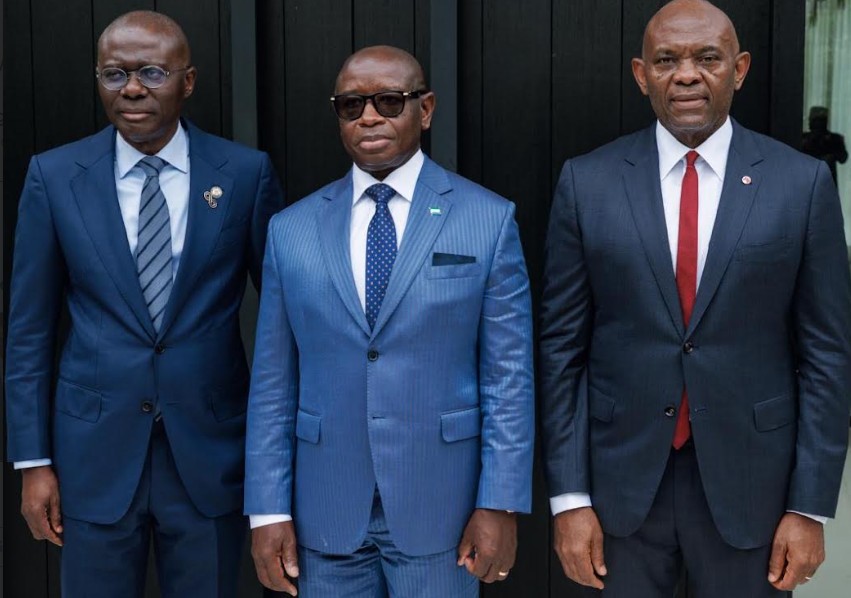
President of Sierra Leone and immediate past Chair of the Economic Community of West African States (ECOWAS) Authority of Heads of State and Government, Mr. Julius Maada Bio, and Chairman of Heirs Holdings, Mr. Tony O. Elumelu, have rallied West African investors and financial institutions to accelerate regional integration ahead of the inaugural West Africa Integration and Investment Summit (WAIIS). At the Private Sector Advisory Board’s inaugural physical meeting in Lagos, they identified energy trade, strategic minerals, agribusiness and digital transformation as priorities for investment. The summit is scheduled for 17–18 November 2026 at the Julius Maada Bio International Conference Centre in Lungi, Sierra Leone.
DECISION HIGHLIGHT
The initiative seeks to convert West Africa’s market of more than 400 million people into a platform for cross-border investment, industrialisation, regional value chains and job creation, with private capital expected to finance viable projects and governments responsible for creating enabling conditions.
DECISION MEMO
The economic significance of WAIIS lies in its attempt to bridge the gap between regional market potential and investable opportunities. A large population and abundant natural resources do not automatically generate prosperity; investment depends on infrastructure, policy consistency, security, trade facilitation and projects capable of delivering commercial returns.
Bio captured the implementation challenge: “But potential is not prosperity. Our task is to convert these advantages into productive enterprises, competitive industries, regional value chains, jobs and wealth.”
He urged the Advisory Board to move beyond advocacy by engaging prospective investors, matching capital with viable projects and identifying financing gaps and policy interventions. He stated: “We are partners in execution — let us transform ideas into partnerships, partnerships into investments, and investments into lasting prosperity for our continent.”
Elumelu, whose investment philosophy of Africapitalism emphasises private-sector-led development, pledged to mobilise African and international capital alongside institutions including the Africa Finance Corporation, African Export-Import Bank, United Bank for Africa and Ecobank.
“This is consistent with our aspirations to create jobs for our young people,” Elumelu said. “We have all it takes to be prosperous.”
But he also identified a condition for investment: “Governments must provide the policy certainty, regulatory efficiency and security required to give investors the confidence to commit capital for the long term.”
Lagos State Governor Babajide Sanwo-Olu reinforced the importance of industrialisation and the free movement of goods and services, highlighting the need for political leadership to reduce barriers to cross-border commerce.
The Advisory Board brings together major industrialists, financiers and investment executives, including Aliko Dangote of Dangote Group, Abdul Samad Rabiu of BUA Group, Wale Tinubu of Oando, Samaila Zubairu of Africa Finance Corporation, Alain Ebobissé of Africa50, and Dr George Elombi of the African Export-Import Bank. Their participation offers access to capital and expertise, but representation alone does not guarantee financing commitments.
WAIIS will be judged by whether it produces bankable projects, financing agreements and measurable improvements in regional trade and productive capacity.
DATA BOX
- Regional market: More than 400 million people.
- Summit dates: 17–18 November 2026.
- Venue: Julius Maada Bio International Conference Centre, Lungi, Sierra Leone.
- Priority sectors: Energy trade, strategic minerals, agribusiness and digital transformation.
- Core mechanism: Match investors with projects, identify funding gaps and address policy constraints.
- Investment framework: Private capital mobilisation supported by government-led regulatory and security improvements.
WHO WINS / WHO LOSES
Potential winners: Businesses accessing larger markets, investors financing scalable projects, workers gaining employment and consumers benefiting from stronger regional supply chains.
Potential losers: Firms dependent on fragmented markets and restrictive cross-border arrangements may face greater competition as integration deepens.
POLICY SIGNALS
Governments must translate summit commitments into predictable regulation, improved security, easier movement of goods and services, and coordinated regional infrastructure. Implementation across national borders will be critical.
INVESTOR SIGNAL
The participation of major industrial and financial institutions could create opportunities in energy, minerals, agriculture and digital infrastructure. Investors should look for disclosed projects, financing structures, risk allocation and implementation timelines rather than relying on summit declarations.
RISK RADAR
Key risks include policy inconsistency, infrastructure gaps, insecurity, financing shortfalls and weak execution across jurisdictions. Without measurable commitments and follow-through, WAIIS could generate regional ambition without delivering the investment and jobs it seeks.
Johnson Emmanuel is a journalist, covering business, investment, monetary & fiscal policies, CBN, economic affairs and issues of significance to Nigeria’s corporate and public sectors.
Discover more from StakeBridge Media
Subscribe to get the latest posts sent to your email.