

By Olumide Johnson
The federal government says indigenous oil and gas operators now account for more than half of Nigeria’s crude oil production, following major divestments by international oil companies. It also reported crude production rising from about one million barrels per day in 2023 to more than 1.7 million barrels per day.
DECISION HIGHLIGHT
The development indicates a structural shift in Nigeria’s upstream industry, with divestments transferring a larger share of production activity to indigenous operators while creating new requirements for domestic capital, technical capacity and infrastructure.
DECISION MEMO
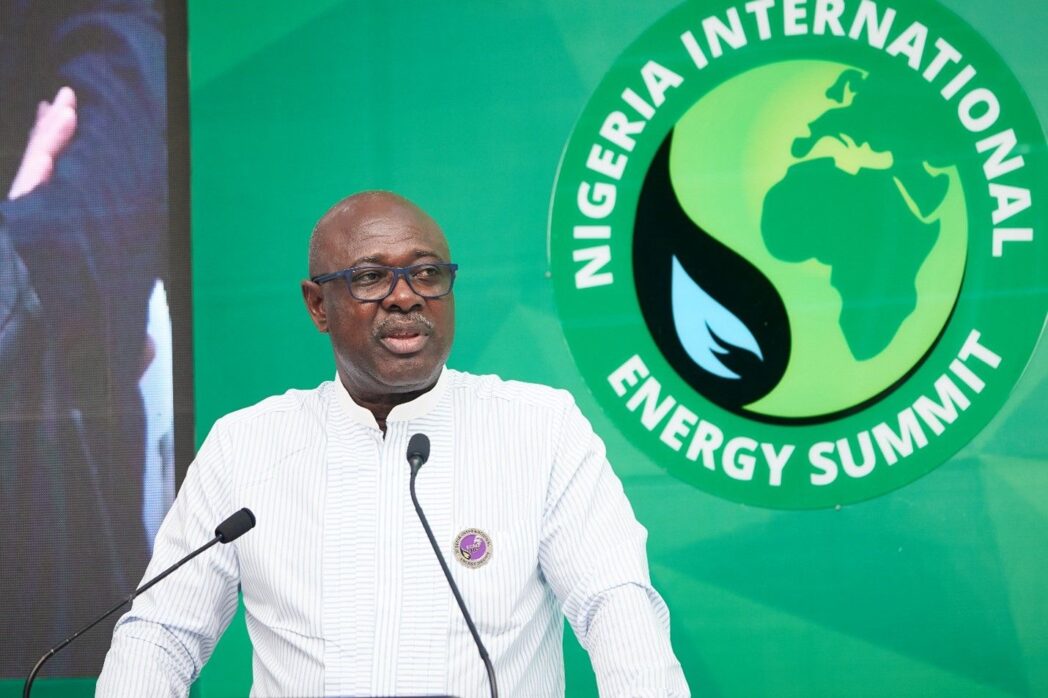
Minister of State for Petroleum Resources (Oil), Senator Heineken Lokpobiri, represented by his Technical Adviser, Engr. Emmanuel Sinime, said that major divestment transactions had created opportunities for indigenous operators to deepen their upstream participation.
“Significant progress has also been made in restructuring the industry by completing major divestment transactions involving international oil companies.
“These transactions are creating great opportunities for indigenous operators who now account for more than 50 percent of Nigerian crude oil production, a historic milestone for our industry,” he said.
The more consequential question is whether increased indigenous ownership can translate into sustained production, stronger domestic value capture and deeper technical capability. Lokpobiri said production growth must be matched by infrastructure, efficient transportation and storage, expanded refining capacity and competitive markets.
The reported increase in active drilling rigs from about 14 to more than 60, alongside over $10 billion in recent foreign direct investment, suggests that upstream activity is broadening. Yet the infrastructure constraints identified by industry stakeholders remain material.
Minister of State for Petroleum Resources (Gas), Senator Ekperikpe Ekpo, said that private capital, technical expertise and innovation were essential to unlocking Nigeria’s gas potential. He said the Petroleum Industry Act had established a framework for regulatory certainty, while the Decade of Gas initiative seeks to support industrialisation and economic diversification.
“The Federal Government cannot achieve this objective alone. We must continue to deepen collaboration with private investors, financial institutions, technology providers and other stakeholders to mobilise the capital and expertise required to deliver these projects,” Ekpo said.
The intervention therefore extends beyond ownership. The next phase depends on whether Nigeria can convert greater indigenous participation into integrated production, processing, logistics and gas monetisation capacity.
DATA BOX
- Indigenous operators: more than 50 percent of crude production.
- Crude production: above 1.7 million barrels per day, from about one million in 2023.
- Active drilling rigs: more than 60, up from about 14.
- Recent foreign direct investment: over $10 billion.
- PTDF scholars supported: more than 15,639.
- Research projects supported: over 50,000.
- Key infrastructure constraints: pipelines, storage, terminals, gas processing and evacuation.
WHO WINS / WHO LOSES
Indigenous producers, domestic service companies, technology providers and infrastructure investors could gain from greater local participation. Operators remain exposed to financing, security, infrastructure and market constraints that can limit the commercial value of additional production.
POLICY SIGNALS
The policy direction is moving from attracting international operators towards strengthening domestic ownership, technical capability and value-chain integration.
INVESTOR SIGNAL
The opportunity increasingly lies beyond crude extraction, particularly in refining, gas processing, pipelines, storage, logistics, petrochemicals and supporting technologies.
RISK RADAR
Infrastructure deficits, high financing costs, regulatory bottlenecks, project-development risk, crude theft, pipeline vandalism and inadequate gas evacuation capacity could prevent higher indigenous participation from translating into sustained industry-wide value creation.
Olumide Johnson is a journalist, reporting on energy, maritime, business, and developments shaping Nigeria’s economy.
Discover more from StakeBridge Media
Subscribe to get the latest posts sent to your email.