

By Ayo Susan
The federal government has commenced construction of a new National Control Centre (NCC) for the Nigerian Independent System Operator (NISO) in Osogbo, Osun State, replacing a 64-year-old facility.
The project is designed to strengthen real-time grid monitoring, system security, disturbance management and integration with regional electricity networks.
DECISION HIGHLIGHT
The new control centre addresses a core weakness in Nigeria’s electricity system: the ability to monitor, coordinate and stabilise an increasingly complex grid using modern operational technology.
DECISION MEMO
The significance of the project extends beyond replacing ageing infrastructure. As Nigeria’s generation mix becomes more diverse and regional electricity trading develops, the system operator requires greater visibility over power flows and faster capacity to respond to disturbances.
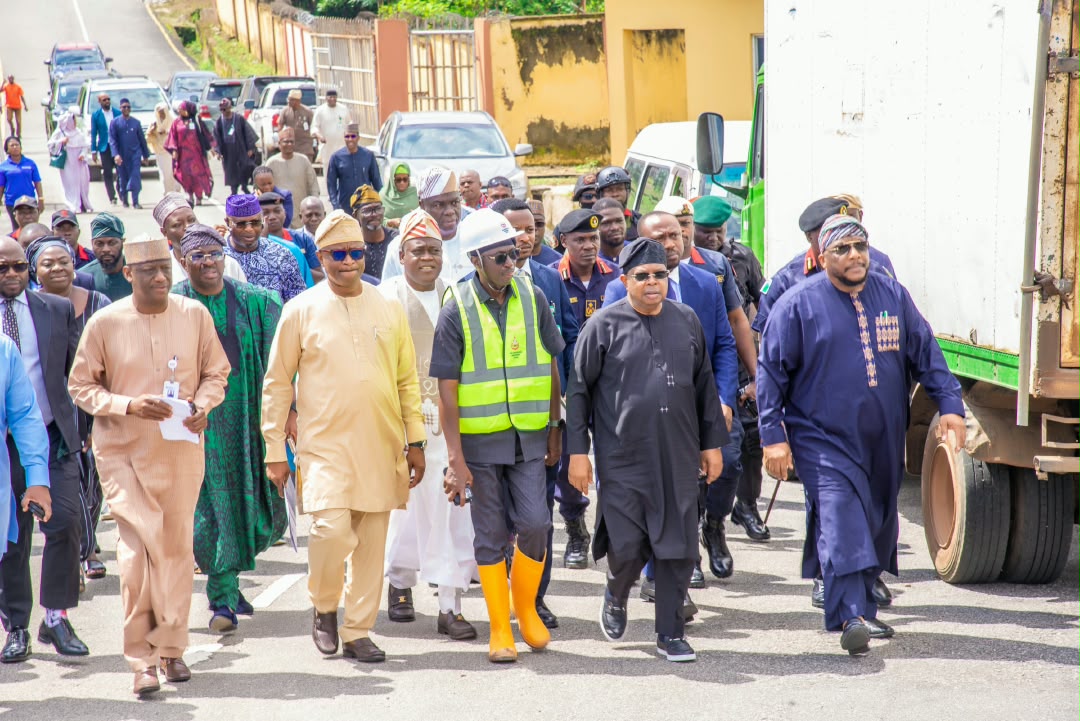
Vice President Kashim Shettima, represented at the groundbreaking by Bashir Maidugu, Special Adviser on Legal and Compliance Matters to the Vice-President, linked reliable electricity to industrial productivity, business activity and wider economic development.
Shettima said that the new facility would provide the technological foundation for managing an increasingly interconnected electricity system, particularly as renewable generation expands.
“The integration of renewable energy resources will create opportunities for expanding electricity supply, but it will also require stronger system-management capabilities.”
He stated that solar and wind generation would require more careful monitoring and coordination, making modern system-operation capabilities increasingly important.
Joseph Tegbe, Minister of Power, said that the existing facility, built 64 years ago, could no longer meet NISO’s operational requirements. The replacement will include Supervisory Control and Data Acquisition (SCADA), large-format displays, communications infrastructure, data systems, a dedicated powerhouse and underground electrical and fibre-optic connections.
Tegbe also said that the centre would “provide the environment for modern grid monitoring and control”, while improved monitoring and analytics would help identify emerging faults, support preventive maintenance and guide decisions around available generation and transmission capacity.
Managing Director and Chief Executive Officer of the Nigerian Independent System Operator, Abdu Bello Mohammed, said that the project would improve monitoring, system coordination and decision-making during disturbances.
Its strategic value will ultimately depend on whether the technology, personnel and operating discipline can convert improved information into faster intervention and more stable grid performance.
DATA BOX
- Existing control centre: 64 years old.
- New facility: Osogbo, Osun State.
- Core technology: SCADA and large-format control displays.
- Additional infrastructure: powerhouse, security facilities, fibre-optic and underground electrical connections.
- Regional dimension: West African Power Pool.
- Emerging requirement: integration of renewable generation.
WHO WINS / WHO LOSES
Electricity consumers, generators, transmission operators and industrial users could benefit from faster fault detection and improved system coordination.
The benefit would be limited if modern equipment is not matched by adequate maintenance, technical expertise and disciplined system operation.
POLICY SIGNALS
Grid modernisation is becoming an operational requirement as Nigeria diversifies generation and strengthens regional electricity integration.
INVESTOR SIGNAL
Improved system visibility and grid management could reduce operational uncertainty for generation and transmission investments, particularly as renewable projects enter the electricity system.
RISK RADAR
A modern control centre cannot independently resolve generation shortages, transmission constraints or distribution weaknesses. Its effectiveness will depend on reliable communications, cybersecurity, technical capacity, equipment maintenance and coordinated action across the electricity value chain.
Ayo Susan is a journalist, covering business, infrastructure, insurance, technology, society and emerging developments with an emphasis on credible and engaging storytelling.
Discover more from StakeBridge Media
Subscribe to get the latest posts sent to your email.