

By Olumide Johnson
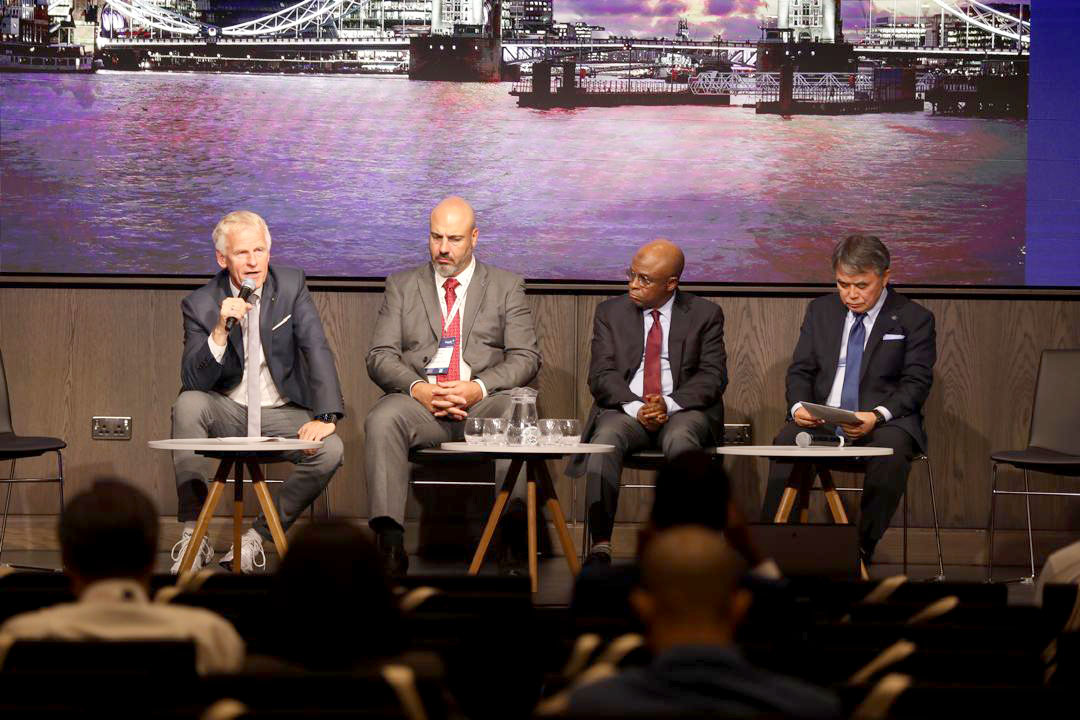
The Nigerian Ports Authority (NPA), through its Managing Director, Dr Abubakar Dantsoho, presented President Bola Ahmed Tinubu’s maritime policy direction and Nigeria’s port infrastructure investment opportunities to international maritime investors at the World Ports Conference in London on Tuesday. Dantsoho, who is also Vice-President of the International Association of Ports and Harbours (IAPH) and Chairman of the Port Management Association of West and Central Africa (PMAWCA), argued that Nigeria’s expanding population, growing cargo volumes and infrastructure requirements make private capital essential to developing deeper seaports, increasing cargo-handling capacity and strengthening regional maritime competitiveness.
DECISION HIGHLIGHT
- Nigeria’s population: More than 260 million, according to Dantsoho.
- Lekki Deep Sea Port: Approximately $1.6 billion investment.
- Lekki Port: Commissioned approximately three years ago, with capacity reportedly exhausted.
- Investment priority: Deeper seaports, larger-vessel accommodation and increased cargo-handling capacity.
- Financing model: Greater private-sector participation alongside government.
- Regional market: Nigeria remains a major destination for cargo entering West Africa.
DECISION MEMO
Dantsoho’s presentation at the London conference represents an important repositioning of Nigeria’s maritime infrastructure conversation, from government-led port development towards a capital-partnership model in which private investment becomes central to expanding capacity.
The significance of his intervention lies in identifying Nigeria’s infrastructure deficit not merely as a development challenge, but as an investment proposition supported by population growth, import demand, expanding commercial activity and regional cargo flows.
His position also places the Tinubu administration’s maritime policy direction within the broader objective of attracting international capital.
The Lekki Deep Sea Port experience provides the central illustration. According to Dantsoho, the $1.6 billion facility has exhausted its capacity approximately three years after commissioning. This suggests that cargo demand and infrastructure expansion requirements are moving at different speeds, creating a potential investment opportunity for additional port capacity.
He explained: “Nigeria at independence in 1960 had a population of 45 million people. Today, about 60 years later, there are more than 260 million people. The investment needed in ports to meet this expansion and growth can only happen if the requisite private investment is attracted and retained which is what President Tinubu has created the enabling atmosphere for”.
More importantly, Dantsoho acknowledged the financing limitations confronting African governments, stating: “So, the governments in both West Africa and generally in Africa have realised that the government cannot fund development of bigger or deeper sea ports, hence the need for your investment to move speedily into Africa.”
His presentation also identified Nigeria’s regional market advantage. With neighbouring West African economies generating cargo flows that frequently serve Nigerian consumers, the country offers investors access to a substantial commercial hinterland.
Dantsoho noted: “But as of today, just about three years later, the capacity of the new deep-sea port that is Lekki has been exhausted. So, which means that clearly, we need more capacity to be able to contain the volumes.”
The strategic implication is that port investment must now anticipate future cargo demand rather than simply respond to existing congestion. For the NPA, attracting capital, retaining investors and ensuring efficient capacity utilisation will be central to translating Nigeria’s maritime potential into sustainable revenue and economic value.
DATA BOX
| Indicator | Reported position |
| Nigeria’s population | Over 260 million |
| Population at independence | 45 million |
| Lekki Port investment | $1.6 billion |
| Lekki Port commissioning | Approximately three years ago |
| Ghana’s population | 34 million |
| Côte d’Ivoire’s population | 32 million |
| Benin Republic’s population | 14 million |
| Togo’s population | 9 million |
WHO WINS / WHO LOSES
- Potential winners: International port investors, terminal operators, shipping companies, logistics providers, exporters and importers.
- Domestic beneficiaries: Nigerian businesses, port-dependent industries and the wider economy through improved cargo-handling capacity.
- Potential losers: Inefficient port operators and competing maritime gateways unable to match improvements in capacity, efficiency and service delivery.
POLICY SIGNALS
The NPA’s investment proposition requires consistent implementation of port reforms, transparent concession arrangements, predictable regulatory processes, improved hinterland connectivity and efficient customs procedures. Private capital attraction must be matched by institutional certainty.
INVESTOR SIGNAL
Nigeria’s population scale, cargo demand and infrastructure deficit provide identifiable investment opportunities in deep-sea ports, terminals, logistics, maritime technology and associated services. Lekki demonstrates the commercial relevance of additional capacity, although investors must independently assess throughput, utilisation, tariffs and concession risks.
RISK RADAR
The principal risks are regulatory uncertainty, port inefficiency, inadequate road and rail connectivity, concession delays, financing costs and competition from neighbouring West African ports. The NPA’s central challenge is to convert the investment interest generated at international platforms into bankable projects, committed capital and measurable improvements in port capacity.
Olumide Johnson is a journalist, reporting on energy, maritime, business, and developments shaping Nigeria’s economy.
Discover more from StakeBridge Media
Subscribe to get the latest posts sent to your email.