

By Olumide Johnson
The Nigerian Ports Authority (NPA) has attributed a reported 25 percent increase in Nigeria’s exports over two years to federal government reforms and improved port operations. Speaking recently at the Annual World Ports Conference organised by the International Association of Ports and Harbours (IAPH) in London, Managing Director of the NPA, Dr Abubakar Dantsoho, identified stronger terminal-operator partnerships, export processing facilities and technology adoption as drivers of improved cargo throughput. He also disclosed plans for a $1 billion expansion and modernisation of Apapa Port, alongside digitalisation initiatives involving international technology partners.
DECISION HIGHLIGHT
- Export growth: 25 percent over two years, according to Dantsoho.
- Port revenue: Reportedly quadrupled.
- Export Processing Terminals: Four established across Nigeria.
- Apapa Port: $1 billion expansion and modernisation programme.
- International partnerships: APM Terminals, Singapore-based technology partners and an Abu Dhabi-based company.
- Digital infrastructure: Single Window System and proposed Port Community System.
- Global ranking: Two Nigerian ports reportedly featured among the World Bank’s latest top 20 rankings.
DECISION MEMO
Dantsoho’s presentation offers an important account of how port-sector reforms could translate into export competitiveness, institutional revenue and stronger participation in regional trade. More significantly, it places the NPA at the intersection of trade facilitation, infrastructure investment and Nigeria’s ambition to derive greater value from non-oil exports.
The reported 25 percent export growth is particularly relevant because Dantsoho attributes the improvement not exclusively to petroleum exports, but also to manufacturing and agricultural commodities, including cocoa and cashew. This diversification, if sustained, would strengthen the economic case for ports as productive trade infrastructure rather than merely gateways for imports.
He stated: “So, for us in Nigeria, the most important thing is that we are seeing growth as a result of this policy that we are taking. Statistically, the exports from Nigeria in the last two years has increased by 25 percent. And then these are exports that are not mainly only oil and gas, in terms of oil and gas as I mentioned, we are doing fantastically around that, but then also in the other areas of manufacturing and agriculture, you know, raw materials like cocoa, like cashew and all that.”
The establishment of four Export Processing Terminals is another significant institutional intervention. By coordinating the NPA, Nigeria Customs Service (NCS), terminal operators and other regulatory agencies, the arrangement seeks to complete export documentation, processing and standards compliance locally. This could reduce avoidable delays and improve the reliability of Nigerian exports.
Dantsoho explained that the objective was to ensure that “everything regarding the processing of the cargo for export is done locally, so that by the time it is exported out of Nigeria, there will not be issues regarding standards.”
The proposed $1 billion Apapa modernisation programme takes this ambition further. Its significance lies in recognising that growing export volumes require corresponding investments in port capacity, technology and operational efficiency. The Single Window System and proposed Port Community System could reduce administrative fragmentation and improve cargo clearance.
Dantsoho also linked Nigeria’s improved maritime performance to the African Continental Free Trade Area (AfCFTA), highlighting cooperation with Morocco and South Africa.
He observed: “This the result of hard work and efficiency, because we are collaborating efficiently. And so we have identified that this is getting us a lot of good results. It’s result-oriented, it’s technology-based.”
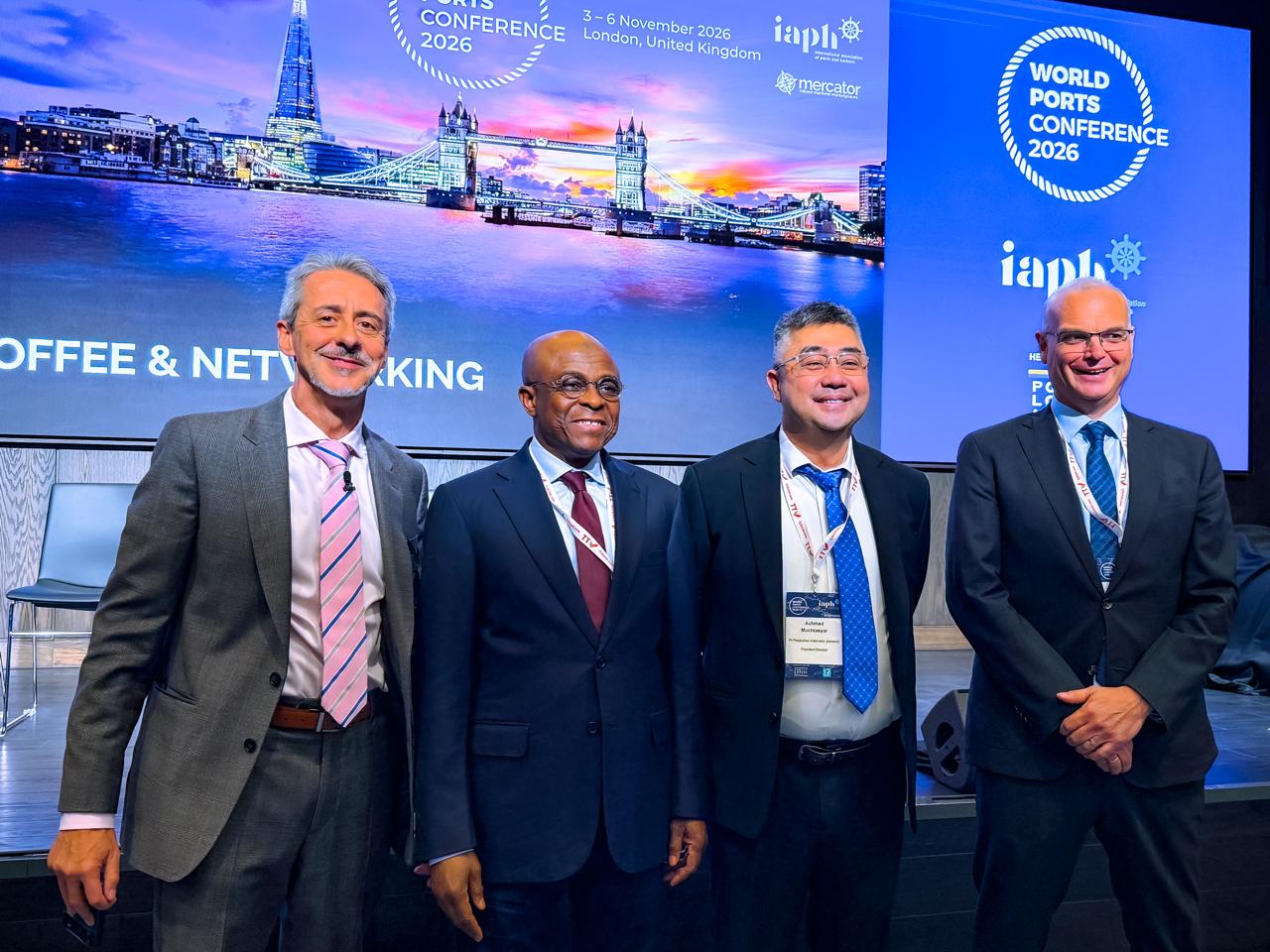
L-R: Mr. Mark Assaf , Chief Human Resources Development UNCTAD; Dr. Abubakar Dantsoho, VP IAPH/MD of NPA; Mr. Achmad Muchtasyar , President Director of PT Pelabuhan Indonesia, and Mr. Igor Van den Essen , Chief Executive Africa & Europe, APM Terminals at the World Ports Conference in London.
DATA BOX
Indicator Reported position
Export growth over two years 25%
Port revenue growth Fourfold
Export Processing Terminals 4
Apapa modernisation investment $1bn
Nigerian ports in reported global top 20 2
Digital initiatives Single Window and Port Community System
WHO WINS / WHO LOSES
- Potential winners: Nigerian exporters, agricultural producers, manufacturers, terminal operators, shipping companies and logistics providers.
- Institutional beneficiaries: NPA, Nigeria Customs Service and other agencies benefiting from improved cargo processing.
- Potential losers: Inefficient logistics intermediaries and businesses dependent on administrative bottlenecks.
POLICY SIGNALS
Port reforms must be sustained through predictable regulation, efficient customs administration, export-quality assurance, transparent concession arrangements and coordinated implementation of AfCFTA commitments. Infrastructure modernisation must complement production and export policies.
INVESTOR SIGNAL
The proposed $1 billion Apapa investment, export-processing infrastructure and digital port systems create opportunities in terminal operations, logistics, maritime technology and export-oriented manufacturing. Private investors will, however, require clarity on financing structures, concession terms, project timelines and expected returns.
RISK RADAR
The principal risks are execution delays, inadequate financing, inter-agency coordination failures, technology integration challenges and insufficient export production to sustain additional port capacity. The decisive measure of success will be whether reported export growth and improved port revenues translate into lasting competitiveness, lower trade costs and stronger non-oil export earnings.
Olumide Johnson is a journalist, reporting on energy, maritime, business, and developments shaping Nigeria’s economy.
Discover more from StakeBridge Media
Subscribe to get the latest posts sent to your email.