

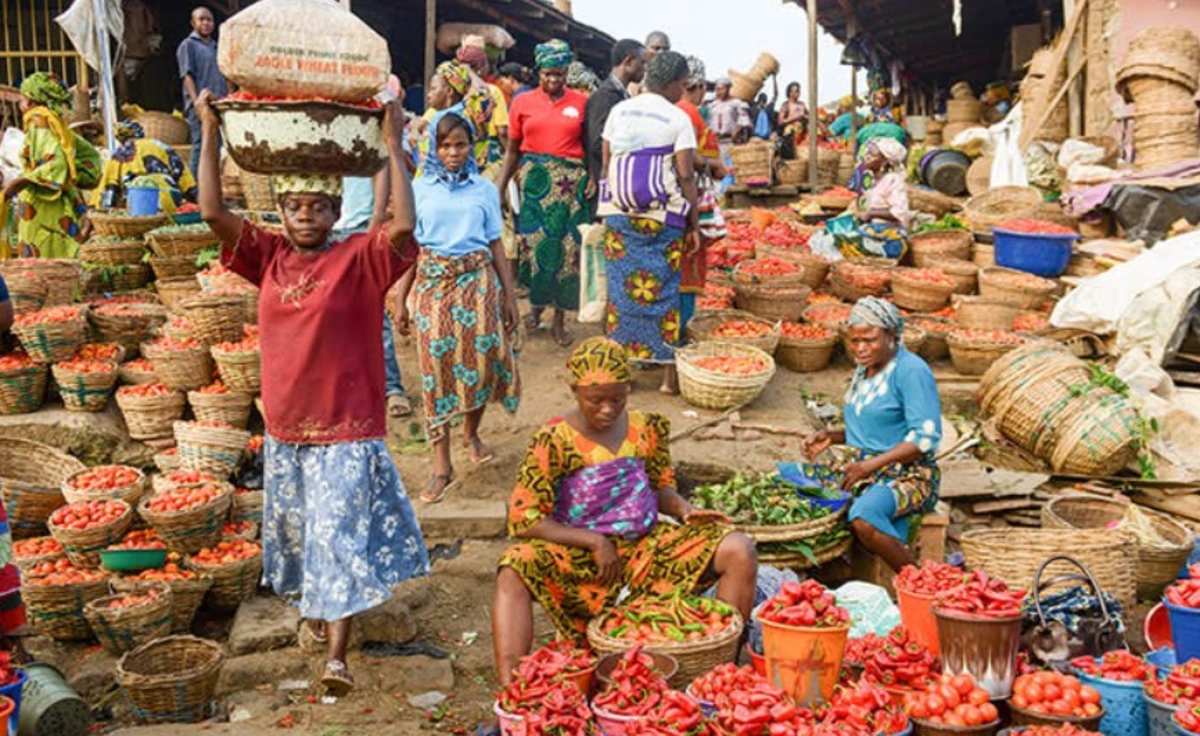
We cannot continue to treat soaring food prices as a seasonal inconvenience when the roads connecting farms to markets remain poor, insecurity threatens produce movement and transport costs consume household purchasing power. The rising prices of tomatoes and onions in some states expose a food distribution system whose weaknesses can turn harvest expectations into economic hardship.
We see that tomatoes and onions are expected to become more affordable during periods of improved seasonal supply, yet traders in Enugu and other places report rising prices and inadequate deliveries. According to the News Agency of Nigeria, a large bag of onions now sells for N272,000 to N280,000, compared with N170,000 to N185,000 in September. A large basket of tomatoes costs N60,000 to N68,000, against N45,000 to N50,000 in August and September.
We must recognise that these are not merely market statistics. They represent pressure on household food budgets, higher operating costs for food businesses and reduced purchasing power for consumers. When traders suspend sales because customers cannot afford prevailing prices, we are witnessing a breakdown in the relationship between supply, affordability and effective demand.
We cannot ignore the structural causes identified by traders. Poor roads, insecurity along supply routes, expensive transportation and inadequate deliveries from northern Nigeria all contribute to the cost of moving perishable produce to southern markets. We should therefore resist the temptation to blame traders alone for prices that may reflect genuine increases in procurement and distribution costs. At the same time, we need reliable market data to distinguish unavoidable costs from excessive margins.
We must also question why seasonal harvests fail to deliver predictable price relief. Where tomatoes and onions cannot move efficiently from producing areas to consuming centres, additional harvests cannot guarantee affordability. Where storage and preservation facilities are inadequate, produce losses can further weaken supply and amplify price fluctuations. We cannot build food security around harvest volumes alone while neglecting the infrastructure that connects production to consumption.
We should demand a more practical agricultural policy response. Government investment must extend beyond farm production to feeder roads, secure transport corridors, aggregation centres, cold storage and appropriate preservation systems. We also need better market information to help producers, transporters, traders and consumers anticipate supply changes. These interventions should be evaluated against measurable reductions in post-harvest losses, distribution costs and seasonal price volatility.
Let us equally acknowledge that infrastructure cannot deliver immediate price reductions where supplies remain insufficient. Short-term monitoring of market arrivals and transport costs should therefore complement longer-term investment in agricultural logistics. Any intervention must address the actual source of the shortage rather than assume that price controls alone can resolve it.
Ultimately, we cannot claim meaningful agricultural progress if food reaches urban markets at prices that exclude ordinary consumers. We need a food system that rewards farmers, sustains viable trading businesses and keeps essential produce within household reach. The test of policy is not simply whether we produce more tomatoes and onions, but whether we can move, preserve and distribute them efficiently enough to make their abundance count.
Discover more from StakeBridge Media
Subscribe to get the latest posts sent to your email.