

By Olumide Johnson
Nigeria’s export performance and port efficiency have come under renewed attention following the disclosure by the Managing Director of the Nigerian Ports Authority (NPA), Dr Abubakar Dantsoho, that the country’s exports have increased by 25 percent over the last two years, driven by federal government reforms and improved collaboration with private terminal operators.
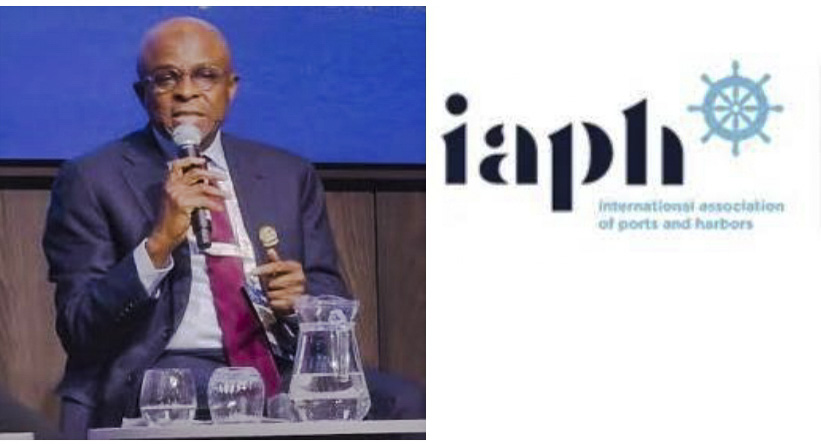
Speaking at the ongoing Annual World Ports Conference in London, organised by the International Association of Ports and Harbours (IAPH), Dantsoho attributed the growth to policy reforms, operational improvements and partnerships within the maritime sector.
DEVELOPMENT:
Dantsoho said that export growth now extends beyond oil and gas to manufacturing and agricultural commodities, including cocoa and cashew, crediting the partnership between NPA and major terminal operators, particularly APM Terminals.
He stated: “So for us in Nigeria, the most important thing is that we are seeing growth as a result of this policy that we are taking. Statistically, the exports from Nigeria in the last two years have increased by 25 percent And then these are exports that are not mainly only oil and gas, in terms of oil and gas as I mentioned, we are doing fantastically around that, but then also in the other areas of manufacturing and agriculture, you know, raw materials like cocoa, like cashew and all that. Volumes have increased and that this is to the credit of the partnership that we have between ourselves and the major terminal operators, APM Terminals.”
He disclosed that NPA operates about four Export Processing Terminals, working with the Nigeria Customs Service (NCS), terminal operators and other agencies to ensure export documentation, processing and standards compliance are completed locally.
DATA:
Beyond the 25 percent export growth, Dantsoho disclosed that revenue generated by ports across Nigeria has quadrupled. He also attributed Nigeria’s improved maritime performance to operational efficiency and technology-driven collaboration.
He also said that Nigeria now has two ports among the world’s top 20 in the latest World Bank global ports ranking.
SIGNIFICANCE:
The improvements potentially strengthen Nigeria’s competitiveness under the African Continental Free Trade Area (AfCFTA), particularly in regional manufacturing and agricultural trade.
Dantsoho said: “Nigeria’s economy is very strong now because of our president’s reforms, which everyone can testify is attracting investors to the country. So because of that, we are leading other African countries to ensure that we export or trade within ourselves in a free and fair manner. So, between, for example, Nigeria and Morocco, there is a lot of exchange of idea because Morocco is now a hub for manufacturing of electric cars and other smaller cars.”
He further affirmed: “This the result of hard work and efficiency, because we are collaborating efficiently. And so, we have identified that this is getting us a lot of good results. It is result-oriented, it is technology-based. So, we are going to continue to consolidate on the relationship we have with major players in Morocco and South Africa.”
NEXT MOVE:
The federal government is planning a $1 billion investment to expand and modernise Apapa Port, with NPA working alongside APM Terminals and other private-sector partners.
Dantsoho also disclosed technology partnerships with a Singaporean firm for a single window system and another company from Abu Dhabi for the development of a Port Community System.
OUR LENS:
Nigeria’s maritime competitiveness is increasingly being measured by its capacity to convert infrastructure investment, technology adoption and trade facilitation into export earnings. However, sustaining the reported gains will depend on the timely delivery of Apapa’s modernisation, stronger port logistics and measurable improvements in non-oil export volumes.
For investors, the critical consideration is whether these reforms can translate into lower trade costs, faster cargo clearance and a more competitive gateway for regional and international commerce.
Olumide Johnson is a journalist, reporting on energy, maritime, business, and developments shaping Nigeria’s economy.
Discover more from StakeBridge Media
Subscribe to get the latest posts sent to your email.