

By Ayo Susan
President Bola Ahmed Tinubu and state governors have agreed to establish a joint Federal and State committee to implement measures aimed at reducing intra-state transport fares from 1 October 2026, primarily by transferring savings from compressed natural gas (CNG) and electric vehicles to commuters. In his 27 August statement from Abuja, the President said that more than 120,000 vehicles had been converted under the Presidential CNG Initiative, with over 100,000 additional conversion kits in the pipeline. He also disclosed plans to expand the national CNG refuelling network to 1,000 stations, alongside more than 100 gas projects being financed through the Midstream and Downstream Gas Infrastructure Fund.
DECISION HIGHLIGHT
The agreement changes the policy test from lowering fuel costs to transmitting those savings through the transport value chain. President Tinubu says CNG vehicles spend 60 to 80 percent less on fuel than petrol-powered vehicles, but the economic benefit will only reach households if operators actually reduce fares.
DECISION MEMO
The federal government’s transport strategy is increasingly linking energy transition with household cost relief. The significance of the governors’ commitment is that intra-state transport, where commuters directly experience fare increases, falls largely within state-level regulatory and administrative influence.
Tinubu’s formulation is explicit: “We have agreed that cheaper fuel should result in cheaper fares!” The statement creates a measurable policy expectation from 1 October rather than leaving CNG adoption as an infrastructure or energy-sector objective.
The scale of the existing intervention provides the supply-side foundation. More than 120,000 vehicles have been converted, while another 100,000 conversion kits are being developed. The government is also financing more than 100 gas projects, including 15 CNG mother stations and 86 daughter stations, and has ordered an additional 500 refuelling stations on top of 500 previously ordered.
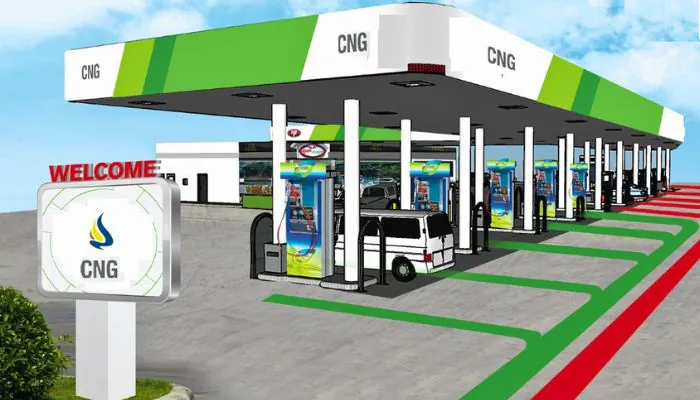
The infrastructure push is intended to address one of the principal constraints on CNG adoption, availability. Tinubu cited an Abuja facility capable of serving 1,000 cars and tricycles and 50 trucks and buses daily, alongside a 15-station refuelling network in Lagos.
The policy logic is therefore sequential: expand CNG infrastructure, lower operators’ fuel costs, and induce lower fares. But the third link is not automatic. Operators also face vehicle financing, maintenance, route economics and other operating costs, meaning the fuel saving does not necessarily translate one-for-one into fare reductions.
The joint Federal and State committee will consequently be the critical transmission mechanism. Its effectiveness will depend on how fare reductions are measured, enforced and sustained across states.
The policy’s broader significance is that Nigeria’s energy transition is being tied directly to affordability. If the savings reach commuters, CNG adoption becomes not only an energy-substitution strategy but a mechanism for reducing transport inflation.
DATA BOX
- CNG fuel-cost saving cited by Tinubu: 60 to 80 percent
- Vehicles converted: 120,000+
- Additional conversion kits: 100,000+
- Gas projects under financing: 100+
- CNG mother stations: 15
- CNG daughter stations: 86
- Refuelling stations previously ordered: 500
- Additional stations ordered: 500
- Target national refuelling network: 1,000 stations
- Fare-reduction target: 1 October 2026
- Implementation mechanism: Joint Federal and State committee
WHO WINS / WHO LOSES
Potential winners: Commuters, CNG-dependent transport operators and businesses that can reduce operating costs through cheaper fuel.
Potential losers: Operators unable or unwilling to pass fuel savings through to fares could face stronger regulatory pressure, while transport businesses dependent on petrol may face a growing cost disadvantage.
POLICY SIGNALS
The government is moving towards linking energy-transition policy to measurable consumer outcomes. CNG infrastructure is no longer being framed solely around fuel substitution, but also around transport affordability.
INVESTOR SIGNAL
The expanding refuelling network and vehicle-conversion programme strengthen the investment case for CNG logistics, transport fleets, refuelling infrastructure and associated gas distribution assets. Demand should increase if lower operating costs translate into commercially viable fare structures.
RISK RADAR
The principal risk is weak pass-through. Lower fuel expenditure does not automatically produce lower fares because operators have other costs and commercial incentives. The credibility of the October target will therefore depend on whether the Federal and State governments can establish transparent fare benchmarks and ensure that the claimed CNG savings reach commuters.
Discover more from StakeBridge Media
Subscribe to get the latest posts sent to your email.