

- Macroeconomic Gains Now Face The Test Of Reaching Businesses, Households.
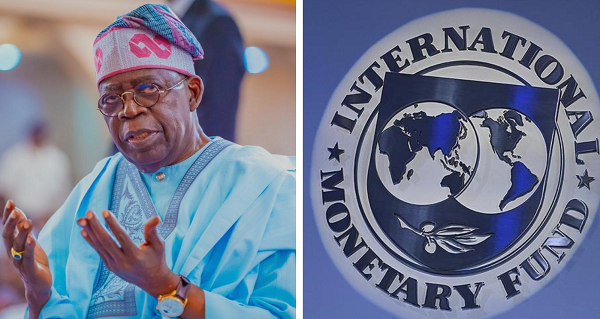
Considering the President Bola Ahmed Tinubu’s reforms determination, the latest assessment by the International Monetary Fund (IMF) has shifted attention from Nigeria’s announcements to the institutional capacity required to convert fiscal, monetary and governance changes into durable macroeconomic stability and broader economic gains. Enam Obiosio sheds some light on the charge.
The International Monetary Fund (IMF) has urged Nigeria and other major African economies to deepen fiscal, monetary, financial and governance reforms, as Minister of Finance and Coordinating Minister of the Economy, Mr. Taiwo Oyedele, says Nigeria’s stabilisation gains now need to translate into broader economic prosperity.
The IMF identified fiscal reform as a priority for seven of the eight African Union (AU) economies it assessed, including Nigeria, with emphasis on tax policy, revenue administration, public financial management and spending efficiency. Its recommendations coincide with Nigeria’s ongoing tax reforms and the National Economic Council (NEC)’s decision to consider fiscal and monetary measures to moderate high interest rates.
DECISION HIGHLIGHT
The underlying policy shift is from stabilisation to transmission. Nigeria has improved several macroeconomic indicators, but the IMF’s recommendations and the NEC’s intervention point to the same unresolved issue: whether stronger public finances, lower inflation and improved external buffers can translate into productive investment, affordable credit and inclusive growth.
DECISION MEMO
Nigeria’s reform story is entering a more demanding phase. The immediate objective of the earlier reform cycle was to restore macroeconomic stability; the emerging challenge is ensuring that stability reaches businesses, investors and households.
Oyedele said that real Gross Domestic Product (GDP) growth rose to 3.89 percent in the first quarter of 2026, from 3.13 percent a year earlier, with full-year growth projected to exceed 4 percent.
“Nigeria’s economy has stabilised, and the task ahead of us now is to convert stability to shared prosperity,” he said.
Other indicators reinforce the stabilisation argument. Headline inflation fell to 15.43 percent in July from 24.94 percent a year earlier, although food inflation remained high at 20.31 percent. External reserves reached $51.96 billion, 38 percent higher year-on-year and their highest level since January 2009. The naira had appreciated 13.5 percent year-on-year by the end of the first half, with the exchange rate below N1,400 to the dollar.
Fiscal capacity has also strengthened. Net Federation Account Allocation Committee FAAC) revenues increased from N15.2 trillion in 2024 to N21.9 trillion in 2025, a 44 percent rise, with Oyedele projecting at least another 50 percent increase in 2026. The trade surplus nearly doubled from N17.7 trillion in 2025 to N34.7 trillion in the first quarter of 2026.
Yet the IMF’s assessment highlights why these improvements are not sufficient on their own. Its recommendation to strengthen domestic revenue mobilisation, public financial management and spending efficiency directly intersects with Nigeria’s tax reform programme, which took effect in January 2026 through the Nigeria Tax Act, Nigeria Tax Administration Act, Nigeria Revenue Service (Establishment) Act and Joint Revenue Board (Establishment) Act.
The reform architecture seeks to eliminate duplicate taxes, harmonise administration and improve compliance. However, implementation pressures remain. The Central Bank of Nigeria’s July 2026 Business Expectations Survey showed that 70.8 percent of respondents identified high and multiple taxation as the biggest constraint on business operations.
The monetary side presents a similar tension. The Central Bank of Nigeria (CBN) pursued aggressive tightening after Mr. Olayemi Cardoso became governor in 2023, with the Monetary Policy Rate rising from 18.75 percent in 2023 to 27.5 percent by the end of 2024. The Cash Reserve Ratio was also raised from 32.5 percent to 45 percent and subsequently 50 percent.
The subsequent easing phase has coincided with moderating inflation and improving macroeconomic conditions, but borrowing costs remain a constraint. At its latest meeting, the National Economic Council expressed concern over prevailing lending rates and directed consideration of fiscal and monetary measures to moderate them.
Oyedele said: “Council expressed concern about the high rates of interest, particularly for businesses, and directed that we look at fiscal and monetary policy measures to moderate these interest rates.”
The choice of priority sectors is economically significant. Agriculture, energy, manufacturing, mining and the digital economy were identified for greater policy attention because they offer stronger channels for employment and productive expansion. Oyedele said 81.4 percent of Nigerians work in agriculture and non-tradable services, making growth in those areas more consequential for poverty and inequality.
The external investment narrative has simultaneously improved. Oyedele cited sovereign-rating upgrades by Fitch, Moody’s and S&P between April 2025 and May 2026, describing their alignment as the first in more than a decade. Nigeria also exited the Financial Action Task Force grey list in October 2025 and the European Union (EU)’s anti-money laundering and countering financing of terrorism deficiency list in January 2026.
He further said that the spread between United States Treasury bonds and Nigerian Eurobonds had narrowed to below 200 basis points, while capitalisation of the Nigerian capital market had almost doubled within one year.
“So, when FTSE Russell says they’ve now reclassified Nigeria to frontier markets, that automatically makes us eligible for investment. Or put differently, we become investable to many institutional investors globally,” Oyedele said.
The IMF, however, adds an important qualification to the improving investment narrative: stronger institutions are necessary to make growth durable.
The Fund said: “Adopting these recommendations can help support strong, sustainable, balanced, and inclusive growth by mobilising domestic revenue and strengthening macroeconomic institutions.”
DATA BOX
- Q1 2026 GDP growth: 3.89 percent
- 2026 full-year growth projection: Above four percent
- July headline inflation: 15.43 percent
- July food inflation: 20.31 percent
- External reserves: $51.96 billion
- Reserve growth: 38 percent year-on-year
- N2025 net FAAC revenue: N21.9 trillion
- Q1 2026 trade surplus: N34.7 trillion
- Public debt: N159.28 trillion, below 37 percent of GDP
- Debt-service-to-revenue ratio: Below 60 percent in 2025
- Businesses citing high/multiple taxation as their biggest constraint: 70.8 percent
- Nigerians working in agriculture and non-tradable services: 81.4 percent
- Eurobond-US Treasury spread: Below 200 basis points
WHO WINS / WHO LOSES
Lower interest rates would favour productive businesses, particularly in agriculture, manufacturing, energy, mining and digital services, while stronger revenue mobilisation and spending efficiency could improve fiscal capacity.
Businesses and households remain exposed if high borrowing costs and food inflation persist. Smaller firms are particularly vulnerable where tax burdens, financing costs and weak infrastructure combine to constrain expansion.
POLICY SIGNALS
The policy direction is increasingly centred on converting macroeconomic stability into productive growth. Fiscal consolidation, tax administration, monetary transmission, governance reform and sector-specific credit conditions are becoming interconnected components of the reform agenda.
INVESTOR SIGNAL
Nigeria’s stronger reserves, currency stability, improved sovereign ratings, reduced external spreads and FTSE Russell frontier-market reclassification strengthen its investment proposition. The decisive factor will be whether these external improvements are sustained through credible institutions and translated into stronger domestic returns.
RISK RADAR
The central risk is a disconnect between macroeconomic stability and economic experience. Falling headline inflation and stronger reserves do not automatically produce affordable credit, lower food costs or higher household incomes. The success of the next reform phase will therefore depend on transmission, not merely stabilisation.
Discover more from StakeBridge Media
Subscribe to get the latest posts sent to your email.