

By Kingsley Ani
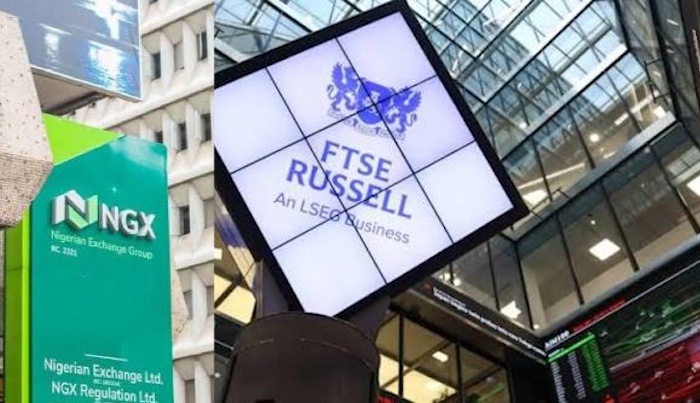
FTSE Russell, the London-based global index provider, has provisionally admitted 10 Nigerian equities, including MTN Nigeria, Dangote Cement and First HoldCo, into its Frontier Index Series, effective 21 September 2026, following Nigeria’s reclassification from an unclassified to a frontier market. The other constituents are Guaranty Trust Holding Company, Nestle Nigeria, Nigerian Breweries, Presco, Stanbic IBTC Holdings and Aradel Holdings, with the stocks entering the Large Cap category subject to the September 7 confirmation.
DECISION HIGHLIGHT
The significance extends beyond index membership: Nigeria’s return to the frontier-market universe creates a formal international investment reference point for its leading listed companies.
DECISION MEMO
The reclassification addresses a visibility problem that has constrained Nigerian equities since the foreign exchange squeeze pushed the market out of FTSE Russell’s recognised classification nearly three years ago. The immediate implication is not necessarily a surge in capital, but the restoration of an investable benchmark through which international investors can assess and allocate to Nigerian equities.
For the 10 qualifying companies, index inclusion potentially widens the pool of institutional investors able to consider their shares. It also creates greater visibility beyond their primary listings on the Nigerian Exchange, while potentially supporting cross-border trading and future equity mobilisation through public offers and rights issues.
The development is particularly consequential for large-cap issuers because their inclusion places Nigeria’s most substantial listed businesses within a recognised frontier-market basket. The transmission mechanism is therefore institutional as much as financial: index recognition can improve discoverability, comparability and accessibility for global portfolio managers.
Dangote Cement’s planned London capital-markets engagement illustrates how individual companies can build on that renewed international visibility. The company will host a capital markets day in London ahead of its proposed secondary listing on the London Stock Exchange.
The event, Dangote Cement said, “will provide investors and other stakeholders with an update on the company’s strategy, operations, and business priorities, as well as an opportunity to engage with the company’s senior management.”
The broader signal is that Nigeria’s capital market is gradually reconnecting with international investment infrastructure. FTSE Russell’s action does not, however, resolve the underlying constraints that caused the earlier exclusion. Sustained foreign participation will ultimately depend on market accessibility, liquidity and investor confidence.
DATA BOX
- 10: Nigerian equities admitted to the Frontier Index Series.
- 21 September 2026: Effective date for index inclusion and Nigeria’s frontier-market reclassification.
- 7 September: Date indicated for confirmation of the tentative inclusion.
- 10 stocks: All classified within the Large Cap category.
- Nearly three years: Period Nigeria remained unclassified after the earlier downgrade.
- 1: Proposed secondary London listing for Dangote Cement, subject to completion of the plan.
WHO WINS / WHO LOSES
WHO WINS: The 10 constituent companies, the Nigerian Exchange and investors seeking greater access to Nigerian equities. Large-cap companies stand to benefit most from enhanced international visibility.
WHO LOSES: The relative isolation created by Nigeria’s previous unclassified status is reduced. However, companies outside the selected index constituents may not immediately enjoy the same visibility or potential portfolio flows.
POLICY SIGNALS
The reclassification indicates improving recognition of Nigeria’s capital-market infrastructure, but maintaining that status requires continued attention to the conditions that determine international market accessibility.
INVESTOR SIGNAL
The Frontier Index Series creates a clearer channel through which global investors can obtain exposure to selected Nigerian equities. The potential benefit is strongest where index visibility is accompanied by adequate liquidity, credible corporate disclosure and investable market conditions.
RISK RADAR
Index inclusion should not be interpreted as guaranteed foreign inflows. Portfolio allocations remain sensitive to liquidity, foreign-exchange accessibility and broader investor confidence.
The critical test is whether Nigeria can convert renewed index recognition into sustained international participation rather than a temporary improvement in market visibility.
Discover more from StakeBridge Media
Subscribe to get the latest posts sent to your email.