

By Ovio Peters
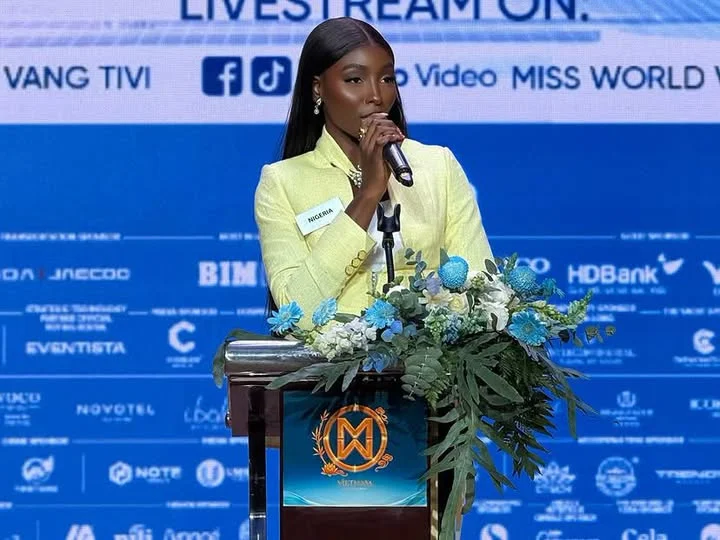
The Minister of Art, Culture and the Creative Economy, Hannatu Musawa, has mobilised Nigerians to vote for Miss World Nigeria 2026, Tamunosoye Karibi-George, known as Soye, as the 73rd Miss World Festival continues in Vietnam. Musawa’s intervention positions the international pageant not merely as a beauty contest, but as a platform for cultural visibility, youth advocacy and Nigeria’s creative-economy positioning. Karibi-George, 26, won the national title in Lagos after competing against 20 finalists and has already emerged Africa’s Top Model and reached the global Top 40.
DECISION HIGHLIGHT
The significant development is the government’s attempt to convert an individual cultural achievement into broader national visibility. By urging Nigerians to vote, Musawa is effectively treating Soye’s international exposure as a soft-power and creative-economy opportunity.
DECISION MEMO
The economic value of pageantry increasingly lies beyond the crown. For Nigeria, the more consequential asset is the attention generated around a contestant who can project the country’s identity, social issues and creative talent to an international audience.
Soye’s profile gives that proposition some substance. A communications professional and associate of the Nigerian Institute of Public Relations, she founded Beyond Labels, an organisation promoting inclusion for children with special needs. Her participation therefore extends beyond representation based on appearance to advocacy, communications and social-impact storytelling.
Musawa’s message also reveals a wider policy logic. When she tells Nigerians, “Seeing you carry Nigeria’s name with such grace, confidence and purpose on the Miss World stage has made us incredibly proud”, she is framing cultural representation as a national asset. Her emphasis that Soye has “used this platform to showcase Nigeria to the world, speak about issues that truly matter, and inspire so many young people” points towards the broader value of international cultural platforms.
That matters for the creative economy because visibility is itself an economic input. International pageants generate audiences, media attention, personal brands and commercial opportunities that can spill into fashion, beauty, advertising, entertainment, tourism and digital content.
The challenge, however, is converting attention into measurable economic value. A successful campaign for Soye can create visibility; sustained creative-economy gains require institutions and businesses capable of monetising that visibility through partnerships, content, brands and investment.
DATA BOX
- Soye: 26 years old.
- National contest: 21 contestants, including the winner.
- Global achievement: Africa’s Top Model.
- Current global position: Top 40.
- Previous Nigerian representative, Joy Mojisola Raimi: Top 20.
- Platform: 73rd Miss World Festival, Vietnam.
- Advocacy: inclusion for children with special needs through Beyond Labels.
- Previous title: Miss Africa International 2024, Ghana.
WHO WINS / WHO LOSES
Wins: Soye gains international visibility; Nigerian fashion, beauty, media and entertainment industries gain a potential promotional vehicle; the Federal Ministry of Art, Culture and the Creative Economy gains an opportunity to demonstrate how cultural platforms can serve national branding.
Potential losers: The wider creative economy loses if the publicity ends with the competition rather than being converted into commercial partnerships, tourism promotion, content and exportable Nigerian creative products.
POLICY SIGNALS
Musawa’s intervention signals a broader interpretation of the creative economy, in which cultural personalities and international platforms can function as instruments of soft power and market visibility.
The more important policy question is whether government can build systems that systematically connect such exposure with Nigerian creative enterprises, rather than relying on individual achievements to generate incidental benefits.
INVESTOR SIGNAL
Soye’s trajectory demonstrates the commercial potential of personality-led Nigerian cultural assets. International visibility can strengthen opportunities across fashion, cosmetics, advertising, media, hospitality and digital content, provided the attention is converted into structured commercial propositions.
RISK RADAR
The principal risk is confusing visibility with value creation. Winning votes can produce international attention, but without strategic commercialisation, audience engagement may remain temporary. The creative-economy test is therefore not simply whether Soye advances beyond the Top 40, but whether Nigeria can turn her international platform into sustained cultural, commercial and reputational value.
Discover more from StakeBridge Media
Subscribe to get the latest posts sent to your email.