

By Johnson Emmanuel
The federal government has taken its reform message to international investors, promising a more competitive investment environment capable of generating returns while financing productive economic activity. The pitch comes as the administration of President Bola Tinubu seeks to move the narrative from economic reform to measurable investment and growth outcomes.
DEVELOPMENT:
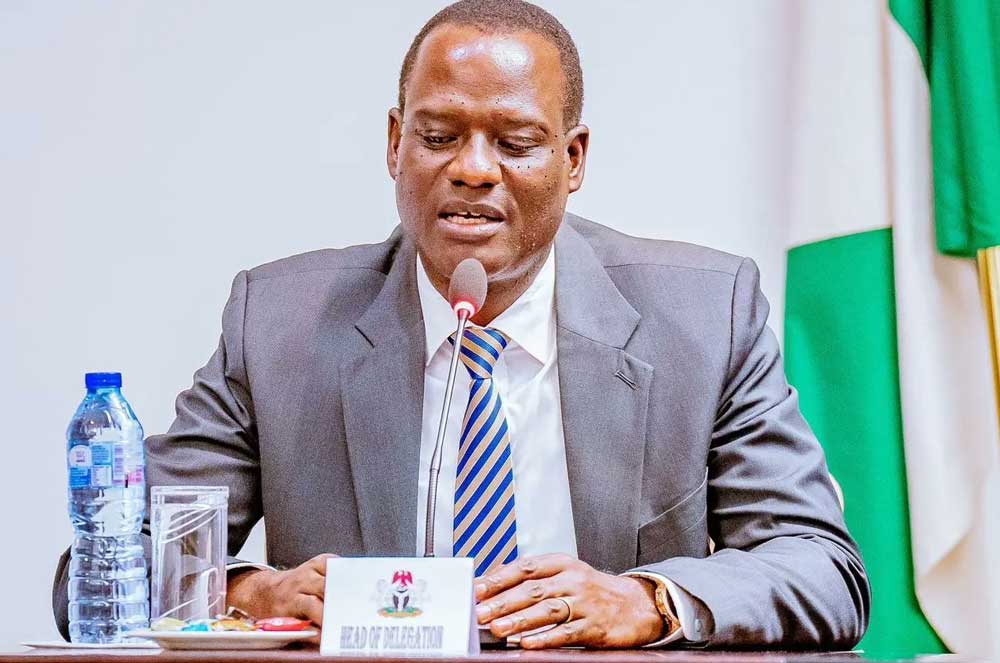
Speaking to investors in London at the Association of Asset Custodians of Nigeria (AACN) 2026 Investor Day, themed ‘Nigeria’s Next Chapter: From Reform to Returns,’ the Minister of Finance and Coordinating Minister of the Economy, Taiwo Oyedele, said that President Bola Tinubu’s reforms were already producing positive results.
Oyedele argued that Nigeria’s economic conversation is shifting beyond the need to undertake reforms towards delivering sustainable returns through increased investment, stronger productivity, higher production, job creation, rising incomes and improved living standards.
DATA:
The source provides no specific investment, productivity or growth figures to quantify the claimed improvement. Instead, Oyedele pointed to what he described as improving macroeconomic fundamentals, deeper capital markets, a redesigned tax system and a more transparent foreign-exchange market.
He also reaffirmed the government’s commitment to mobilising private capital and strengthening institutions.
SIGNIFICANCE:
The message is significant because investors ultimately judge reforms not by policy announcements but by whether they improve the risk-return equation.
Nigeria’s government is therefore attempting to reposition the investment conversation around current economic conditions rather than the negative perceptions that have historically influenced international investor sentiment.
For foreign investors, the credibility of that argument will depend on whether improved macroeconomic conditions translate into predictable rules, stronger institutions, productive investment opportunities and competitive returns.
NEXT MOVE:
The next test is implementation. Investors will be watching whether tax reforms, capital-market development, foreign-exchange transparency and institutional strengthening produce tangible improvements in investment flows, business productivity and returns.
The government will also need to demonstrate that private capital can be mobilised at scale without being undermined by policy uncertainty or institutional weaknesses.
OUR LENS:
Nigeria’s reform narrative is entering a more demanding phase. Stabilising the economy and changing policies are only the first steps; the harder task is proving that those changes can generate investable opportunities and sustainable returns.
Oyedele’s central message to the international investment community was therefore straightforward: Nigeria’s changing fundamentals and expanding opportunities should be assessed “on current evidence, not inherited perceptions.” The real challenge now is ensuring that the evidence investors see is strong enough to change those perceptions permanently.
Johnson Emmanuel is a journalist, covering business, economic affairs and issues of significance to Nigeria’s corporate and public sectors.
Discover more from StakeBridge Media
Subscribe to get the latest posts sent to your email.