

By Jennete Ugo Anya
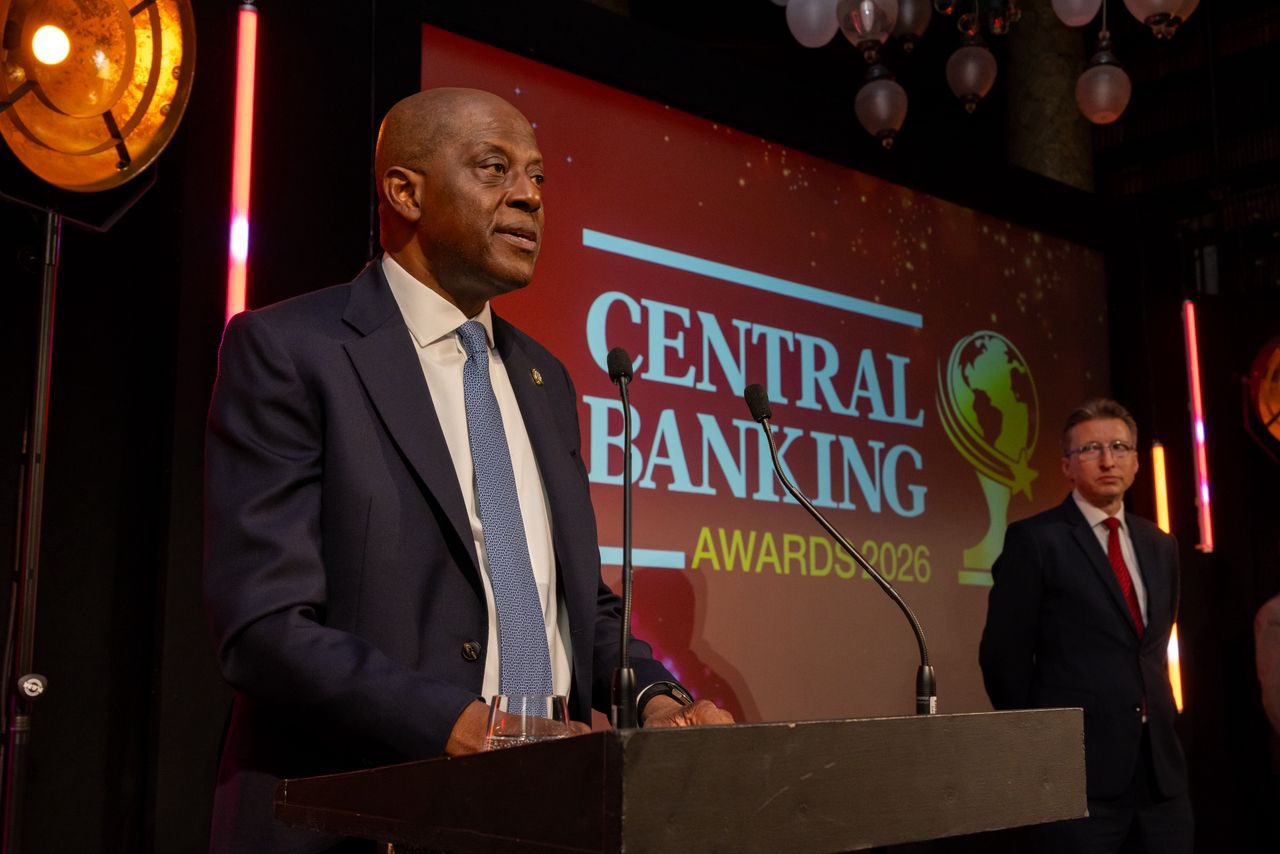
The Central Bank of Nigeria (CBN) has received the Nigerian Economic Society’s (NES) Distinguished Organisation Award, giving external recognition to the monetary authority’s reform programme under Mr. Olayemi Cardoso, the Governor of the CBN. The award comes as the CBN continues efforts to reshape monetary policy, foreign exchange management and the banking sector.
DEVELOPMENT:
The award was presented at the 67th Annual Conference of the NES, held in Abuja from September 7 to 10, 2026. Dr. Victor Oboh, Director of the Monetary Policy Department at the CBN, received the award on behalf of Cardoso.
The recognition reflects reforms implemented by the apex bank over the past three years, particularly in the foreign exchange market, monetary financing and financial-sector regulation.
Key measures include the reform of the foreign exchange market, clearance of longstanding foreign exchange obligations, cessation of Ways and Means financing to the federal government, implementation of Payment System Vision 2028 and the recapitalisation of Nigerian banks.
Together, the measures are intended to strengthen financial-system resilience, improve market efficiency and position Nigerian banks to compete more effectively in the global financial system.
DATA:
The award follows a three-year reform cycle covering monetary policy, foreign exchange, payments infrastructure and banking-sector capitalisation. While the NES recognition is not itself a measure of economic performance, the breadth of reforms being recognised points to an attempt to address structural weaknesses across several parts of the financial system simultaneously.
SIGNIFICANCE:
For investors, financial institutions and businesses, the significance lies in whether institutional reforms can translate into greater policy credibility, improved market functioning and stronger financial-sector capacity.
The cessation of Ways and Means financing is particularly significant because it represents a shift away from direct monetary financing of fiscal deficits. Meanwhile, foreign exchange reforms and the clearance of inherited obligations seek to restore confidence in the FX market, while bank recapitalisation is designed to provide institutions with greater capacity to absorb risks and finance economic activity.
NEXT MOVE:
The focus now shifts from reform announcement to sustained implementation and measurable economic outcomes. Investors will be watching inflation, exchange-rate stability, foreign-exchange liquidity, credit conditions and the ability of recapitalised banks to support productive sectors.
OUR LENS:
The NES award is significant less as an institutional honour than as a validation from Nigeria’s economics community that the CBN’s direction has represented a meaningful break from previous policy practices.
Cardoso described the recognition as an endorsement of the bank’s broader institutional approach.
“The Distinguished Organisation Award is a testament to the Central Bank of Nigeria’s unwavering pursuit of excellence, institutional resilience, and commitment to national development.
“As it continues to implement reforms and innovate to fulfil its mandate, the CBN remains firmly committed to building a stronger economy and a brighter future for Nigeria.”
The deeper test, however, remains whether the reform architecture can produce durable macroeconomic stability and translate financial-sector resilience into stronger investment, production and inclusive economic growth.
Jennete Ugo Anya is a journalist and researcher with interests across Nigeria’s economy, public policy, business, development and strategic communications.
Discover more from StakeBridge Media
Subscribe to get the latest posts sent to your email.