

By Jennete Ugo Anya
The World Trade Organization (WTO) has warned that the global economy is approaching a critical juncture in which the future of international trade cooperation could materially determine long-term economic growth. Its 2026 World Trade Report says strengthening the multilateral trading system could add about $3 trillion to global gross domwestic product (GDP) by 2050, while failure to modernise it could cost the world economy up to 10 percent of output.
DEVELOPMENT:
The report, titled ‘World Trade Report 2026: A Critical Juncture for the World Trading System’, was released on September 15 at the WTO Public Forum. It examines what the rules-based trading system has delivered over eight decades and the pressures now confronting it.
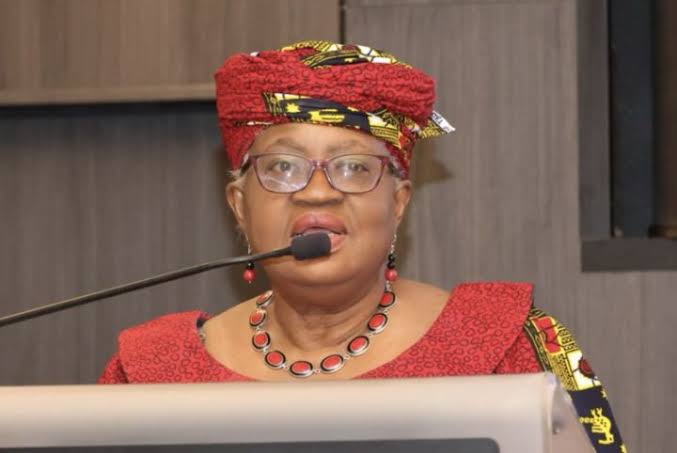
The Director-General (DG) of the WTO, Dr. Ngozi Okonjo-Iweala, said that the system remains central to global economic integration.
“The multilateral trading system has delivered enormous benefits over the past 80 years, helping to create a more integrated and resilient global economy,” she said.
She noted that about 72 percent of global merchandise trade still occurs under WTO most-favoured-nation terms.
“The global trading landscape has changed significantly but the founding logic of the system, that all economies are better off cooperating rather than acting unilaterally, remains as relevant today as ever,” Okonjo-Iweala said.
DATA:
The report projects that a strengthened multilateral framework could increase global GDP by 2.9 percent and exports by 17.9 percent by 2050 relative to the baseline, equivalent to roughly $3 trillion in additional global output.
Least-developed countries could see GDP rise by 7.7 percent, while high-income economies could gain about $1.7 trillion.
The alternative scenarios are significantly weaker. A geopolitically fragmented trading system could reduce global GDP by 5.1 percent and exports by 18.6 percent, while a world dominated by free trade agreements rather than multilateral cooperation could see GDP fall by 6.9 percent and exports by 26.9 percent.
SIGNIFICANCE:
The report turns WTO reform from an institutional debate into an economic-growth question. It argues that the global trading system has helped drive a nearly 50-fold expansion in world trade, but now faces pressures from shifting economic power, industrial policy, digitalisation, environmental transformation and geopolitical tensions.
For emerging economies, particularly LDCs, the stakes are substantial because lower trade costs and greater market access could produce disproportionate gains.
NEXT MOVE:
WTO members will need to determine how trade rules can accommodate digital commerce, services, industrial policy and security concerns without sacrificing openness and predictability.
WTO Chief Economist Robert Staiger presented the report’s findings at the launch, followed by discussions involving Ambassador Kumar Iyer of the United Kingdom, Ambassador Manuel Teehankee of the Philippines, Dr Pinelopi Goldberg of Yale University, Dr Mona Paulsen of the London School of Economics, and Andrew Wilson, Deputy Secretary General (Policy) and Global Policy Director of the International Chamber of Commerce.
OUR LENS:
The report’s central message is that preserving the global trading system does not mean preserving its status quo. Reform has become an economic necessity.
Okonjo-Iweala captured the opportunity when she said: “As members move forward with WTO reform, this difficult moment for the trading system has the potential to become a turning point for renewal and revitalisation.”
Her conclusion is equally consequential: “It is in their power to do so again. So let’s not be fearful: the system has faced challenges before and has been able to renew and revitalise itself. We can do it again.”
Discover more from StakeBridge Media
Subscribe to get the latest posts sent to your email.