

By Olumide Johnson
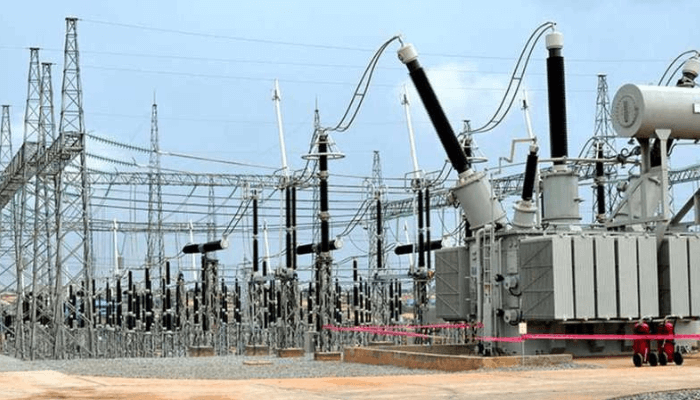
The federal government is moving more than 300 containers of critical power equipment into the transmission network as it intensifies efforts to strengthen grid stability and address infrastructure bottlenecks nationwide.
DEVELOPMENT:
Minister of Power, Mr. Joseph Olasunkanmi Tegbe, said that the Ministry and relevant government agencies had facilitated the “release of more than 300 containers of critical power equipment held at the ports.”
The equipment will now undergo inspection before deployment and installation for transmission upgrades.
Tegbe also said that the intervention addresses the contradiction of unfinished power projects existing alongside critical equipment stranded in storage. The next phase will also deepen grid stabilisation along the Lagos, Enugu-Port Harcourt and Abuja-Kaduna-Kano corridors, alongside technical audits to identify weak points and guide investment.
DATA:
New transformers commissioned at Apapa, Ijora, Alausa and Lekki have unlocked 672MW, while a 300MVA transformer energised at Katampe unlocked another 240MW.
“Generation and transmission had exceeded 5,000MW over recent weeks, compared with the 3,700MW–4,700MW range before June, while a generation peak of 5,330MW was recorded during August and September,” Tegbe stated.
The Federal Government has also raised N1.23 trillion towards a N3.3 trillion power-sector debt backlog.
The resolution of litigation has further unlocked procurement of approximately 1.4 million smart meters, while military formations have reached 90,000 installations.
SIGNIFICANCE:
For investors and businesses, the significance is the potential improvement in the transmission system’s ability to absorb and distribute available generation.
The government is also developing a Transmission Super Grid intended to improve utilisation of existing generation and distribution assets while preparing the network for future electricity demand.
However, the scale of the debt backlog and repeated grid disruptions indicate that equipment deployment alone does not resolve the sector’s structural constraints.
NEXT MOVE:
The immediate watchpoints are the inspection, installation and commissioning of the released equipment, alongside technical audits of priority transmission corridors.
The government’s March 2026 proposal for a Grid Asset Management Company also places greater attention on the management of transmission infrastructure as a distinct investment and operational challenge.
OUR LENS:
The deeper issue is whether Nigeria can convert infrastructure spending into sustained grid reliability.
The latest intervention combines physical equipment deployment with debt settlement, transformer capacity additions, smart-meter procurement and corridor-level technical audits. The reported increase in generation and transmission above 5,000MW also raises the importance of ensuring that the transmission network can carry available power consistently.
The 300 containers therefore represent more than equipment waiting to be installed. Their economic value will ultimately depend on how quickly they are deployed, where they are installed and whether the wider transmission system can sustain the additional capacity.
Olumide Johnson is a journalist, reporting on energy, maritime, business, and developments shaping Nigeria’s economy.
Discover more from StakeBridge Media
Subscribe to get the latest posts sent to your email.