

By Ayo Susan
Africa’s digital infrastructure market is attracting demand from data localisation policies, but infrastructure builders say high construction costs, expensive power and limited access to capital are preventing that demand from translating into faster capacity deployment.
DEVELOPMENT:
The issue dominated the opening panel of ITW Africa, titled ‘Africa’s Moment to Deliver Digital Infrastructure at Scale,’ where executives from data centre, cloud, telecoms and connectivity companies identified the economics constraining the continent’s digital infrastructure build-out.
Andile Ngcaba, Chairman of Convergence Partners, put the central challenge in a single figure: building data centre capacity in Africa costs about $12 million per megawatt. He argued that the figure needs to fall toward $5 million per megawatt for African locations to become significantly more competitive for neocloud and AI compute operators.
Africa is also competing for capital with markets such as India, where incentives are being deployed to attract AI data centres. Equipment costs, including the importation of GPUs, add another layer of pressure.
Power is equally decisive. Ngcaba identified about 10 US cents per kilowatt-hour as a critical threshold for compute-intensive workloads, while other panellists stressed the importance of reliable supply, predictable regulation and bankable anchor customers.
The demand side is being strengthened by data sovereignty policies. Wole Abu of Equinix cited data localisation requirements from the Central Bank of Nigeria (CBN) and National Information Technology Development Agency (NITDA) as drivers of domestic capacity demand. Kenya is seeing similar demand from public-sector data consolidation and localisation requirements.
But the industry faces a wider affordability constraint. Telkom Kenya CEO, Mugo Kibati, noted that while mobile networks cover about 90 percent of Africa, only around 28 percent of the population uses the internet.
NUMBERS:
The economics of Africa’s digital infrastructure challenge can be reduced to a handful of investment metrics:
- $12m/MW: approximate current African data centre construction cost cited by Ngcaba.
- $5m/MW: target cost required to make African locations more competitive for emerging neocloud and AI compute demand.
- ~$11.3m/MW: 2026 global average construction cost cited from JLL, placing African construction broadly within global benchmarks.
- ~10 cents/kWh: power-cost threshold identified for compute-intensive workloads.
- 90 percent: approximate continental mobile network coverage.
- 28 percent: estimated share of Africans actually using the internet.
The gap between coverage and usage is particularly important. It suggests that infrastructure availability alone will not produce sustained digital demand unless affordability improves.

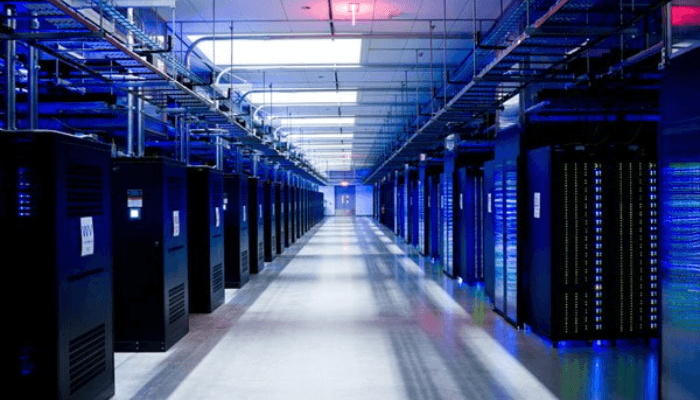
Africa’s data centre expansion faces a cost test as investors seek lower construction costs, reliable power and stronger digital demand.
SIGNIFICANCE:
For infrastructure investors, the issue is moving from whether Africa needs digital infrastructure to whether individual projects can produce investable returns.
Data localisation creates an initial demand pool, particularly from banks, governments and other regulated institutions. But policy-driven demand needs to be converted into contracted workloads capable of underwriting new capacity.
That makes power, construction cost, equipment duties, permitting, regulation, currency stability, capital repatriation and network interconnection part of the same investment equation.
The implication for governments is equally significant. Many of the variables investors are evaluating are policy-dependent. Tax treatment, GPU import costs, power procurement frameworks, permitting speed and regulatory consistency can materially alter project economics without governments having to directly subsidise construction.
NEXT MOVE:
The market should watch whether data localisation policies in Nigeria and Kenya begin producing contracted data centre capacity rather than simply creating theoretical demand.
The other indicators are more fundamental: whether construction costs move toward the $5 million per megawatt target, whether reliable power can be secured below the cited 10 cents per kilowatt-hour threshold, and whether infrastructure operators can secure anchor workloads before committing large amounts of capital.
Longer term, internet usage and affordability will determine whether Africa develops a deep digital demand base beyond government and regulatory requirements.
OUR LENS:
Africa’s digital infrastructure problem is not fundamentally a shortage-of-demand story. It is a conversion problem between demand, project economics and investable capital.
Localisation rules can force workloads onto African infrastructure, but they cannot by themselves make data centres commercially competitive. Similarly, mobile coverage can reach most of the population without generating corresponding digital consumption if devices, data and services remain unaffordable.
The $12 million-to-$5 million cost gap therefore matters because it captures the central investment question: can Africa make digital infrastructure cheap enough to attract capital, reliable enough to retain workloads, and affordable enough to generate mass usage?
Until those three economics begin moving together, Africa can have strong digital infrastructure demand without building a sufficiently strong digital infrastructure business model.
Ayo Susan is a journalist, covering business, society and emerging developments with an emphasis on credible and engaging storytelling.
Discover more from StakeBridge Media
Subscribe to get the latest posts sent to your email.