

By Ogbuefi O. Emelike
Nigeria has taken a decisive step toward defence industrial localisation following the signing of a Memorandum of Understanding (MoU) between the Defence Industries Corporation of Nigeria (DICON) and Terra Industries Limited.
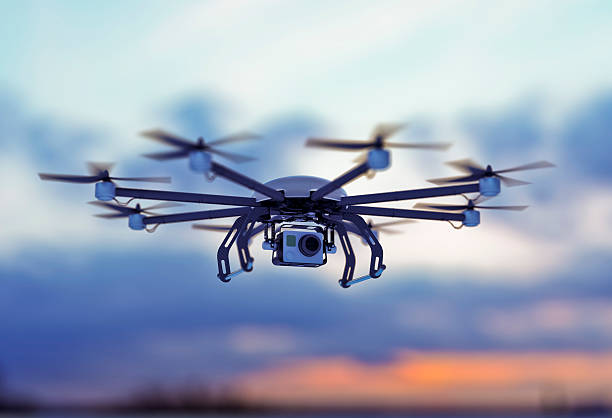
The agreement establishes a jointly owned subsidiary to produce drones, cybersecurity systems, robotics platforms and related technologies within Nigeria, marking a shift away from long-standing dependence on imported military hardware.
DECISION HIGHLIGHT
- Structure: DICON–Terra Joint Venture Company
- Legal basis: DICON Act 2023
- Technology focus: UAVs, cybersecurity, robotics
- Strategic goal: reduce defence import dependence
- Operating model: Public-Private Partnership
- Capability pillar: R&D and technology transfer
- Geographic intent: position Nigeria as regional hub
DECISION MEMO
The DICON–Terra partnership represents one of the clearest signals yet that Nigeria is attempting to reposition its defence posture from procurement dependency toward domestic capability building.
For decades, Nigeria’s security architecture has relied heavily on foreign suppliers, a model that has repeatedly exposed the country to foreign exchange strain, long procurement timelines and geopolitical supply risk. The new joint venture seeks to reverse that structural vulnerability by localising production of high-technology defence systems.
Maj. Gen. BI Alaya, Director-General (DG) of DICON, framed the agreement in strategic terms, describing it as “a transformational step toward strengthening Nigeria’s defence manufacturing base, reducing import dependence, and positioning Nigeria as a regional hub for advanced innovation.” The language underscores that this is not merely an industrial project but a sovereignty play.
The partnership architecture is notable. Executed under the DICON Act 2023, the venture formalises the corporation’s shift toward Public-Private Partnership (PPP) models, reflecting recognition that state-only defence manufacturing has historically struggled to achieve scale and technological depth.
Terra Industries’ role is central to the technology transfer equation. The firm will provide technical expertise, coordinate equipment procurement and facilitate both local and international training. Nathaniel Nwachukwu, Chief Executive Officer (CEO) of Terra Industries Limited, emphasised the confidence dimension, stating the collaboration “demonstrates confidence in indigenous Nigerian engineering capability and creates a platform for sustainable defence technology development.”
The strategic focus on drones and cybersecurity is also well aligned with modern security realities. Contemporary conflict and internal security operations increasingly rely on unmanned systems, digital intelligence and cyber resilience rather than purely conventional hardware.
However, the initiative’s success will hinge on execution discipline. Nigeria has announced several localisation drives in the past that struggled with scale economics, supply chain depth and sustained funding. Building assembly lines is relatively straightforward; building globally competitive defence manufacturing ecosystems is materially harder.
Key variables to watch include the depth of technology transfer, the extent of local component sourcing, and whether the joint venture evolves beyond assembly into genuine intellectual property development.
If these hurdles are cleared, the venture could meaningfully reduce import leakage and strengthen Nigeria’s defence autonomy. If not, it risks becoming another limited assembly programme with modest strategic impact.
DATA BOX
Defence JV Snapshot
- Partners: DICON and Terra Industries
- Legal framework: DICON Act 2023
- Core outputs: UAVs, cybersecurity systems, robotics
- Ownership: jointly owned subsidiary
- Delivery model: PPP structure
- Capability pillars: R&D, training, technology transfer
- Strategic objective: import substitution and export potential
WHO WINS / WHO LOSES
Who Wins
- Nigerian defence manufacturing ecosystem
- Local engineering and cybersecurity talent
- Armed forces through faster equipment access
- Ancillary manufacturing and logistics firms
- Investors in defence technology infrastructure
Who Loses
- Foreign defence suppliers to Nigeria
- Import-dependent procurement channels
- FX outflows linked to defence purchases
- Low-capability local assemblers unable to compete
POLICY SIGNALS
- Nigeria is accelerating defence industrial self-sufficiency.
- PPP models are now central to defence manufacturing strategy.
- Technology transfer is being prioritised alongside production.
- Drone and cyber capability are emerging national security priorities.
- Industrial policy is increasingly linked to security sovereignty.
INVESTOR SIGNAL
For investors, the initiative signals emerging opportunity in Nigeria’s defence technology and dual-use manufacturing space. If the JV achieves credible scale, it could catalyse a broader ecosystem spanning electronics, software, and advanced fabrication.
However, defence industrial projects carry long gestation periods and high execution sensitivity. Investors will look for clarity on funding structure, procurement guarantees from security agencies, and export market access before assigning strong commercial value.
Early positioning may favour technical partners and specialised component suppliers rather than broad capital deployment.
RISK RADAR
- Technology transfer depth risk
- Funding continuity and budget discipline
- Supply chain localisation gaps
- Execution slippage on production timelines
- Procurement off-take uncertainty
- Export control and regulatory barriers
- Capability dilution into simple assembly
Bottom line: the DICON–Terra joint venture marks a strategically coherent push toward defence localisation, but its ultimate credibility will depend on whether Nigeria can convert partnership intent into genuine high-technology manufacturing capability rather than limited domestic assembly.
Discover more from StakeBridge Media
Subscribe to get the latest posts sent to your email.