

By Ayo Susan
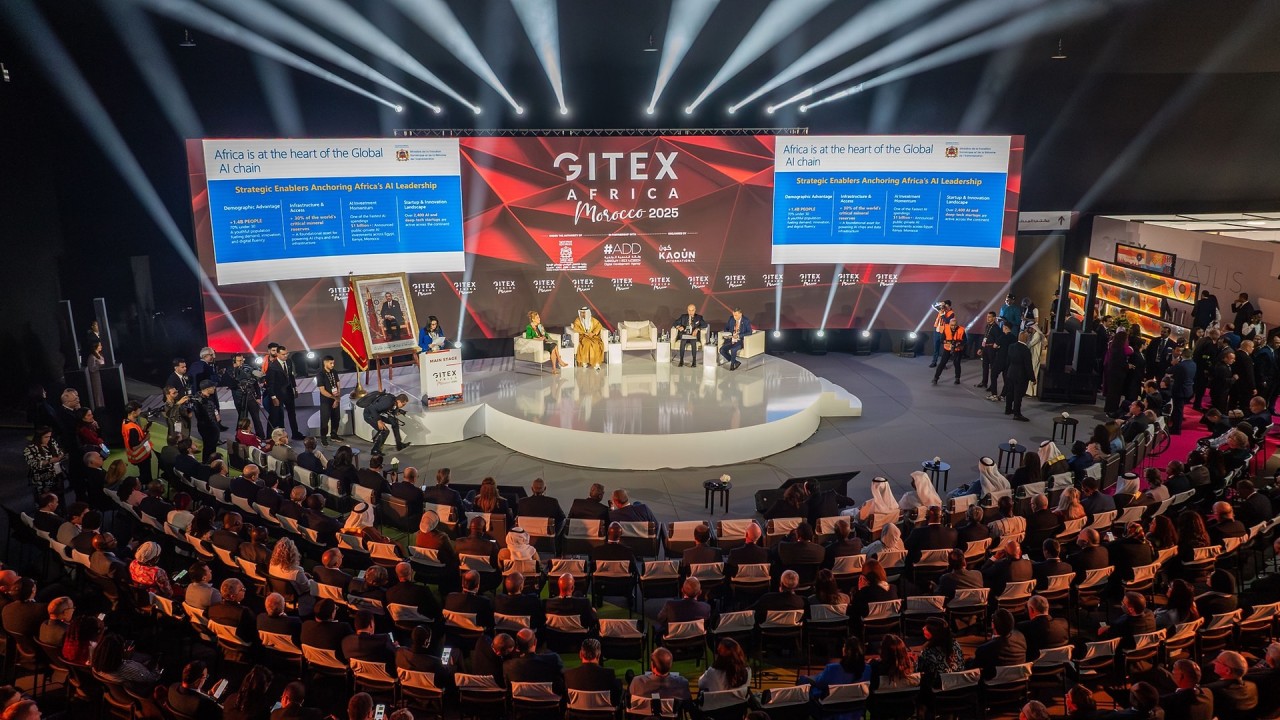
GITEX Africa 2026 recently opened in Marrakech, convening 1,450 companies from 145 countries and over 400 investors managing more than $350 billion in assets. The event, themed “Catalysing Africa’s Digital Economy in the Age of Artificial Intelligence,” brings together global technology actors and African innovators within a rapidly expanding digital ecosystem.
The forum highlights Africa’s projected digital economy growth to $2.9 trillion by 2030 and the expansion of the artificial intelligence market from $4.5 billion to $16.5 billion within the same period.
DECISION HIGHLIGHT
Global and regional stakeholders are consolidating engagement in Africa’s digital economy, positioning the continent as a strategic growth frontier for technology investment and innovation.
DECISION MEMO
GITEX Africa 2026 reflects a convergence of global capital, technology, and policy interest around Africa’s digital transformation trajectory. The scale of participation, particularly from countries such as the United States, China, South Korea, and France, indicates intensifying competition to shape market standards, investment flows, and innovation ecosystems.
The presence of 400 investors managing over $350 billion signals a shift from exploratory engagement to capital deployment readiness. This suggests that Africa’s digital economy is transitioning from a narrative of potential to one of structured opportunity, supported by demographic expansion and increasing technology adoption.
At the same time, the emphasis on African entrepreneurs and creatives underscores a structural imbalance between innovation capacity and capital access. While local innovators are developing context-specific solutions, capital concentration remains skewed towards global investors and external institutions.
The projected entry of 375 million young Africans into the workforce by 2030 reinforces the scale of demand for digital infrastructure, employment, and innovation ecosystems. This demographic dynamic positions digital technology not only as a growth sector but as a critical economic absorber.
However, the strategic question raised for African institutions centres on participation and positioning. As external actors increase their presence, the extent to which local institutions shape regulatory frameworks, capital allocation, and ecosystem governance will determine long-term value retention.
The event therefore represents both an opportunity and a competitive inflection point, where Africa’s digital economy is increasingly contested by global and domestic actors.
DATA BOX
- Participating companies: 1,450
- Countries represented: 145
- Investors: 400+
- Assets under management: $350 billion+
- Africa digital economy projection: $2.9 trillion by 2030
- African artificial intelligence market: $4.5 billion to $16.5 billion
- Workforce growth: 375 million entrants by 2030
WHO WINS / WHO LOSES
Global technology firms and investors gain early positioning in a high-growth market.
African startups and innovators gain visibility and potential access to capital.
Host ecosystems benefit from increased deal flow and partnerships.
However, local institutions risk marginalisation if they do not actively shape market structures.
Capital-constrained innovators may remain underfunded despite increased global attention.
POLICY SIGNALS
The event signals increasing global recognition of Africa’s digital economy as a strategic priority.
It also highlights the need for African governments to strengthen policy frameworks around digital infrastructure, data governance, and innovation financing.
There is an implicit push towards ecosystem coordination to ensure local participation in value creation.
INVESTOR SIGNAL
Africa’s digital sector is emerging as a credible investment destination, supported by demographic scale and market expansion projections.
Investor interest appears to be shifting towards structured engagement, with potential for increased deal activity and capital deployment.
However, investment decisions will depend on regulatory clarity, infrastructure readiness, and execution capacity.
RISK RADAR
Capital access risk persists for local innovators despite increased investor presence.
Strategic control risk may arise if external actors dominate market structuring and value capture.
Execution risk remains in scaling digital infrastructure to meet projected demand.
Regulatory risk is evident where policy frameworks lag behind technological adoption.
There is also competitive risk, as multiple global players seek to influence market direction simultaneously.
Discover more from StakeBridge Media
Subscribe to get the latest posts sent to your email.