

By Jennete Ugo Anya
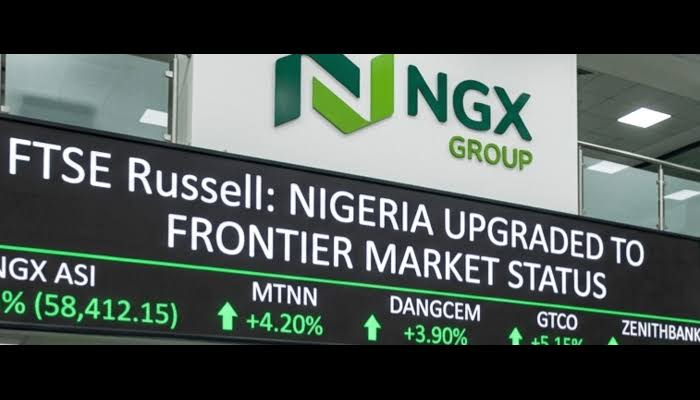
FTSE Russell has restored Nigeria to Frontier Market status from “Unclassified”, following approval by its Index Governance Board based on recommendations from its Equity Country Classification Advisory Committee and Policy Advisory Board. The reclassification, announced in March 2026, will take effect from September 2026.
The decision reflects improvements in market infrastructure and accessibility within the Nigerian capital market, particularly upgrades linked to the Nigerian Exchange Group Plc. The disclosure highlights enhancements in trading systems, settlement processes, and transparency as key drivers.
DECISION HIGHLIGHT
FTSE Russell has re-admitted Nigeria into its Frontier Market index universe, signalling that recent infrastructure and regulatory reforms have met minimum global investability thresholds, while acknowledging unresolved structural inefficiencies.
DECISION MEMO
The reclassification represents a technical validation of Nigeria’s market reforms rather than a full endorsement of market depth or liquidity resilience. FTSE Russell’s methodology combines structural metrics with investor experience, indicating that Nigeria’s capital market has crossed baseline thresholds for accessibility, repatriation, and operational efficiency.
The Nigerian Exchange Group Plc’s infrastructure upgrades appear central to the decision. The Group Managing Director (GMD) and Chief Executive Officer (CEO), Nigerian Exchange Group Plc, Mr. Temi Popoola, stated: “This milestone reflects… deliberate efforts to strengthen the underlying market infrastructure that supports efficient trading, transparency, and investor access.” Popoola added that the focus remains on “deepen[ing] reforms, address[ing] identified gaps, and sustain[ing] momentum towards higher market classifications.”
The inclusion signals progress in aligning Nigeria’s post-foreign exchange volatility environment with global investor expectations. However, FTSE Russell’s retention of identified gaps, including foreign exchange liquidity constraints and limited derivatives infrastructure, suggests that Nigeria’s re-entry is conditional on continued reform continuity.
The decision also reflects improved regulatory coordination across market institutions, particularly in capital repatriation and settlement efficiency, where a T+2 cycle now operates. This aligns Nigeria with standard practices in comparable frontier markets, reducing friction for cross-border investors.
DATA BOX
- Classification change: Unclassified to Frontier Market
- Effective date: September 2026
- Review cycle: March 2026 interim review
- Settlement cycle: T+2
- Assessment ratings: “Pass” across regulatory oversight, capital repatriation, brokerage competitiveness, tax framework, settlement efficiency
WHO WINS / WHO LOSES
Global asset managers and index-tracking funds gain access to a reclassified market, enabling portfolio reallocation into Nigeria. Domestic listed companies benefit from potential liquidity inflows and improved valuation benchmarks.
The Nigerian Exchange Group Plc strengthens its institutional credibility as infrastructure improvements receive external validation.
However, markets competing for frontier allocations may experience marginal capital rebalancing. Domestic investors could face increased exposure to foreign-driven volatility as inflows and outflows intensify.
POLICY SIGNALS
The reclassification reinforces the effectiveness of incremental, infrastructure-led reform within Nigeria’s capital market. It signals that regulatory coordination across the Securities and Exchange Commission (SEC) and market operators is yielding measurable outcomes.
At the same time, the explicit identification of gaps in foreign exchange depth and derivatives markets indicates that policy focus must now shift from access to sophistication, particularly in liquidity management and risk hedging instruments.
INVESTOR SIGNAL
The Frontier Market status restores Nigeria’s eligibility within FTSE Russell-tracked indices, potentially triggering passive inflows from index-linked funds. It also improves Nigeria’s visibility within active frontier and emerging market allocation strategies.
However, the signal remains qualified. Investors are likely to interpret the reclassification as an entry point contingent on foreign exchange stability, transaction cost efficiency, and continued reform execution.
RISK RADAR
Foreign exchange market depth remains a primary constraint, with potential implications for capital repatriation despite current improvements.
Market structure risks persist, particularly limited derivatives availability and evolving custody and clearing frameworks.
There is also reform sustainability risk, where policy inconsistency or regulatory slippage could reverse classification gains.
Finally, increased foreign participation introduces volatility risk, as Nigeria becomes more sensitive to global risk-off cycles and capital flow reversals.
Discover more from StakeBridge Media
Subscribe to get the latest posts sent to your email.