

By Kingsley Ani
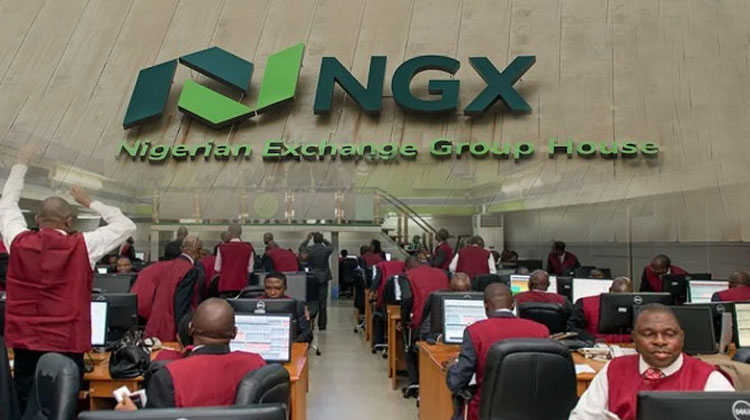
The Nigerian Exchange Group (NGX) has recently introduced two new index futures contracts, NGX30U6 and NGXPENSIONU6, extending its derivatives offerings within the domestic capital market. The contracts, listed on March 16, 2026, are structured to expire on September 18, 2026, providing investors with instruments for hedging and directional market exposure.
David Adonri, Vice Chairman of Highcap Securities, described the move as reinforcing innovation and positioning the Exchange as a broader trading hub beyond traditional equities.
DECISION HIGHLIGHT
The Nigerian Exchange Group is accelerating product diversification, with a deliberate push to institutionalise derivatives as a core component of Nigeria’s capital market architecture.
DECISION MEMO
The introduction of NGX30U6 and NGXPENSIONU6 reflects a strategic attempt to align Nigeria’s capital market with global financial structures. However, the expansion raises a fundamental question, whether product innovation is outpacing market readiness.
Adonri’s endorsement of the listing as a marker of innovation is consistent with the Exchange’s positioning. Yet, derivatives markets are not defined by product availability alone but by liquidity depth, pricing efficiency, and participant sophistication.
The new contracts enable hedging and speculative positioning, theoretically improving market efficiency. Investors can offset downside risk or take leveraged positions on index movements without holding underlying assets. This aligns with global market practice.
However, Nigeria’s capital market remains structurally shallow, with limited institutional participation relative to advanced markets. The introduction of leverage-based instruments in such an environment increases systemic exposure, particularly where risk management capacity among retail participants is uneven.
The inclusion of a pension-linked futures contract suggests an attempt to integrate long-term institutional capital into derivatives trading. This introduces a layer of complexity, as pension fund managers operate within strict regulatory frameworks that prioritise capital preservation. The practical uptake of such instruments will depend on regulatory clarity and internal risk governance within pension institutions.
While the contracts expand financial tools, they do not directly resolve underlying constraints such as low market liquidity, limited investor education, and concentration of market activity in a narrow set of equities.
The broader implication is that the Exchange is prioritising structural evolution through product expansion, but the effectiveness of this approach will depend on whether market infrastructure and participant capacity can absorb the added complexity.
DATA BOX
- NGX30 Futures (NGX30U6): Opened at N7,601.75
- NGX Pension Futures (NGXPENSIONU6): Opened at N10,199.50
- Listing date: March 16, 2026
- Expiry date: September 18, 2026
WHO WINS / WHO LOSES
Institutional investors, particularly asset managers and proprietary trading firms, gain access to more advanced risk management and trading instruments.
Brokerages and the Nigerian Exchange Group benefit from increased trading activity and product diversification.
Retail investors face elevated risk exposure due to leverage and potential mispricing, particularly in a market with limited derivatives experience.
POLICY SIGNALS
The Nigerian Exchange Group is signalling a transition toward a multi-asset market structure, reducing reliance on equities and fixed income instruments.
This aligns with broader ambitions to position Nigeria’s capital market within global financial systems, though regulatory and supervisory frameworks must evolve in parallel.
INVESTOR SIGNAL
The introduction of index futures suggests a maturing market with expanding financial instruments, potentially attracting more sophisticated investors.
However, investor confidence will depend on liquidity depth, transparency in pricing, and the robustness of clearing and settlement systems.
RISK RADAR
- Low liquidity in derivatives segment limiting price discovery
- Elevated leverage risk, particularly for retail participants
- Limited investor education on derivatives trading
- Regulatory gaps in overseeing complex financial instruments
- Potential mismatch between product sophistication and market depth
- Concentration risk within underlying equity indices
The expansion of derivatives reflects ambition toward market sophistication. Its success will depend less on product introduction and more on whether Nigeria’s capital market can sustain the complexity these instruments require.
Discover more from StakeBridge Media
Subscribe to get the latest posts sent to your email.