

By Jennete Ugo Anya
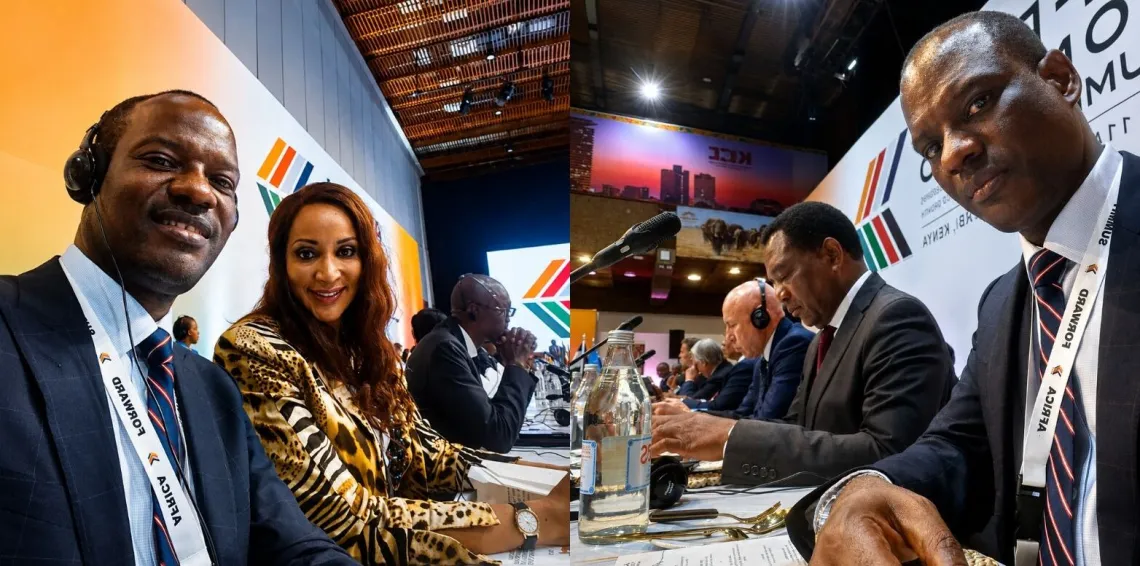
The Honourable Minister of Finance and Coordinating Minister of the Economy, Mr. Taiwo Oyedele, speaking recently at the Africa Forward Summit in Nairobi, argued that Africa’s industrialisation prospects remain constrained by structural weaknesses within the international financial system. He stated that African economies continue to face disproportionately high capital costs driven by “unfair risk assessment” and what he described as a “prejudice premium.” He called for reforms to global financing structures while also urging African governments to improve governance, policy stability, investment frameworks and regional integration to attract long-term capital into productive sectors.
DECISION HIGHLIGHT
The intervention reflects increasing African policy pressure for a transition from aid-dependent financing structures toward productivity-driven capital mobilisation and investment-led development.
DECISION MEMO
Oyedele’s remarks capture a growing consensus among African policymakers that the continent’s development constraints are no longer viewed solely as domestic governance failures, but also as consequences of structural imbalances within the global financial architecture.
His argument that Africa faces a “prejudice premium” highlights longstanding concerns that global risk pricing models disproportionately penalise African economies regardless of underlying reform progress or investment potential.
According to Oyedele: “One of the major conversations at the recently concluded Africa Forward Summit in Nairobi was the urgent need to reform the international financial architecture. Africa continues to bear a disproportionate cost of capital, driven largely by unfair risk assessment and the attendant ‘prejudice premium.”
The Minister further argued that the current system limits Africa’s industrialisation capacity through “high borrowing costs,” “restrictive financing terms,” “limited access to long-term capital,” and “inadequate financing for productivity and value addition.”
The remarks also signal an ideological shift away from crisis-driven development financing toward capital structures capable of supporting industrial productivity, infrastructure and regional manufacturing ecosystems.
At the same time, Oyedele acknowledged that internal reforms remain necessary. He stated that Africa “must also do more internally to strengthen governance and policy stability, create investment-friendly systems, respect contracts and the rule of law, and deepen regional integration.”
His warning that “fragmented small markets cannot compete effectively in an integrated global economy” reinforces increasing pressure for deeper implementation of the African Continental Free Trade Area framework and broader economic integration strategies.
The emphasis on mobilising domestic savings, including pension assets, also reflects growing recognition that Africa’s long-term investment sustainability may depend less on sovereign borrowing and more on unlocking institutional capital pools within the continent itself.
Oyedele stated: “With over $120 trillion in global private capital seeking opportunities, Africa must position itself as an investment destination, not just a development conversation.”
He further argued that financing priorities should shift “from merely extracting raw materials and funding emergencies to enabling value addition, infrastructure, skills development, regional value chains, technology and innovation. “Africa’s future will not be built on dependency, but on productivity, integration, and value creation,” Oyedele said.
DATA BOX
- Event: Africa Forward Summit
- Location: Nairobi, Kenya
- Key speaker: Taiwo Oyedele
- Major issues identified:
- High borrowing costs
- Restrictive financing terms
- Limited long-term capital access
- Weak financing for productivity and value addition
- Estimated global private capital referenced: over $120 trillion
- Strategic focus areas proposed:
- Infrastructure
- Regional value chains
- Technology
- Skills development
- Industrial productivity
- Pension asset mobilisation
- Key structural themes: governance, integration, investment competitiveness
WHO WINS / WHO LOSES
Winners:
- African economies pursuing industrialisation and regional integration
- Infrastructure and manufacturing sectors requiring patient capital
- Institutional investors seeking emerging market opportunities
- African startups and productive industries needing long-term financing
Losers:
- Commodity-dependent growth models
- Economies with weak governance and policy inconsistency
- Short-term emergency financing structures lacking productivity focus
POLICY SIGNALS
The remarks signal intensifying African advocacy for reforms in global financial governance alongside stronger continental focus on regional integration, domestic capital mobilisation and investment-driven economic transformation.
INVESTOR SIGNAL
Oyedele’s comments reinforce efforts to reposition Africa as an investment destination capable of absorbing institutional and private capital into productive sectors. The emphasis on governance, rule of law and regional integration may also strengthen investor confidence if matched by implementation consistency.
RISK RADAR
Africa remains exposed to high sovereign risk pricing, currency instability, fragmented markets, governance weaknesses and global capital market volatility. Failure to implement domestic reforms alongside international advocacy may weaken the continent’s ability to attract long-term productive investment at competitive financing costs.
Discover more from StakeBridge Media
Subscribe to get the latest posts sent to your email.