

By Ovio Peters
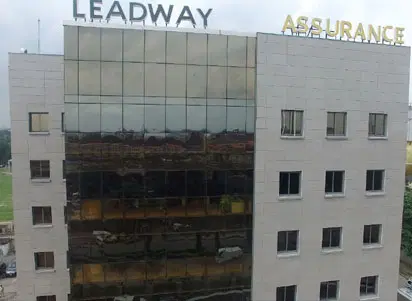
Leadway Assurance Company Limited has renewed its support for Nigeria’s creative economy and small business ecosystem by sponsoring the Lagos Leather Fair (LLF) for the fourth consecutive year. The ninth edition of the fair will hold on 27 and 28 June 2026 at the EPAC Centre, Victoria Island, Lagos, under the theme, ‘Beyond the Hide: Scaling Value, Building Industry, Driving Growth.’ The initiative is focused on strengthening Africa’s leather, craftsmanship and creative manufacturing value chains. Olusakin Labeodan, Managing Director and Chief Executive Officer of Leadway Pensure, recently said that the sponsorship aligns with Leadway’s broader objective of promoting enterprise resilience, value retention and sustainable business growth.
DECISION HIGHLIGHT
Leadway is positioning support for the creative and manufacturing ecosystem as a long-term economic development strategy rather than a conventional corporate sponsorship activity.
DECISION MEMO
The significance of Leadway’s continued involvement lies in its focus on value-chain development within a sector that remains under-industrialised despite abundant raw material availability. Nigeria’s leather industry has long operated below its value-creation potential, exporting significant volumes of raw materials while capturing limited manufacturing value.
By backing a platform dedicated to design, production, innovation and market access, Leadway is aligning itself with a broader industrialisation agenda centred on local processing and enterprise development.
Labeodan described small and medium enterprises as central to economic transformation. According to Labeodan, “SMEs are the critical drivers of Nigeria’s economic growth, innovation, and generational wealth creation. The leather industry provides huge opportunities for our young entrepreneurs and creative minds to be part of a vibrant, resilient and incrementally growing value retention economy.”
The intervention reflects growing recognition that creative industries can function as manufacturing ecosystems rather than solely cultural sectors. The fair’s emphasis on scaling value and building industry suggests a deliberate attempt to move participants higher up the production chain.
Labeodan further noted, “It is within ecosystems such as this, where the potential for transformation is high, that Leadway continues to deepen its engagement and support.” The statement underscores a strategy that links enterprise development, local production and export competitiveness.
The broader implication is that Nigeria’s creative economy is increasingly being viewed through an industrial policy lens, where value addition, job creation and export diversification become as important as artistic output.
DATA BOX
- Sponsor: Leadway Assurance Company Limited
- Sponsorship duration: Four consecutive years
- Event: Lagos Leather Fair (9th Edition)
- Date: 27-28 June 2026
- Venue: EPAC Centre, Victoria Island, Lagos
- Theme:
- “Beyond the Hide: Scaling Value, Building Industry, Driving Growth”
- UNIDO 2025 estimate:
- More than 750,000 metric tonnes of raw hides and skins processed annually in Nigeria
- Strategic focus:
- Leather manufacturing
- Creative economy
- SME development
- Value-chain expansion
- Export potential
WHO WINS / WHO LOSES
Who Wins
- Leather manufacturers and artisans
- Small and medium enterprises
- Creative entrepreneurs
- Export-oriented producers
- Young entrepreneurs entering the leather value chain
Who Loses
- Exporters dependent on low-value raw material sales
- Businesses unable to move beyond primary production
- Producers disconnected from formal value chains and market access opportunities
POLICY SIGNALS
- Creative industries are increasingly being integrated into industrial development discussions.
- Value addition is becoming a priority within non-oil export sectors.
- SME development remains central to enterprise growth strategies.
- Public and private stakeholders are placing greater emphasis on local manufacturing ecosystems.
INVESTOR SIGNAL
The leather industry represents an underdeveloped value-retention opportunity. Businesses focused on processing, design, manufacturing, branding and export development may benefit from rising attention to local value creation and creative-sector industrialisation.
RISK RADAR
- Limited processing capacity may constrain value-chain expansion.
- Infrastructure and logistics bottlenecks could affect competitiveness.
- Access to finance remains a challenge for many creative enterprises.
- Continued export of raw materials may weaken domestic value capture.
- Global demand fluctuations could affect export-oriented growth prospects.
Discover more from StakeBridge Media
Subscribe to get the latest posts sent to your email.