

By Johnson Emmanuel
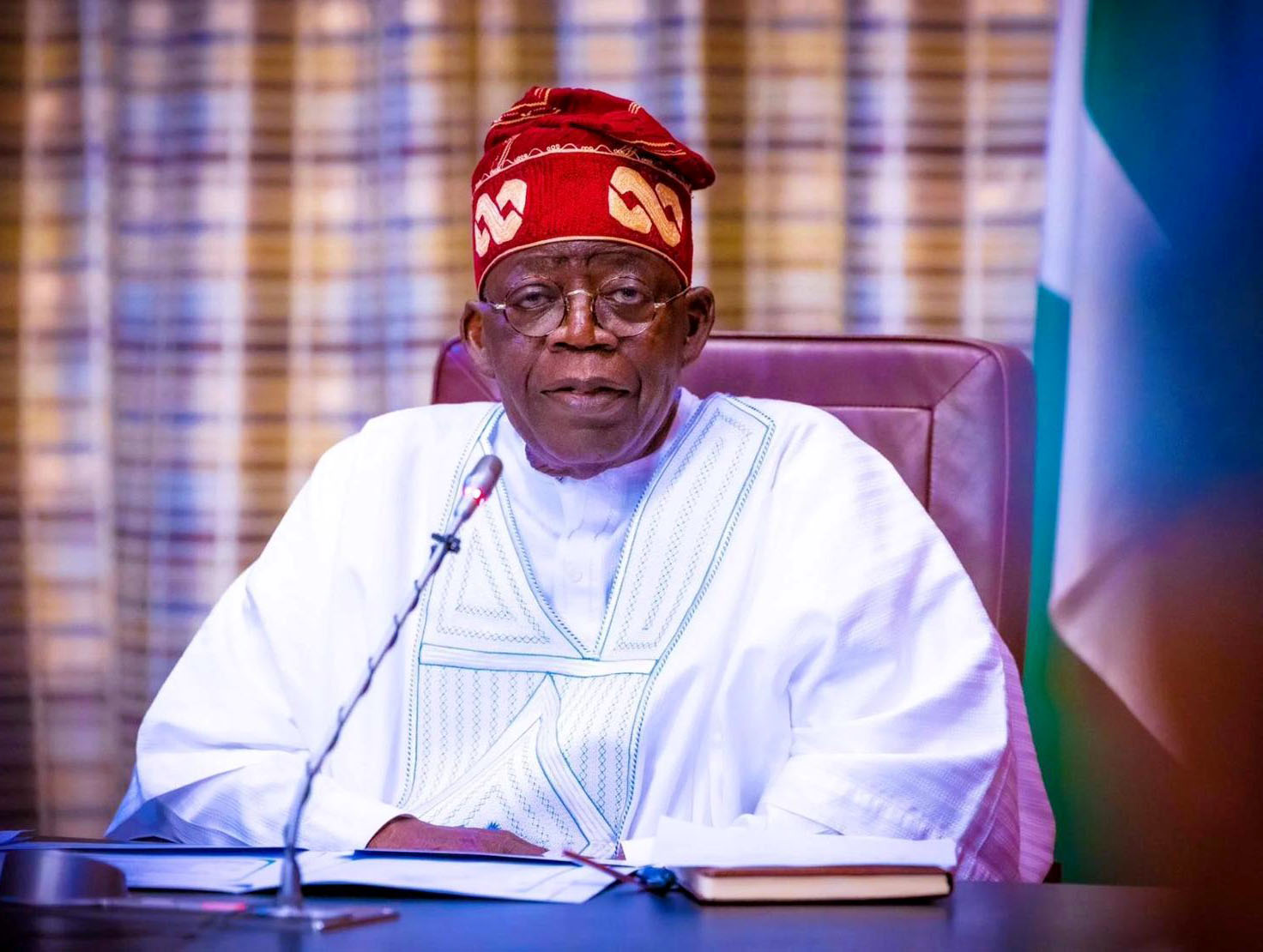
President Bola Ahmed Tinubu has urged the African Export-Import Bank (Afreximbank) to intensify efforts towards accelerating Africa’s industrialisation through investments in manufacturing, value addition and productive sectors.
President Tinubu made the call at the State House, Abuja, while receiving a delegation led by Afreximbank President and Chairman of the Board, Dr George Elombi. The President said Africa must move beyond exporting raw materials by developing industries that create jobs, expand production capacity and improve living standards.
The engagement focused on strengthening collaboration between Nigeria and Afreximbank across manufacturing, agriculture, infrastructure, healthcare and value-chain development.
DECISION HIGHLIGHT
The meeting reinforced a policy direction centred on converting Africa’s natural resources into industrial assets through investment guarantees, local processing and regional trade financing.
The President’s message to Afreximbank was that development finance institutions must play a larger role in moving African economies from resource extraction towards manufacturing-led growth.
DECISION MEMO
Africa’s industrialisation challenge has largely been defined by a gap between resource availability and domestic production capacity. Despite abundant agricultural and mineral resources, many African economies continue to export raw materials while importing finished products.
President Tinubu argued that the continent’s economic future depends on building production ecosystems around its resources, citing minerals such as lithium as opportunities for developing battery manufacturing and related industries.
“The time has come for us to start doing things together as Africans,” he said, stressing that value addition must replace dependence on raw commodity exports.
The President’s engagement with Afreximbank aligns with Nigeria’s broader economic reform agenda, which includes exchange rate reforms, industrial expansion and efforts to attract investment into productive sectors.
A key area of focus was agriculture and agro-processing. President Tinubu urged Afreximbank to deepen collaboration with the Bank of Agriculture to support cocoa, palm oil, palm kernel and other agricultural value chains.
The creation of the Federal Ministry of Livestock Development was also presented as part of a strategy to convert farmer-herder tensions into economic opportunities through livestock production, cotton processing and garment manufacturing.
For Afreximbank, Nigeria remains a major investment market. Dr. Elombi disclosed that the bank had invested between $15 billion and $20 billion in Nigeria over the past five years, with additional commitments towards industrial and infrastructure projects.
However, translating financing commitments into industrial outcomes remains the central challenge. Investment must be matched with effective implementation, infrastructure capacity, regulatory stability and private sector participation.
DATA BOX
- Key institution: African Export-Import Bank (Afreximbank)
- Meeting location: State House, Abuja
- Afreximbank investment in Nigeria (past five years): $15bn–$20bn
- Additional commitment for cotton and garment industry: $2bn
Priority sectors discussed:
- Manufacturing
- Solid minerals
- Agriculture and agro-processing
- Oil and gas value chains
- Healthcare
- Infrastructure
- Digital economy
Referenced projects:
- Lagos-Calabar Coastal Highway
- Kano-Maradi Railway Project
- African Medical Centre of Excellence, Abuja
WHO WINS / WHO LOSES
Winners:
Manufacturers, agro-processors, exporters and local value-chain businesses could benefit from increased financing and industrial support.
Nigeria’s workforce may gain from expanded manufacturing activities and new employment opportunities.
Potentially affected:
Businesses dependent on raw material exports without local processing may face increasing pressure as policy emphasis shifts towards value addition.
POLICY SIGNALS
The engagement signals stronger alignment between Nigeria’s industrial policy and development finance institutions.
It reinforces the government’s preference for investment-led growth focused on manufacturing, export competitiveness and reduced dependence on crude oil revenues.
INVESTOR SIGNAL
Afreximbank’s continued investment commitments indicate confidence in Nigeria’s long-term economic potential, particularly in industrial production, infrastructure and export-oriented sectors.
For investors, the key opportunity lies in sectors where financing, policy support and market demand converge. However, execution risks remain central to investment decisions.
RISK RADAR
Key risks include weak infrastructure, policy implementation gaps, financing constraints and limited industrial capacity.
The effectiveness of Afreximbank-backed projects will depend on whether capital deployment produces sustainable industries, stronger exports and measurable productivity gains.
Discover more from StakeBridge Media
Subscribe to get the latest posts sent to your email.