

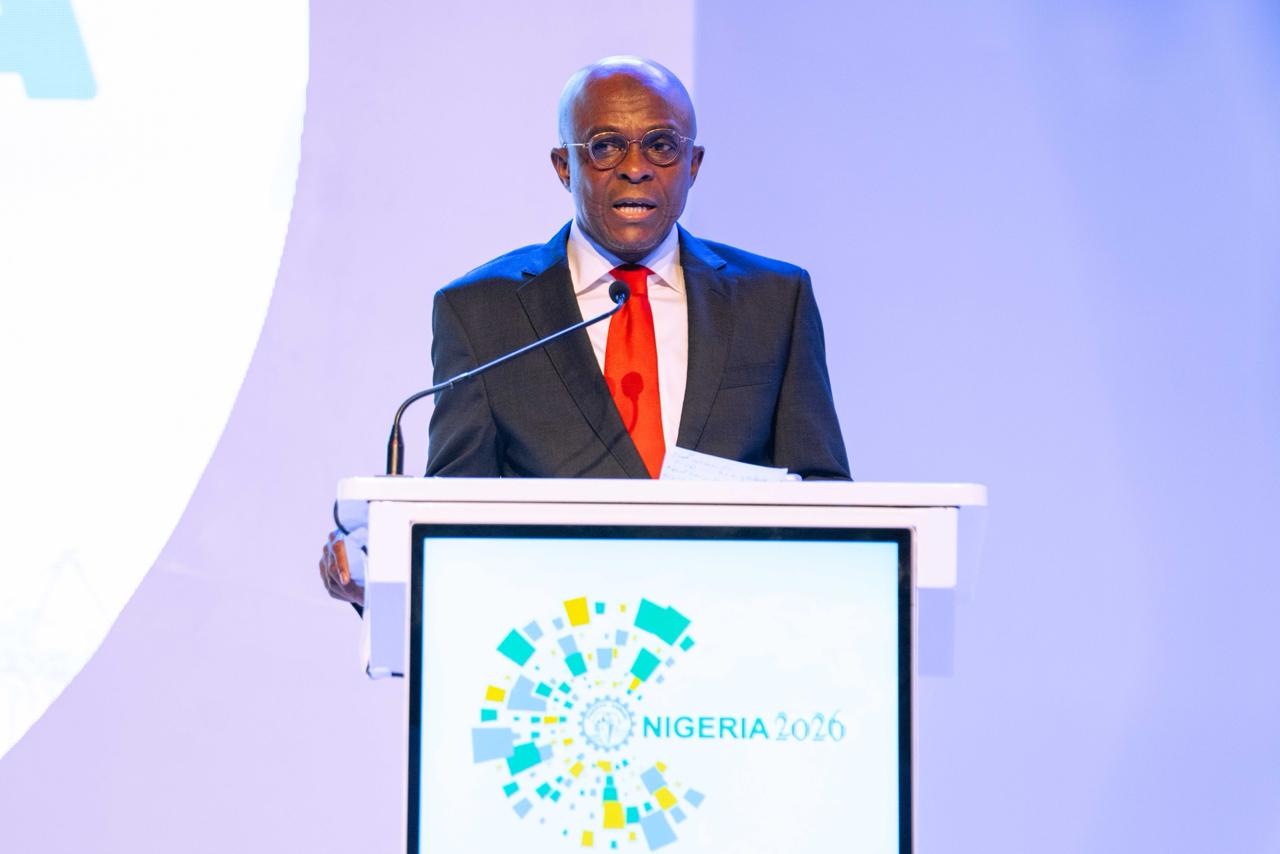
By Olumide Johnson
The Managing Director (MD) of the Nigerian Ports Authority (NPA) and President of the Port Management Association of West and Central Africa, Dr. Abubakar Dantsoho, recently used the closing session of the regional maritime meetings in Lagos to deliver what was effectively a blunt warning to African governments still operating obsolete port systems. Dantsoho argued that Africa’s economic ambitions would remain largely rhetorical without urgent investment in modern ports, deep sea infrastructure, automation and technology-driven cargo systems.
Commending President Bola Ahmed Tinubu and the Federal Ministry of Marine and Blue Economy for providing policy direction, Dantsoho positioned Nigeria as the sub-region’s most strategically important maritime gateway, noting that the country already accounts for over 70 percent of cargo traffic within West and Central Africa. He explained that Nigeria’s market size, demographic advantage and connectivity to landlocked economies such as Niger, Chad, Mali and Burkina Faso have elevated the NPA into a regional trade anchor.
Dantsoho stated that Nigeria is currently refurbishing Apapa and Tin Can Island ports while simultaneously pursuing deeper and more technologically advanced port infrastructure capable of accommodating larger vessels and future trade volumes. According to him, the Lekki Deep Sea Port remains an important milestone, although Africa must now pursue infrastructure comparable to global maritime hubs.
“This is an industry that requires huge investment in infrastructure. You cannot make progress with obsolete facilities and still expect to receive newer and larger vessels,” he said.
“You cannot have a hotel built 50 years ago and expect modern customers to continue coming without refurbishment. It is the same thing with ports.”
Referencing global competition, Dantsoho pointed to Singapore’s massive berth expansion projects and Guinea’s reported $20 billion deep sea port ambition as evidence that maritime infrastructure has become a geopolitical economic weapon rather than merely a logistics asset.
DECISION HIGHLIGHT
The NPA is unmistakably signalling a transition from incremental rehabilitation to long-term maritime competitiveness strategy. Beneath the public rhetoric sits a wider institutional repositioning agenda centred on four pressure points: port modernisation, automation, regional cargo dominance and deep sea expansion.
The authority’s near-90 percent automation claim, including electronic cargo systems and the Apapa electronic call-up platform, reflects an attempt to dismantle the inefficiency culture historically associated with Nigerian ports. Dantsoho’s emphasis on reducing congestion around Apapa was particularly symbolic because port traffic dysfunction had long damaged Nigeria’s commercial credibility and supply chain efficiency.
“Today, you can go into Apapa and leave within minutes. Before now, people spent hours and sometimes slept on the bridge because of congestion,” he said.
The NPA is therefore attempting to recast itself not merely as a port administrator, but as a regional economic infrastructure institution capable of shaping trade flows across West and Central Africa.
DECISION MEMO
The deeper message from Lagos was less about port renovation and more about economic survival. Dantsoho effectively framed maritime infrastructure as the central battlefield for African competitiveness in the next phase of global trade realignment.
The patronising reality confronting slower African economies is that cargo owners, shipping alliances and global logistics operators no longer reward sentiment or geography alone. Ports now compete on draught depth, automation speed, turnaround efficiency and digital integration. Countries still operating analogue maritime systems risk gradual exclusion from high-volume international shipping networks.
Within that context, the NPA appears determined to leverage Nigeria’s demographic scale and regional positioning before competing ports across the Gulf of Guinea fully mature. The authority’s strategy also aligns with broader federal government ambitions around blue economy expansion, non-oil exports and regional trade integration under the African Continental Free Trade Area (AfCFTA).
Dantsoho’s repeated references to larger vessels, deeper waters and stronger quays reveal a clear understanding that future maritime dominance will belong to countries capable of handling next-generation cargo traffic at scale. His intervention also subtly acknowledged that refurbishment alone will eventually become inadequate without entirely new port ecosystems.
DATA BOX
- Nigeria controls over 70 percent of West and Central African cargo traffic
- Nigerian Ports Authority says operations are nearly 90 percent automated
- Lekki Deep Sea Port currently operates two berths
- Guinea pursuing reported $20 billion deep sea port investment
- Nigeria refurbishing Apapa and Tin Can Island ports
WHO WINS / WHO LOSES
Who Wins:
- Nigerian Ports Authority through stronger regional influence
- Shipping and logistics operators benefiting from faster turnaround systems
- Landlocked neighbouring economies dependent on Nigerian trade corridors
- Industrial exporters requiring modern cargo infrastructure
- Technology and maritime automation providers
Who Loses:
- Ports resisting automation and infrastructure renewal
- Smaller regional ports unable to scale capacity
- Informal logistics structures previously benefiting from congestion inefficiencies
- Competing trade corridors with weaker infrastructure financing capacity
POLICY SIGNALS
The Federal Government is increasingly treating maritime infrastructure as a strategic economic growth instrument rather than a narrow transport issue. The emphasis on deep sea ports, automation and regional integration suggests future policy support for infrastructure financing, digital port systems and private-sector maritime partnerships.
The Nigerian Ports Authority also appears positioned to become a leading execution vehicle within Nigeria’s blue economy framework.
INVESTOR SIGNAL
The maritime sector is gradually emerging as one of Nigeria’s most investable infrastructure corridors. Port expansion, logistics technology, industrial warehousing, inland cargo connectivity and marine services are likely to attract increased institutional and private capital interest if reforms continue.
Dantsoho’s remarks were effectively a signal that Nigeria intends to consolidate itself as the dominant maritime gateway in West Africa before regional competition intensifies further.
RISK RADAR
Major risks remain substantial. Deep sea infrastructure requires enormous long-term capital commitments, policy consistency and sustained political discipline. Delays in execution, regulatory fragmentation, foreign exchange instability and weak multimodal transport connectivity could undermine competitiveness gains.
There is also the uncomfortable reality that several African governments still underestimate the speed at which global shipping standards are evolving. Without aggressive execution, many regional ports risk becoming commercially peripheral despite their geographic advantages.
Discover more from StakeBridge Media
Subscribe to get the latest posts sent to your email.