

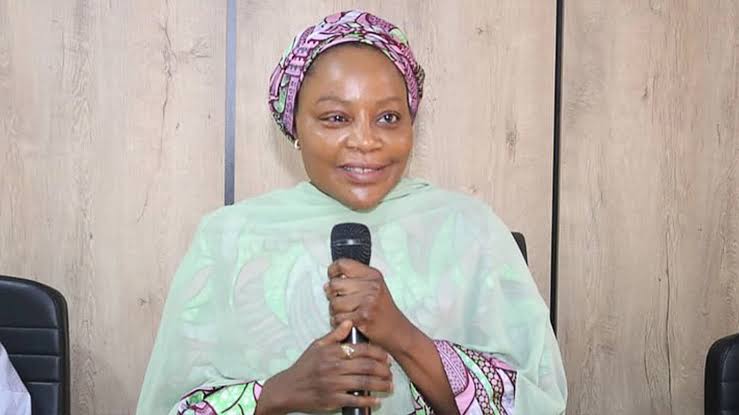
By Ayo Susan
The Executive Secretary of the Universal Basic Education Commission (UBEC), Aisha Garba, recently announced in Abuja that the commission has recovered more than N100 billion in previously unclaimed matching grants to accelerate basic education reforms under its 2025 to 2031 Strategic Blueprint. Working with the State Universal Basic Education Boards (SUBEBs), UBEC has constructed more than 4,600 classrooms, renovated over 6,100 classrooms, and established more than 2,300 Early Childhood Care Development and Education Centres to strengthen foundational learning. Garba also disclosed that the Commission is expanding digital literacy centres to support smart schools and urged the media to remain active partners by providing balanced reporting that strengthens public confidence and encourages wider stakeholder participation in basic education delivery.
DECISION HIGHLIGHT
UBEC has shifted attention from funding availability to funding utilisation, converting dormant education grants into physical infrastructure and institutional reforms aimed at improving access and learning outcomes.
DECISION MEMO
The recovery of over N100 billion in unclaimed matching grants addresses one of the longstanding weaknesses in Nigeria’s basic education financing framework, where available resources have often remained inaccessible because states failed to meet counterpart funding requirements or complete administrative processes.
By redirecting idle funds into classrooms, early childhood centres and digital learning infrastructure, UBEC is signalling that implementation efficiency is becoming as important as budgetary allocation. The emphasis on foundational education and smart schools also suggests an attempt to balance traditional infrastructure deficits with the growing need for digital learning capacity.
However, the long-term success of the initiative will depend less on the volume of infrastructure delivered than on sustained maintenance, teacher quality, learning outcomes and the continued willingness of state governments to participate effectively in the matching grant framework.
Garba’s appeal for balanced media reporting equally reflects recognition that public confidence and stakeholder engagement remain important components of education reform.
DATA BOX
- Unclaimed grants recovered: Over N100 billion.
- Strategic framework: 2025 to 2031 UBEC Strategic Blueprint.
- Classrooms constructed: More than 4,600.
- Classrooms renovated: More than 6,100.
- Early Childhood Care Development and Education Centres established: More than 2,300.
- Additional initiative: Expansion of digital literacy centres and smart schools.
WHO WINS / WHO LOSES
Winners
- Pupils in public basic education schools.
- State Universal Basic Education Boards implementing projects.
- Teachers benefiting from improved learning environments.
- Communities gaining expanded access to early childhood education.
Losers
- States that fail to maximise available matching grants.
- Communities where implementation delays continue to impede education delivery.
POLICY SIGNALS
- Education policy is increasingly prioritising implementation efficiency over funding commitments alone.
- Greater emphasis is being placed on early childhood education and digital literacy.
- Stronger collaboration between UBEC and State Universal Basic Education Boards is becoming central to basic education reform.
INVESTOR SIGNAL
Although basic education is primarily a public sector responsibility, expanded investment in school infrastructure, digital learning facilities and foundational education creates opportunities for construction firms, education technology providers, training institutions and learning content developers participating in government-supported education projects.
RISK RADAR
Recovering unclaimed grants does not automatically guarantee improved educational outcomes. Weak project execution, inadequate maintenance, uneven state participation, teacher shortages and poor monitoring could reduce the long-term impact of the infrastructure investments despite the substantial financial recovery.
Discover more from StakeBridge Media
Subscribe to get the latest posts sent to your email.