

By Jennete Ugo Anya
Nigeria’s financial inclusion has improved, but pension participation remains critically low. The 2026 Access to Financial Services in Nigeria (A2F) Survey by Enhancing Financial Innovation and Access (EFInA) found that only 9.1 percent of adults had formal pension coverage, leaving roughly nine in 10 outside formal retirement arrangements.
DEVELOPMENT:
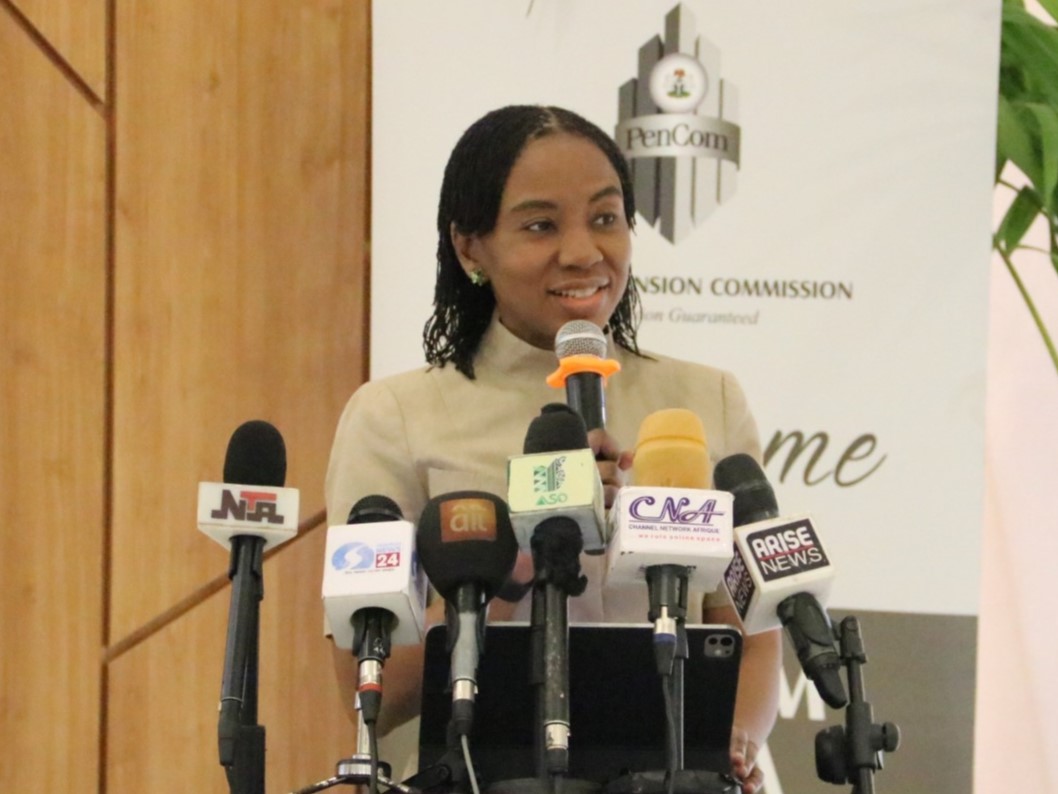
Speaking at the report’s launch in Abuja, Director-General (DG) of National Pension Commission (PenCom), Omolola Oloworaran, said that pension participation increased from 7.8 percent of adults in 2023 to 9.1 percent in 2026.
“Pension participation has risen from 7.8 percent of adults in 2023 to 9.1 percent in 2026. That progress is real, and it is encouraging. But turn the statistics around. Roughly nine out of every 10 Nigerian adults still stand outside any formal pension arrangement,” she said.
Oloworaran also said that traders, farmers, mechanics, drivers, tailors, hairdressers and digital-economy workers remain largely outside formal retirement protection.
“They work, they earn, they carry this economy. But too many of them are growing older without building any security for the day they can no longer work. That is the great frontier of pension reform,” she stated.
She said that PenCom was redesigning pension inclusion through the Personal Pension Plan and proposed a pension inclusion map combining EFInA survey evidence with PenCom data.
“As we roll out the Personal Pension Plan, I invite EFInA to work with PenCom and the industry to test what works, from digital onboarding to accredited pension agent distribution framework, transaction-based savings, matching incentives and behavioural models,” she said further.
DATA:
The survey covered 18,679 adults across Nigeria’s 36 states and the FCT between April and June 2026, under National Bureau of Statistics supervision.
Overall financial inclusion reached 79 percent, while formal inclusion stood at 73 percent and digital financial-service usage at 64 percent. Yet formal credit reached only 10 percent, while insurance penetration stood at five percent.
Pension coverage was about nine percent nationally, 12 percent among urban residents and 13 percent among the richest 60 percent.
SIGNIFICANCE:
The figures expose a gap between access to financial services and long-term financial resilience. EFInA CEO, Foyinsolami Akinjayeju, said, “Access is increasing, but financial health is not catching up at the same pace.”
Financial health improved from 16 percent in 2023 to 25 percent in 2026, leaving three out of four adults financially unhealthy.
EFInA Board Chair, Dr Agnes Olatokunbo Martins, said: “Access is only the beginning of the journey; it is not the destination.”
NEXT MOVE:
PenCom’s Personal Pension Plan, digital onboarding, pension-agent distribution, transaction-based savings and possible matching incentives will be key developments. The implementation of NFIS 4.0 will also matter.
The Governor of Central Bank of Nigeria (CBN), Mr. Olayemi Cardoso, represented by Dr Aisha Isa-Olatinwo, said: “The policy challenge before us is therefore no longer simply to open an account or expand access point. It is to ensure meaningful usage, affordability, reliability, safety, trust, and measurable improvement in financial health.”
OUR LENS:
Nigeria has made measurable progress in getting people into the formal financial system, but formal access is not yet translating into adequate financial protection. Oloworaran put the issue plainly: “An account that is open but never funded will not provide dignity in retirement.”
The challenge is therefore moving from financial inclusion to sustained financial accumulation, particularly among Nigeria’s large informal workforce.
Jennete Ugo Anya is a journalist and researcher with interests across Nigeria’s economy, public policy, business, development and strategic communications.
Discover more from StakeBridge Media
Subscribe to get the latest posts sent to your email.