

By Olumide Johnson
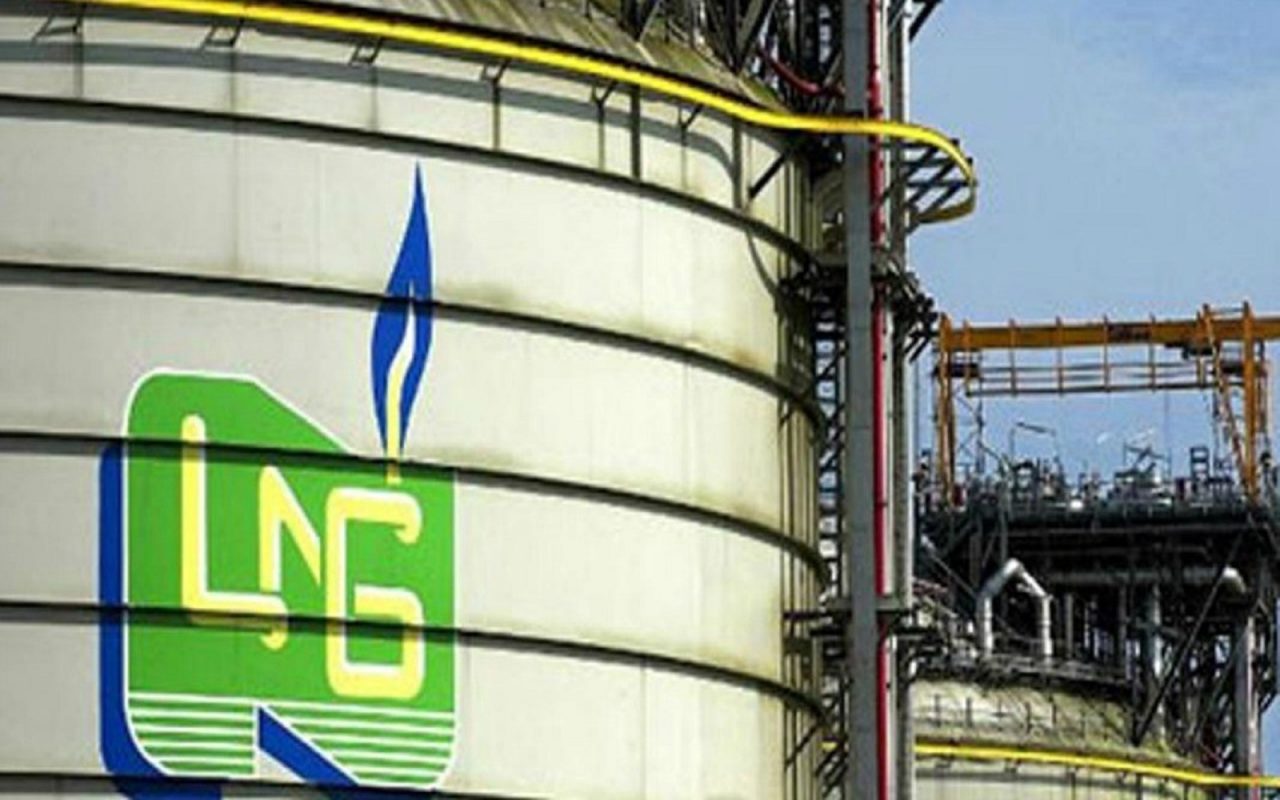
Nigeria Liquefied Natural Gas Limited (NLNG) expects its $10 billion Train 7 project to begin operations by the end of 2027, potentially lifting Nigeria’s LNG production capacity as global supply disruptions increase demand for reliable alternative sources.
DEVELOPMENT:
The Managing Director of NLNG, Adeleye Falade, disclosed the timeline on the sidelines of the Gastech conference in Bangkok, saying the Train 7 project on Bonny Island, Rivers State, is central to the company’s production expansion.
The project is expected to raise NLNG’s capacity from 22 million metric tonnes per annum (mtpa) to 30 million mtpa. However, persistent gas supply constraints remain the immediate limitation on production.
NLNG has also remained under a force majeure declared in 2022 following widespread flooding that disrupted gas supplies. Falade said the declaration would be lifted once plant utilisation reaches 90 percent, compared with its current 82 to 83 percent.
“We still have a delta of about 15 per cent that we need to close,” Falade said. “Operationally, we are able to do that, but our biggest constraint is gas supply, and we are working with all the relevant people, including the government, to be able to get more gas to flow into the plant,” he stated.
DATA:
Train 7 represents a planned capacity increase of 8 million mtpa, taking NLNG from 22 million mtpa to 30 million mtpa.
The company currently operates at 82 to 83 percent utilisation against its 90 percent target for lifting the force majeure.
Meanwhile, Brent crude rose 3.3 percent to $109.20 per barrel, while United States West Texas Intermediate gained 5.01 percent to $106.46 per barrel.
SIGNIFICANCE:
The combination of higher global energy prices, disrupted supply routes and growing demand for diversified LNG supplies creates a potentially significant market opportunity for Nigeria.
Falade said interest in additional LNG volumes and spot cargoes had increased following disruptions to exports through the Strait of Hormuz.
“People are looking at more diversified, reliable sources of supply,” he said.
But Nigeria’s ability to capture that opportunity remains tied to upstream gas availability and the completion of Train 7.
NEXT MOVE:
The critical indicators are progress towards Train 7 completion, domestic gas supply to NLNG, plant utilisation and the lifting of the force majeure.
NLNG’s ability to meet existing contractual commitments while increasing production will also determine how much additional LNG Nigeria can make available to global buyers.
“Our priority currently is to continue to make sure that we fulfil our obligations to our existing customers and maximize as much production opportunity as possible that we have,” Falade said.
OUR LENS:
Train 7 is not simply a capacity-expansion project. It is a test of whether Nigeria can convert its substantial gas resources into dependable export capacity at a time when global buyers are placing greater value on supply diversification.
The immediate constraint is clear from Falade’s assessment: Nigeria’s LNG growth story ultimately depends on securing sufficient feed gas to utilise the infrastructure already in place and support the next production phase.
Olumide Johnson is a journalist, reporting on energy, business, markets, policy and developments shaping Nigeria’s economy.
Discover more from StakeBridge Media
Subscribe to get the latest posts sent to your email.