

By Johnson Emmanuel
Nigeria’s private capital inflows have increased nearly twentyfold to almost $6 billion in 2026 from about $300 million in 2023, drawing attention to the challenge of converting improved macroeconomic stability into stronger growth, investment and job creation.
DEVELOPMENT
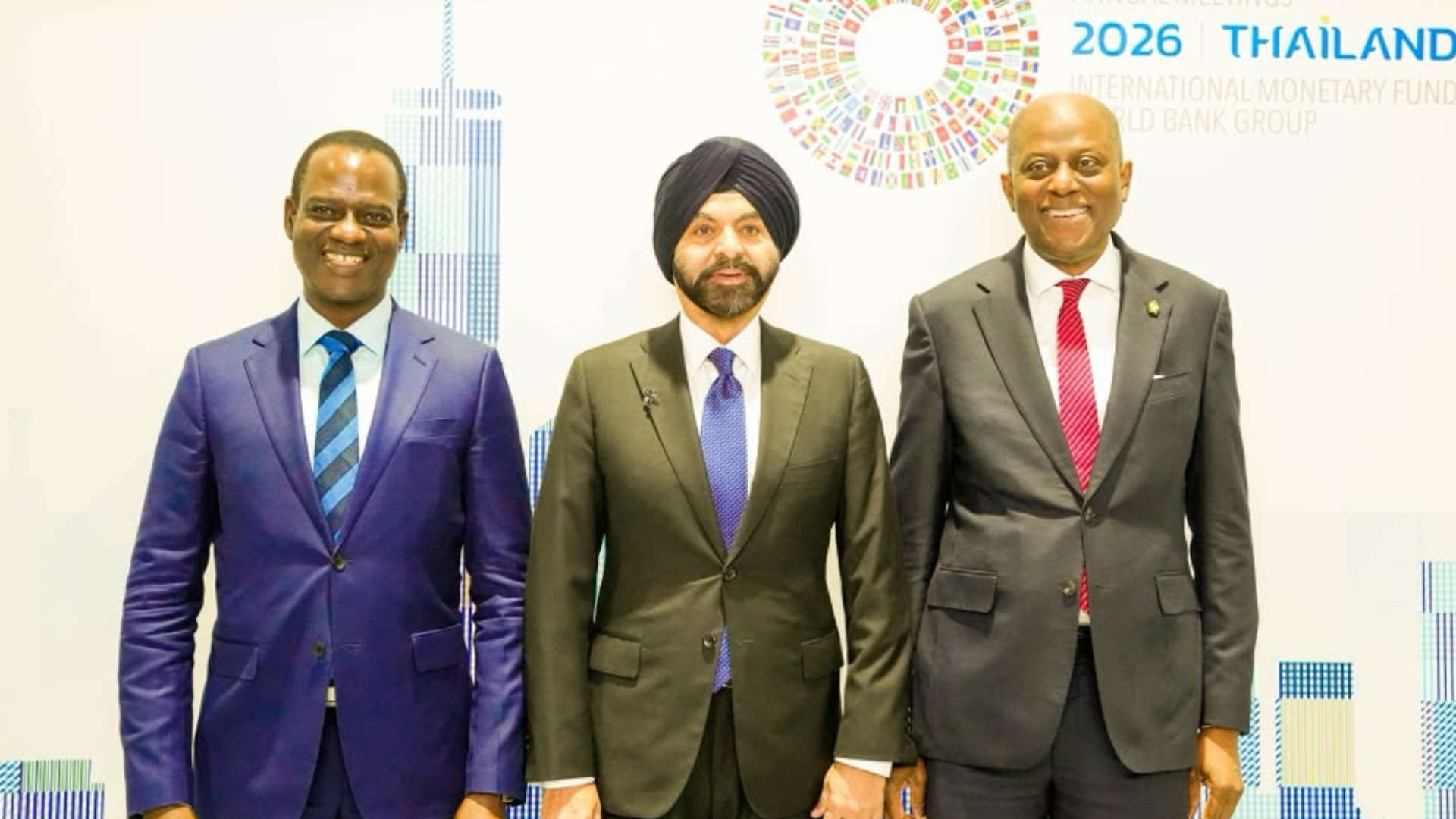
The development featured in discussions between Dr. Taiwo Oyedele, Minister of Finance and Coordinating Minister of the Economy; Mr. Olayemi Cardoso, Governor of the Central Bank of Nigeria (CBN); and Mr. Ajay Banga, President of the World Bank Group, on the sidelines of the IMF and World Bank Group Annual Meetings in Thailand.
Oyedele highlighted the improvement in Nigeria’s economic growth and the increase in the tax-to-GDP ratio from approximately seven percent to 12.5 percent. The higher ratio, he noted, provides the government with greater capacity to finance public investment without resorting to deficit monetisation.
The discussions also examined the use of World Bank guarantee instruments to mobilise additional private financing for infrastructure projects, with power infrastructure and human capital development identified as priority areas.
DATA
Private capital inflows rose from approximately $300 million in 2023 to almost $6 billion in 2026, while the tax-to-GDP ratio increased by 5.5 percentage points.
The figures point to stronger reported investor participation and improved domestic revenue mobilisation. However, the available information does not specify the composition of the capital inflows or the extent to which they represent long-term investment in productive assets.
SIGNIFICANCE
For investors, the developments suggest opportunities to finance infrastructure and productive economic activities. World Bank guarantees could help reduce selected project risks and attract private financing for investments that might otherwise struggle to secure funding.
Higher domestic revenue mobilisation could also strengthen the government’s capacity to fund infrastructure and development priorities. However, the economic benefits will depend on effective project execution, investment quality and the ability to translate capital inflows into productive capacity and employment.
NEXT MOVE
Investors and policymakers should monitor the implementation of guarantee-backed infrastructure financing, the allocation of capital to productive sectors and the sustainability of improvements in domestic revenue mobilisation.
OUR LENS
Nigeria’s investment challenge is shifting towards converting macroeconomic stability and stronger capital inflows into measurable economic outcomes. Rising private investment and tax revenue provide important foundations, but the decisive test is whether financing reaches critical infrastructure, improves productivity and creates sustainable employment.
Johnson Emmanuel is a journalist, covering business, investment, monetary & fiscal policies, CBN, economic affairs and issues of significance to Nigeria’s corporate and public sectors.
Discover more from StakeBridge Media
Subscribe to get the latest posts sent to your email.