

By Enam Obiosio
We cannot claim to be serious about reducing transport costs in Nigeria if we promote compressed natural gas (CNG) as a cheaper alternative to petrol and diesel without making the fuel accessible, affordable and reliable. A policy that promises savings at the pump but leaves motorists stranded in refuelling queues has not solved the transport problem. It has merely relocated the frustration.
I believe the central question in Nigeria’s CNG transition is no longer whether the country possesses sufficient natural gas. It is whether we have built the infrastructure, financing arrangements, technical capacity and commercial discipline needed to turn that resource into a dependable public benefit.
The National CNG Adoption Conference in Abuja exposed the gap between policy ambition and operational reality. Transport unions, petroleum marketers and gas industry operators urged the Federal Government to address inadequate refuelling facilities, high conversion costs, unreliable gas supplies and limited access to affordable credit. These are structural barriers determining whether transport operators can participate in the transition.
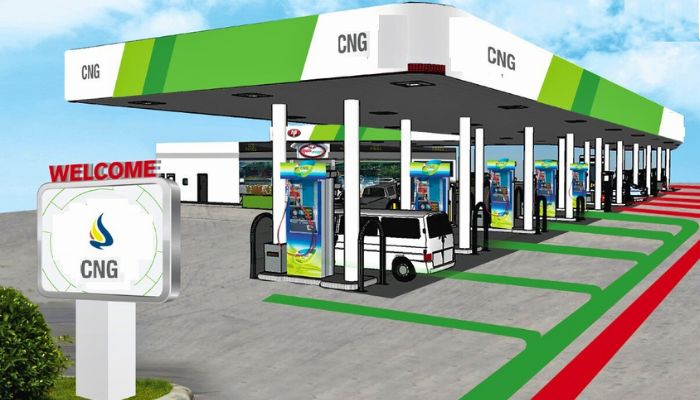
We cannot persuade motorists to adopt a fuel they cannot reliably obtain. Conference participants reported queues of about 50 vehicles at some Lagos stations and queues reaching 250 vehicles or more in Abuja. Such reports raise fundamental questions about infrastructure planning and the relationship between supply and demand.
If a commercial driver spends hours waiting to refuel, fuel savings may be offset by lost working time, fewer daily trips and lower earnings. For transport businesses operating on narrow margins, time is part of the cost of production. The Federal Government must therefore stop treating conversion capacity as proof of readiness. Converting vehicles and providing places to refuel them are different tasks. Thousands of conversions will achieve little if drivers cannot obtain fuel along their routes.
Participants cited 90 refuelling stations and 500 conversion centres, figures that must be assessed against vehicle numbers, transport routes and facility capacity. We need an infrastructure plan prioritising major commercial corridors, including Lagos to Abuja, coastal routes, industrial centres and busy urban networks. We should also investigate why some stations reportedly remain underused while others face excessive queues. Reliable demand data, location analysis and supply planning should guide investment. Building facilities in the wrong places wastes capital; neglecting busy corridors discourages adoption.
We cannot describe CNG as affordable while ignoring the cost of acquiring or converting vehicles. Participants said a refuelling station costs more than N3 billion to build. They also noted that many existing diesel engines in tanker trucks cannot simply be converted to CNG. Acquiring a CNG-powered truck or engine can cost around N100 million, beyond the reach of many operators.
This is the transition’s central contradiction. We are asking transport businesses to reduce dependence on conventional fuels while the capital cost of adopting the alternative may be prohibitive. Cheaper fuel offers little benefit to an operator who cannot afford a suitable vehicle or conversion system.
We need transparent financing with repayment schedules linked to realistic cash flows. Options could include partial credit guarantees, equipment leasing, fleet-conversion loans and targeted interest support. These arrangements should mobilise private capital, not create an open-ended public subsidy. Lenders must disclose the full cost of credit, including interest, fees, insurance and repayment obligations. A programme that cuts fuel expenditure but traps operators in unaffordable debt defeats its purpose.
Conference participants questioned why transport lacks a specialised banking institution comparable to those serving agriculture and other sectors. Whether Nigeria needs a new institution or a dedicated financing window within existing development finance structures requires careful assessment. What cannot be defended is expecting operators to make substantial investments while leaving them dependent on expensive commercial credit.
We should establish a transport energy financing facility for viable CNG vehicle acquisition, technically appropriate conversions, refuelling infrastructure, maintenance and training. Access should depend on credible business plans, vehicle suitability, realistic savings and repayment capacity. Public money must unlock investment, not conceal commercial weaknesses or reward political connections.
Infrastructure and finance will not sustain adoption if gas supplies remain unreliable. We cannot build stations and convert vehicles on the assumption that gas will always be available. Stakeholders called for binding agreements between gas buyers and suppliers. Contracts should specify volumes, delivery schedules, quality, prices and remedies for non-performance. Accountability must work both ways: suppliers should not be penalised for failures beyond their control, and buyers should not disregard purchase commitments without consequence. Predictable commercial rules can make investment less risky.
Government should examine the entire chain from gas production and processing to transportation, storage and distribution. Participants acknowledged the high investment required for gas storage.
We cannot measure success solely by the number of vehicles on the road. CNG adoption must also be safe and sustainable. Participants reported that some imported trucks fitted with conversion kits had stopped working because of poor maintenance and a shortage of technical expertise. Such failures can increase costs, damage public confidence and expose users to avoidable risks.
We therefore need recognised technical certification, quality assurance for conversion equipment and accessible maintenance services. Technology transfer must develop local technicians able to install, inspect, diagnose and repair CNG systems to appropriate standards. It must mean more than importing equipment and declaring progress.
The Pi-CNG initiative was credited by conference participants with encouraging demand through conversion centres. Its progress should be assessed alongside refuelling access, actual fuel savings, vehicle reliability and maintenance capacity. We should publish regular indicators covering operational stations, waiting times, geographic coverage, supply interruptions, conversion costs, financing uptake, vehicle downtime and verified operating savings. Such evidence would show whether the programme is delivering value or merely increasing participation figures.
Ultimately, CNG is not a complete transport policy. It is one component of a wider effort to reduce energy costs, improve transport productivity and make better use of Nigeria’s domestic resources. We cannot ask operators to carry the financial risks of a transition whose essential infrastructure remains inadequate. Nor can we expect private investors to commit billions of naira while demand, gas supply and regulatory arrangements remain uncertain.
There is need to plan the network, secure reliable supply, mobilise affordable finance, build technical capacity, enforce safety standards and measure results. Public education should support these measures, not substitute for them.
We have heard the industry’s warnings. The next test is whether government and business convert them into practical decisions. Until motorists can refuel without excessive delays, acquire suitable vehicles without crippling debt and maintain them through dependable local expertise, CNG adoption will remain a policy promise struggling against the realities of Nigerian transport.
Enam Obiosio is a public relations and investor relations practitioner and journalist with experience in arts and business journalism, with expertise spanning financial markets, economic policy, infrastructure, corporate communications, and the creative economy.
Discover more from StakeBridge Media
Subscribe to get the latest posts sent to your email.