

By Olumide Johnson
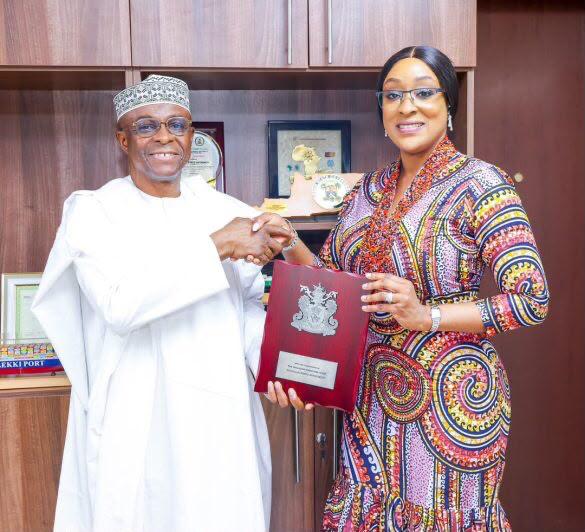
The Nigerian Ports Authority (NPA), led by Managing Director Dr. Abubakar Dantsoho, has facilitated the recovery and clearance of critical power equipment belonging to the Niger Delta Power Holding Company Limited (NDPHC) that had remained idle at various Nigerian seaports. During a management engagement in Lagos over recently, Engr. Jennifer Adighije, Managing Director of NDPHC, said that the intervention would accelerate critical power projects and save the company billions of naira in potential losses. Dantsoho reaffirmed the NPA’s commitment to sustaining such inter-agency support.
DECISION HIGHLIGHT
The intervention illustrates how port administration can directly affect infrastructure delivery. Equipment stranded at ports represents immobilised capital; clearing it restores access to assets already procured for power projects and potentially removes avoidable delays from the project-delivery chain.
DECISION MEMO
The significance of the NPA’s intervention lies in what it reveals about the relationship between logistics and infrastructure performance. A power project cannot advance simply because funding has been committed or equipment purchased. The equipment must reach the project site at the right time. Where it remains trapped at the port, investment is effectively suspended.
Adighije said that the recovered equipment was required for critical NDPHC projects and warned that prolonged delays could have affected project timelines, increased costs and undermined efforts to improve electricity supply. She credited the NPA intervention with saving NDPHC billions of naira in potential losses.
That assessment gives the intervention an economic dimension beyond routine cargo clearance. By facilitating access to already-purchased equipment, the NPA has helped reduce a form of infrastructure friction that can quietly increase project costs without adding productive capacity.
Dantsoho’s response is very important because the intervention is part of a broader institutional relationship rather than an isolated administrative concession.
The NPA managing director congratulated the NDPHC on its contribution to Nigeria’s power sector and stressed that efficient and reliable electricity supply remains critical to economic growth, industrialisation and improved living standards. He reaffirmed the authority’s openness to meaningful engagement with government agencies and other strategic stakeholders whose activities contribute to the Nigerian economy.
Dantsoho further assured the NDPHC that the NPA would continue supporting initiatives that facilitate the smooth movement and clearance of critical equipment, particularly materials required for projects capable of strengthening infrastructure and advancing national development.
The NPA’s position also strengthens the case for a more coordinated approach to strategic cargo. Not every shipment has the same economic significance. Equipment destined for projects with direct implications for electricity supply, industrialisation or other critical infrastructure carries wider national-economic consequences when delayed.
Adighije’s call for stronger collaboration between NDPHC, NPA and other agencies therefore points towards a practical policy lesson: infrastructure agencies cannot operate effectively in isolation where their project-delivery chains intersect.
For the NPA, Dantsoho’s intervention demonstrates the authority’s capacity to connect port efficiency with national development priorities. For NDPHC, it reduces logistical obstacles to project execution. For government, it provides an example of how inter-agency coordination can extract greater value from infrastructure investments already made.
The ultimate measure, however, will be what happens after the equipment leaves the ports. The economic value of the intervention will be fully realised only if the recovered assets translate into completed projects, additional electricity infrastructure and improved reliability of supply.
DATA BOX
- Institutions: NPA and NDPHC
- Equipment: Critical power-sector equipment
- Locations: Various Nigerian seaports; management engagement in Lagos
- Potential losses averted: Billions of naira
- Expected benefit: Faster implementation of critical power projects
- Transmission channel: Port clearance → equipment availability → project execution → power infrastructure
WHO WINS / WHO LOSES
Wins: NDPHC, power-sector contractors, infrastructure projects and ultimately electricity consumers if faster equipment clearance accelerates project completion. The NPA also strengthens its role as an enabler of national infrastructure delivery.
Loses: Port-related delays, avoidable storage and other administrative inefficiencies that increase the cost of infrastructure projects without creating additional value.
POLICY SIGNALS
Dantsoho’s commitment signals a willingness by the NPA to treat strategic infrastructure cargo as part of a wider national-development chain. The stronger policy opportunity is to institutionalise such coordination so that critical equipment is identified and processed efficiently before delays become project risks.
INVESTOR SIGNAL
Predictable movement of critical equipment improves project execution certainty and can reduce avoidable costs. For infrastructure investors, the important signal is the NPA’s stated openness to collaboration meant to develop into consistent, system-wide logistics efficiency.
RISK RADAR
The principal risk is recurrence. Individual interventions can unlock stranded assets, but their broader value depends on preventing similar bottlenecks. The critical test is whether NDPHC and other relevant government agencies can turn this successful intervention into a durable mechanism for faster clearance and infrastructure delivery.
Discover more from StakeBridge Media
Subscribe to get the latest posts sent to your email.