

By Ayo Susan
The federal government has set an immediate December target for its nationwide telecommunications expansion programme, with at least 200 new telecom sites expected to become operational before the end of November. The rollout is part of a larger plan to extend connectivity to more than 20 million Nigerians in underserved and unserved communities.
DEVELOPMENT:
Minister of Communications, Innovation and Digital Economy, Dr. Bosun Tijani, disclosed the target on Monday at the commissioning of the new headquarters of the Nigeria Data Protection Commission (NDPC) in Abuja.
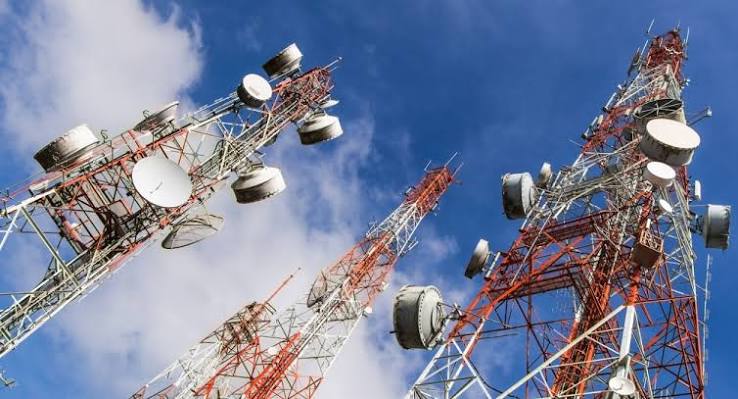
Tijani said that the government plans to deploy 3,700 telecommunications towers across the country, following a directive from President Bola Tinubu to connect communities left outside the country’s digital infrastructure.
“Before December, at least 200 of those sites will be active,” Tijani said.
He explained that each tower would serve communities of between 5,000 and 10,000 residents.
“Each of those towers will serve communities of about 5,000 to 10,000 people. These are people that are currently unconnected. So, at the end of this project, we will be reaching over 20 million Nigerians,” Tijani also said.
The first tower has been deployed at Kura Village outside Abuja, while work has commenced in the Niger Delta.
DATA:
Beyond the 3,700-tower programme, the government is investing in a 90,000-kilometre fibre optic network. President Tinubu has also approved an upgrade of Nigeria’s communications satellite to extend coverage to locations beyond the reach of fibre and terrestrial towers.
“For places where fibre cannot reach, where towers cannot reach, NIGCOMSAT will now be able to reach those locations,” Tijani further said.
The ICT sector’s contribution to GDP has also risen to about 21 percent, from 16 to 18 percent when the administration assumed office. Tijani wants that contribution to reach 25 percent.
The National Commissioner and CEO of the NDPC, Dr. Vincent Olatunji, said that the commission had licensed 356 Data Protection Compliance Organisations, contributing to more than 27,000 jobs in three years. The commission has generated over N12 billion in revenue, while Nigeria’s data privacy and protection ecosystem is valued at more than N18 billion.
Its virtual privacy academy has onboarded over 66,000 Nigerians, while more than 220 training programmes have reached 99,370 people.
SIGNIFICANCE:
The programme positions connectivity as economic infrastructure, not merely a telecommunications service. Bringing 20 million more Nigerians online could expand the addressable market for digital finance, e-commerce, education, health services and technology businesses.
But the economic dividend will depend on whether new coverage is matched by affordability, reliable power, digital literacy and adequate data protection.
Tijani acknowledged that broader connectivity must be accompanied by stronger safeguards.
“As we bring more people online, we also have to ensure that we can protect them as well. And that is why digital literacy, cybersecurity and data protection are all critical pillars of the growth of our digital economy in Nigeria,” he said.
NEXT MOVE:
The immediate test is whether government and its partners can activate the promised 200 sites before December, while maintaining quality and reliability. Progress on the 3,700 towers, 90,000-kilometre fibre network and NIGCOMSAT upgrade will determine how quickly the connectivity gap narrows.
OUR LENS:
Nigeria is moving from a connectivity deficit strategy to a digital infrastructure expansion strategy. The deeper opportunity is not simply putting millions of people online, but converting connectivity into productive economic participation while building the regulatory architecture to protect the citizens entering that digital economy.
The institutional expansion of the NDPC reflects that parallel agenda. Its Head of People Management and Administration, Mrs Watira Fitto, described the new headquarters as “a statement of the commission’s growing capacity and commitment to institutional stability,” after the agency moved four times in four years.
Ayo Susan is a journalist, covering business, society and emerging developments with an emphasis on credible and engaging storytelling.
Discover more from StakeBridge Media
Subscribe to get the latest posts sent to your email.