

By Olumide Johnson
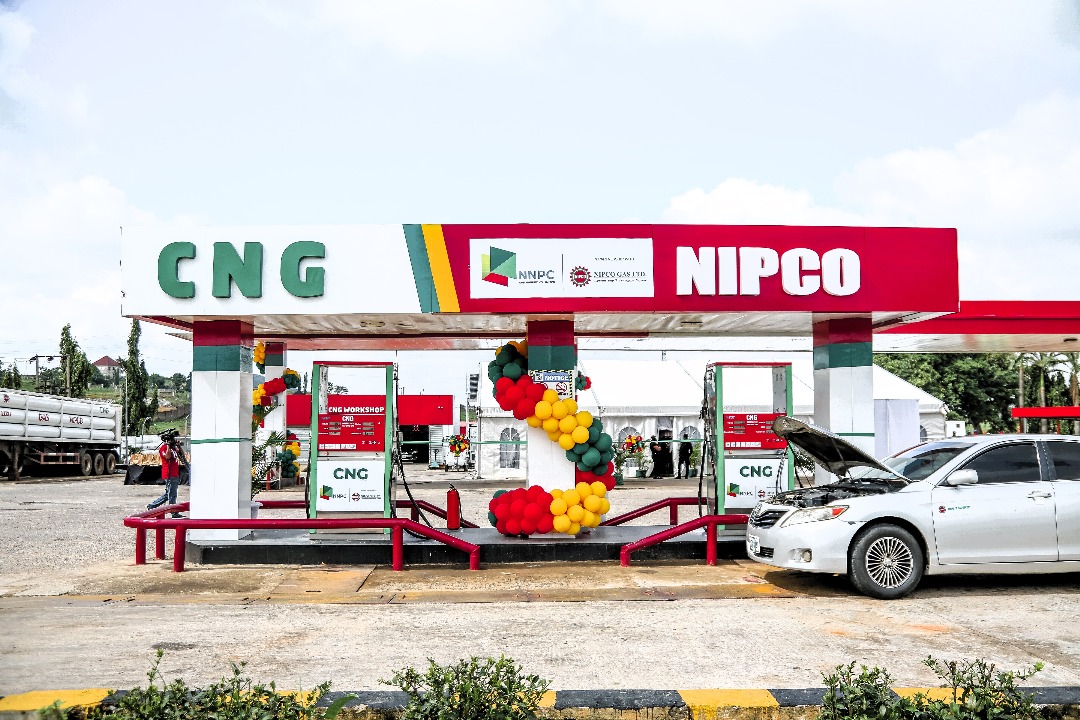
Independent petroleum marketer, NipCo, has released preliminary findings on a CNG vehicle explosion at its Gas Filling Station on Airport Road, Abuja, attributing the incident to an additional cylinder it said was spurious and unsuitable for Compressed Natural Gas (CNG) use.
DEVELOPMENT:
The incident involved a CNG-converted Toyota Camry, registration number MAP-962 JU. According to NipCo, the cylinder ruptured shortly after refuelling commenced, causing an explosion that damaged the vehicle.
No fatalities, injuries or casualties were recorded.
NipCo said that station personnel immediately activated established emergency response procedures. The driver was retained at the station to assist with enquiries, while relevant regulatory and security authorities are expected to investigate the incident.
The company said its preliminary assessment found that the vehicle had been fitted with an additional cylinder that was not approved or suitable for CNG use.
“Management reiterates that safety remains our highest priority. Motorists and CNG vehicle owners are strongly advised to ensure that all CNG cylinders, conversion systems, and associated components are approved, certified, and installed only by duly authorised and qualified personnel. The use of spurious, uncertified, or unsuitable cylinders and components is strictly discouraged,” the company said.
DATA:
The immediate incident involved one CNG-converted vehicle at the NipCo station in Abuja. No deaths or injuries were reported, although the vehicle was damaged.
NipCo’s preliminary finding places particular attention on the cylinder and associated conversion components rather than CNG fuel itself. Final conclusions, however, remain subject to regulatory and security investigations.
SIGNIFICANCE:
The incident highlights an important risk accompanying Nigeria’s transition towards CNG: equipment integrity and conversion standards must keep pace with fuel adoption.
For motorists, investors, operators and regulators, the safety chain extends beyond the availability of CNG. Cylinders, conversion kits, installation procedures, inspection and certification all form part of the infrastructure required for a credible CNG market.
NipCo said: “We further reaffirm that CNG is a safe and reliable fuel when approved equipment, proper conversion procedures, and applicable safety standards are strictly followed.”
NEXT MOVE:
The regulatory investigation should establish the precise cause of the rupture, the origin and certification status of the additional cylinder, and whether the vehicle’s conversion complied with applicable standards.
Attention should also remain on enforcement against uncertified conversion components and unauthorised installations.
OUR LENS:
The Abuja incident underscores that the success of Nigeria’s CNG transition will depend not only on expanding refuelling infrastructure, but also on building a rigorous safety ecosystem around vehicle conversion.
NipCo described the incident as evidence of “the serious risks associated with the use of uncertified or inappropriate components in CNG conversion systems and related accessories.”
For the emerging CNG market, equipment certification, installer competence and regulatory enforcement are therefore becoming critical components of investor and consumer confidence.
Olumide Johnson is a journalist, reporting on energy, business, markets, policy and developments shaping Nigeria’s economy.
Discover more from StakeBridge Media
Subscribe to get the latest posts sent to your email.