

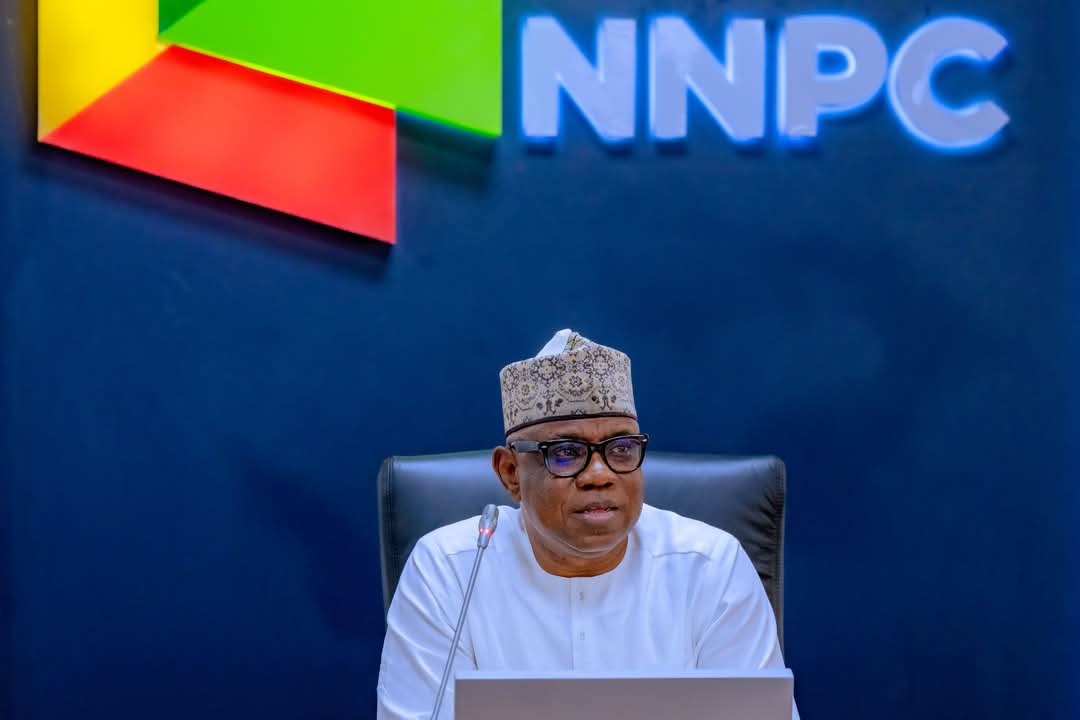
NNPC’s Gas Master Plan 2.0 Reopens the Old Question Nigeria Keeps Dodging: Execution
Nigerian National Petroleum Company Limited (NNPCL) has unveiled the Nigerian Gas Master Plan 2026 (NGMP 2026), a revised framework intended to reposition natural gas as the backbone of Nigeria’s industrialisation, energy security, and transition strategy. The plan was launched on January 30, 2026, at the NNPC Towers in Abuja and is presented as a shift from policy articulation toward execution, investment mobilisation, and commercial discipline.
DECISION HIGHLIGHT
Institution: Nigerian National Petroleum Company Limited
Policy Instrument: Nigerian Gas Master Plan 2026 (NGMP 2026)
Political Sponsor: Ekperikpe Ekpo
Corporate Sponsor: Bashir Bayo Ojulari
Strategic Target: 10 bcfd gas production by 2027, 12 bcfd by 2030
Investment Ambition: >$60bn across the gas value chain by 2030
Policy Lineage: Successor to Nigerian Gas Master Plan 2008, aligned with Decade of Gas Initiative
DECISION MEMO
NGMP 2026 arrives with familiar ambition but sharper language. Nigeria holds about 210 trillion cubic feet of proven gas reserves, with upside estimates reaching 600 Tcf, placing it among the world’s most significant gas provinces. Yet despite decades of gas-centric policy framing, domestic supply gaps, underdeveloped infrastructure, and weak offtake economics persist.
The Honourable Minister of State for Petroleum Resources (Gas), Mr. Ekperikpe Ekpo, framed the Plan as a break from historical inertia, describing it as a move from “policy articulation to disciplined execution.” The admission was revealing. Nigeria’s gas constraint has never been geological, but institutional, translating reserves into dependable supply, monetisable infrastructure, and measurable economic outcomes.
Engr. Bashir Bayo Ojulari, NNPC Group Chief Executive Officer (GCEO), reinforced this positioning, presenting NGMP 2026 as an execution-anchored and investor-facing roadmap. He cited production targets of 10 bcfd by 2027 and 12 bcfd by 2030, alongside a projected $60 billion investment requirement across upstream, midstream, and downstream gas segments. The Plan prioritises advancing resources from 3P to bankable 2P reserves, improving cost competitiveness, and expanding gas delivery to power, LPG, CNG, Mini-LNG, and industrial offtakers.
From an institutional perspective, NNPC has framed the Plan as a definitive coordination tool. In a release by Andy Odeh, Chief Corporate Communications Officer, NGMP 2026 is intended to “serve as the definitive framework for coordinated gas sector development, execution discipline, and value creation over the next decade,” underscoring management’s attempt to close the historic gap between intent and implementation.
Industry reaction was supportive but conditional. Adegbite Falade of Aradel Holdings described the Plan as a potential bridge between intent and reality, while Matthieu Bouyer signalled alignment from international operators. These endorsements are meaningful, but they do not substitute for bankable pricing, enforceable contracts, and transport infrastructure, which remain the sector’s binding constraints.
Crucially, this is not Nigeria’s first attempt at gas centrality. The original Nigerian Gas Master Plan of 2008 laid out similar domestic supply corridors and industrial anchors. Its limited impact stemmed not from design failure, but from weak enforcement, distorted pricing regimes, and fiscal uncertainty. NGMP 2026 therefore carries not just ambition, but legacy risk.
DATA BOX
Proven Gas Reserves: ~210 Tcf
Upside Potential: Up to 600 Tcf
Production Targets:
• 10 bcfd by 2027
• 12 bcfd by 2030
Projected Investment Requirement: >$60bn by 2030
Policy Precursor: Nigerian Gas Master Plan 2008
Alignment Frameworks: Decade of Gas Initiative, Petroleum Industry Act
WHO WINS / WHO LOSES
Winners:
Gas-focused upstream producers with scalable reserves and existing infrastructure.
Industrial users and power generators, if domestic gas supply reliability improves.
Losers:
Policy credibility, if execution timelines slip as they did under earlier gas frameworks.
Investors exposed to regulated pricing without enforceable offtake and payment security.
POLICY SIGNALS
NGMP 2026 signals a tougher rhetorical stance on execution, but credibility will hinge on enforcement. Domestic gas pricing, transport tariffs, and power sector liquidity remain unresolved pressure points. Without reform in these areas, coordination risks reverting to aspiration.
INVESTOR SIGNAL
The Plan improves narrative coherence but not automatic bankability. Investors will look for early final investment decisions, credible pricing frameworks, and pipeline expansions backed by firm contracts. Capital will follow executed projects, not policy declarations.
RISK RADAR
Execution risk remains dominant. Infrastructure delays, pricing distortions, power sector arrears, and security challenges persist. There is also sequencing risk, scaling supply ahead of bankable demand could recreate stranded assets rather than value.
NGMP 2026 is not short of ambition. What Nigeria must now prove is that this gas plan functions as a commercial programme, not another strategic document. That proof will come through contracts signed, infrastructure delivered, and molecules sold.
Discover more from StakeBridge Media
Subscribe to get the latest posts sent to your email.