

By Jennete Ugo Anya
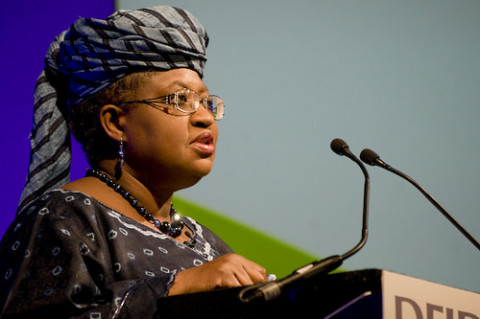
The Director-General (DG) of the World Trade Organization (WTO), Dr. Ngozi Okonjo-Iweala, recently delivered the 8th Annual Wenger Lecture at American University on “Global Trade, Overdependencies and the Future of the Multilateral Trading System,” engaging with Angela Ellard, former Deputy DG of the WTO.
DECISION HIGHLIGHT
The WTO is intensifying its reform narrative, focusing on supply chain vulnerabilities and systemic overdependence ahead of the 14th Ministerial Conference.
DECISION MEMO
The lecture reinforces a strategic pivot within the WTO from rule preservation to system adaptation. Okonjo-Iweala framed global trade as operating within a “turbulent trade world,” signalling recognition that existing multilateral structures are under strain from geopolitical fragmentation and concentrated supply chains.
Okonjo-Iweala’s emphasis on overdependencies reflects a recalibration of trade policy discourse, from efficiency-driven globalisation towards resilience and diversification. The reference to the 14th Ministerial Conference positions the upcoming forum as a critical inflection point for institutional relevance, where incremental reforms may no longer suffice.
Ellard provided contextual engagement on institutional pathways, underscoring continuity between past reform efforts and emerging priorities. The discussion highlights an internal alignment within the organisation on the need to modernise trade rules to accommodate shifting economic realities.
Acknowledgements to Jonathan R. Alger, President of American University, and Padideh Ala’i, Professor, situate the engagement within an academic-policy interface, reinforcing the WTO’s effort to shape intellectual consensus around reform urgency.
DATA BOX
- Event: 8th Annual Wenger Lecture
- Date: April 16, 2026
- Theme: Global trade, overdependencies, multilateral system future
- Key forum ahead: 14th World Trade Organization Ministerial Conference
- Core issue: Supply chain concentration and systemic trade vulnerabilities
- Strategic focus: Trade resilience, diversification, institutional reform
WHO WINS / WHO LOSES
Diversified economies stand to benefit from a shift towards resilient supply chains. Countries heavily reliant on single-market or single-supply dependencies face adjustment pressures. The WTO gains relevance if reforms materialise, while fragmented bilateral trade arrangements risk losing coherence within a multilateral framework.
POLICY SIGNALS
There is a clear movement towards embedding resilience within global trade governance. Policymakers are prioritising diversification and risk mitigation over pure efficiency, indicating a structural shift in trade rule-making.
INVESTOR SIGNAL
Investors are likely to recalibrate supply chain strategies, favouring jurisdictions with diversified trade linkages and stable policy environments. Trade-exposed sectors may see capital reallocation towards resilience-enhancing investments.
RISK RADAR
Geopolitical fragmentation risk remains elevated, potentially undermining multilateral consensus. Reform risk persists if institutional inertia delays meaningful outcomes at the ministerial level. Supply chain transition risk may increase costs in the short term, while uneven adoption of new trade norms could create regulatory asymmetries.
Discover more from StakeBridge Media
Subscribe to get the latest posts sent to your email.