

By Johnson Emmauel
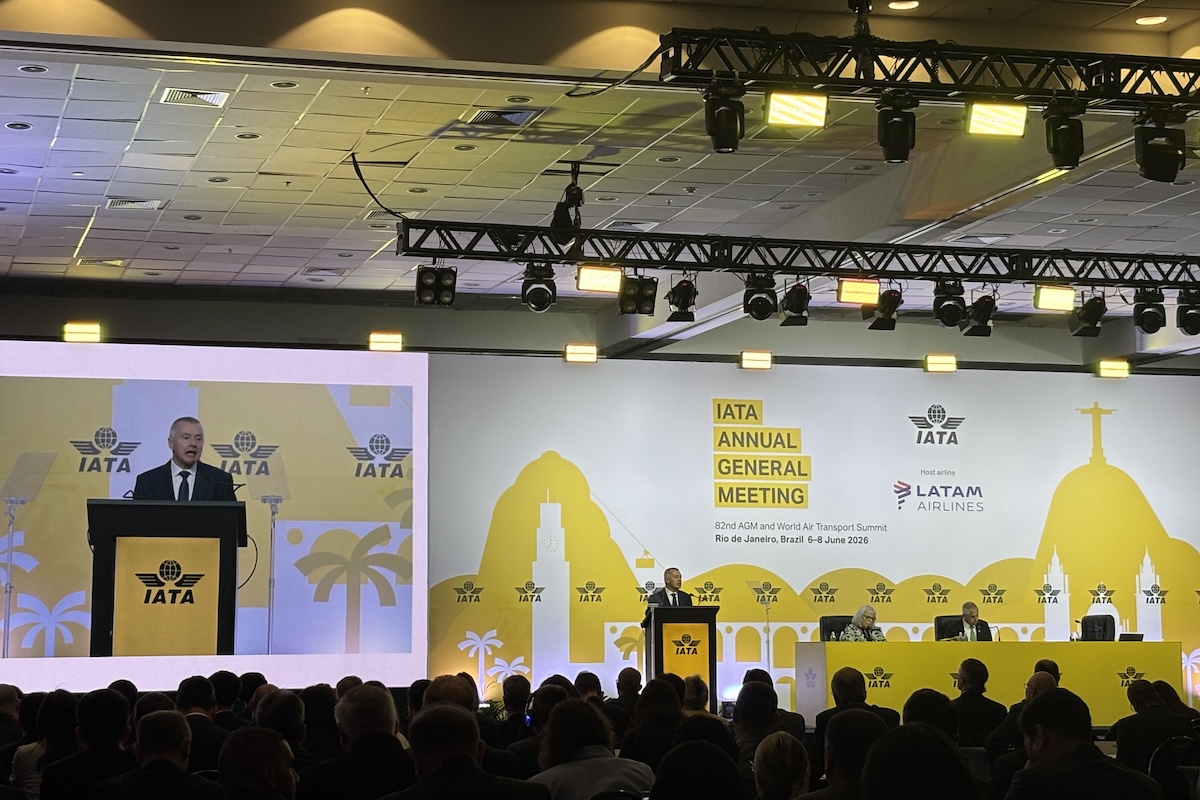
At the International Air Transport Association (IATA) Annual General Meeting in Rio de Janeiro, Willie Walsh, Director General of the International Air Transport Association, warned that airlines globally face an additional $100 billion jet fuel bill in 2026 following oil market disruptions linked to tensions in the Middle East and the closure of the Strait of Hormuz. According to IATA, jet fuel prices are expected to rise by 70 percent this year, reducing projected global airline profits to $23 billion and forcing carriers to raise fares. Separately, Kamil Al-Awadhi, Regional Vice President for Africa and the Middle East at the International Air Transport Association, again identified Nigeria as one of the world’s most expensive aviation markets, citing excessive taxes, charges and operating costs.
“High oil prices will inevitably mean higher ticket prices. There’s just no way to avoid that,” Walsh said.
DECISION HIGHLIGHT
The aviation industry is confronting a dual challenge: a global fuel-cost shock and persistent structural cost pressures in markets such as Nigeria.
For airlines, fuel remains one of the largest operating expenses. A 70 percent increase in jet fuel prices significantly alters profitability assumptions, pricing strategies and network planning decisions.
Walsh described the situation as “very challenging” and warned that for some carriers, “the increase in the fuel bill is potentially existential.”
DECISION MEMO
The significance of the warning extends beyond higher ticket prices.
The projected $100 billion increase in industry fuel expenditure effectively functions as a global cost transfer mechanism, forcing airlines to choose between absorbing losses, reducing margins or passing costs to passengers and cargo operators.
The challenge is particularly acute because aviation remains a low-margin industry even during favourable economic periods. Walsh described current industry margins as “wafer-thin,” suggesting limited capacity to absorb sustained fuel inflation.
While airlines globally face the same fuel environment, the impact is unlikely to be uniform. Premium long-haul carriers and business-travel-focused operators may possess greater pricing power than airlines competing primarily in price-sensitive leisure markets.
Sean Doyle, Chief Executive of British Airways, acknowledged this reality.
“There’ll be no getting away from it – if fuel goes up, fares have to go up,” Doyle said.
The situation carries additional implications for African aviation, where structural operating costs already constrain profitability. In Nigeria’s case, fuel inflation compounds existing challenges linked to taxation, airport charges, insurance costs and infrastructure-related expenses.
Al-Awadhi argued that cost competitiveness remains one of the biggest obstacles facing Nigerian aviation.
The concern is not merely about profitability but about the ability of local carriers to compete effectively against international operators with larger balance sheets and broader networks.
“In a recent research conducted, we discovered that the most expensive airport in Africa is Abuja airport, followed by Lagos airport,” Al-Awadhi said.
According to him, “The government imposes at least 27 different charges on airlines.”
The broader interpretation is that while global airlines are responding to external energy shocks, Nigerian carriers must simultaneously navigate domestic cost burdens that further weaken competitive positioning.
DATA BOX
- Additional global airline fuel bill in 2026: $100 billion
- Expected increase in jet fuel prices: 70 percent
- Forecast global airline profit: $23 billion
- Global traffic growth forecast: 2 percent
- Proposed reduction in West African aviation taxes and charges: 25 percent
- Charges imposed on airlines in Nigeria, according to IATA: 27
- Airports previously identified by IATA as Africa’s most expensive: Nnamdi Azikiwe International Airport, Abuja; Murtala Muhammed International Airport, Lagos
WHO WINS / WHO LOSES
Winners
- Oil producers benefiting from elevated energy prices.
- Airlines with strong balance sheets and pricing power.
- Premium and long-haul operators able to transfer costs to passengers.
- Fuel-efficient airlines with lower operating costs.
Losers
- Airlines operating on thin margins.
- Price-sensitive travellers.
- Cargo operators facing higher transportation costs.
- Nigerian carriers already burdened by high operating expenses.
- Tourism-dependent markets vulnerable to reduced travel demand.
POLICY SIGNALS
The developments reinforce the growing importance of aviation cost reform across Africa.
IATA’s call for a 25 percent reduction in aviation taxes and charges across the Economic Community of West African States suggests that industry stakeholders increasingly view cost competitiveness as a policy issue rather than a commercial issue alone.
For Nigeria, the concerns highlight the potential economic consequences of excessive aviation charges on connectivity, tourism, trade and sector growth.
INVESTOR SIGNAL
The aviation sector is entering a period of margin compression.
Investors are likely to focus increasingly on airlines with strong liquidity positions, efficient fleets, diversified revenue streams and the ability to pass through higher costs.
The warning also reinforces the investment case for fuel efficiency technologies, aviation infrastructure improvements and cost-reduction initiatives.
In Nigeria, future investment attractiveness may depend partly on progress in reducing structural operating costs.
RISK RADAR
The principal risk is prolonged energy market disruption.
If elevated fuel prices persist, fare increases could eventually weaken passenger demand and reduce traffic growth.
Walsh acknowledged this uncertainty, noting that “the big unknown is how long travellers and shippers can tolerate the higher costs of connectivity.”
A second risk is airline solvency. Smaller and weaker carriers may struggle to absorb fuel-cost shocks, particularly in high-cost operating environments.
A third risk concerns Africa’s competitiveness. As fuel inflation combines with taxation, airport charges, leasing costs and insurance expenses, airlines operating in already expensive markets face increasing pressure on profitability and expansion plans.
The emerging challenge for the aviation industry is therefore not simply managing higher fuel costs, but maintaining growth, affordability and financial sustainability simultaneously.
Discover more from StakeBridge Media
Subscribe to get the latest posts sent to your email.