

By Ayo Susan
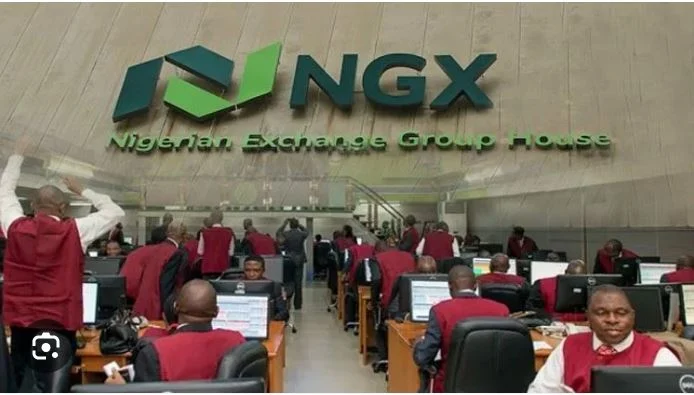
The Nigerian Exchange Limited (NGX) recently issued cautionary letters to Tantalizers Plc and NPF Microfinance Bank Plc for breaches of closed period trading rules, even as both stocks posted strong year to date gains.
The Exchange disclosed in its February 2026 X Compliance Report that both companies violated Rule 17:18 of the Listings Rules, which restricts insider trading during sensitive disclosure windows.
The enforcement action comes amid broader regulatory vigilance following unusual price movements in select equities.
DECISION HIGHLIGHT
The NGX has signalled stricter surveillance of insider transactions but stopped short of imposing financial sanctions or trading restrictions on the affected firms.
While the warnings reinforce rule visibility, the absence of immediate punitive measures raises questions about deterrence strength at a time of heightened speculative activity in the market.
DECISION MEMO
The Nigerian Exchange’s intervention reflects a market regulator attempting to stay ahead of governance slippage during a period of strong equity momentum. However, the current action highlights a familiar tension between rule enforcement and enforcement intensity.
The Exchange stated that Tantalizers Plc engaged in insider dealing during its closed period, while NPF Microfinance Bank Plc was flagged for “a breach of the provisions of Rule 17:18: Period of Closure.”
Rule 17:18 is unambiguous. It restricts insiders and connected persons from trading when material information remains undisclosed. Closed periods are designed specifically to prevent information asymmetry and preserve market fairness.
The key issue is not the rule itself but the enforcement optics.
Both companies have recorded significant share price appreciation in early 2026. Tantalizers is up 116 percent year to date, while NPF Microfinance Bank has gained 85.7 percent. In momentum driven markets, insider trading breaches during rallies attract heightened investor sensitivity.
The NGX’s move therefore serves as a reputational signal, but its deterrent power will depend on follow through.
What remains notably absent from the disclosure is enforcement depth.
There is no indication of:
- Monetary penalties
- Director level accountability measures
- Enhanced surveillance status
- Mandatory governance remediation plans
Without these, the market may interpret the warnings as procedural rather than corrective.
The broader market context heightens the stakes. The Exchange has already suspended trading in another Growth Board listing after an extraordinary 772 percent price surge within one month. That backdrop suggests regulators are increasingly alert to overheating pockets within the market.
Yet sustained credibility depends on consistency between detection and consequence.
From a corporate perspective, the timing of the breaches is also sensitive. Tantalizers’ recent rally has been partly supported by its diversification into entertainment and digital media. Its subsidiary, Tantainment Limited, secured a N2 billion equity investment for a 10 percent stake based on a N30 billion valuation.
Meanwhile, NPF Microfinance Bank’s share price strength appears linked to its return to profitability after years of losses.
In both cases, improving corporate narratives coincided with insider trading breaches. That overlap is precisely the scenario closed period rules are designed to guard against.
The Exchange emphasised that trading restrictions during closed periods are critical to maintaining “an orderly and efficient market.” The policy logic is sound. The execution question now shifts to whether warning letters alone are sufficient to shape behaviour in a fast-rising market.
DATA BOX
Tantalizers YTD Gain: 116 percent
Tantalizers Share Price: N5.40
Tantalizers Shares Outstanding: 5 billion
Tantalizers Market Cap: about N27 billion
NPF Microfinance Bank YTD Gain: 85.7 percent
NPF Share Price: N6.89
NPF Shares Outstanding: 5.99 billion
NPF Market Cap: N41.3 billion
Relevant Rule: NGX Rule 17:18
Recent extreme case in market: 772 percent price surge in one month
WHO WINS / WHO LOSES
Who Wins
- The NGX’s market surveillance credibility, in the near term
- Investors prioritising governance transparency
- Compliance focused institutional participants
- Regulators seeking to reinforce disclosure discipline
Who Loses
- Minority shareholders exposed to information asymmetry risk
- Companies facing heightened governance scrutiny
- Momentum traders if enforcement tightens further
- Market perception if warnings are seen as insufficient deterrence
POLICY SIGNALS
First, the Exchange is clearly tightening monitoring of insider transactions, particularly in high momentum stocks.
Second, the use of public cautionary letters indicates a preference for graduated enforcement rather than immediate heavy sanctions.
Third, the action reflects growing sensitivity to governance optics as domestic liquidity and retail participation expand.
Fourth, the broader regulatory environment suggests the NGX is moving toward a more surveillance driven market regime, though still evolving in enforcement severity.
INVESTOR SIGNAL
For institutional investors, the signal is mixed.
On one hand, the NGX is demonstrating active oversight, which supports market credibility. On the other hand, the limited visible penalties may prompt questions about enforcement depth and deterrence effectiveness.
Serious investors will monitor whether repeated breaches attract progressively stronger sanctions. The trajectory of enforcement matters more than the initial warning.
If consistently applied, tighter governance policing could improve Nigeria’s equity market risk premium over time. If inconsistently applied, it could reinforce perceptions of uneven compliance discipline.
RISK RADAR
Enforcement Credibility Risk
Warnings without visible penalties may dilute deterrence if repeated.
Momentum Distortion Risk
Rapid price appreciation combined with insider breaches could amplify volatility episodes.
Governance Perception Risk
Foreign institutional investors are highly sensitive to insider trading enforcement quality.
Surveillance Capacity Risk
Sustained market rallies will test the Exchange’s real time monitoring capability.
Regulatory Escalation Risk
If breaches persist, the NGX may be forced into sharper enforcement actions that could unsettle speculative segments.
Bottom Line
The Nigerian Exchange has moved to reinforce closed period discipline, but the current intervention is more cautionary than corrective. With both flagged stocks delivering strong rallies, the real test will be whether enforcement evolves into consistently visible consequences. Market confidence will ultimately track not the presence of rules, but the credibility of their enforcement.
Discover more from StakeBridge Media
Subscribe to get the latest posts sent to your email.