

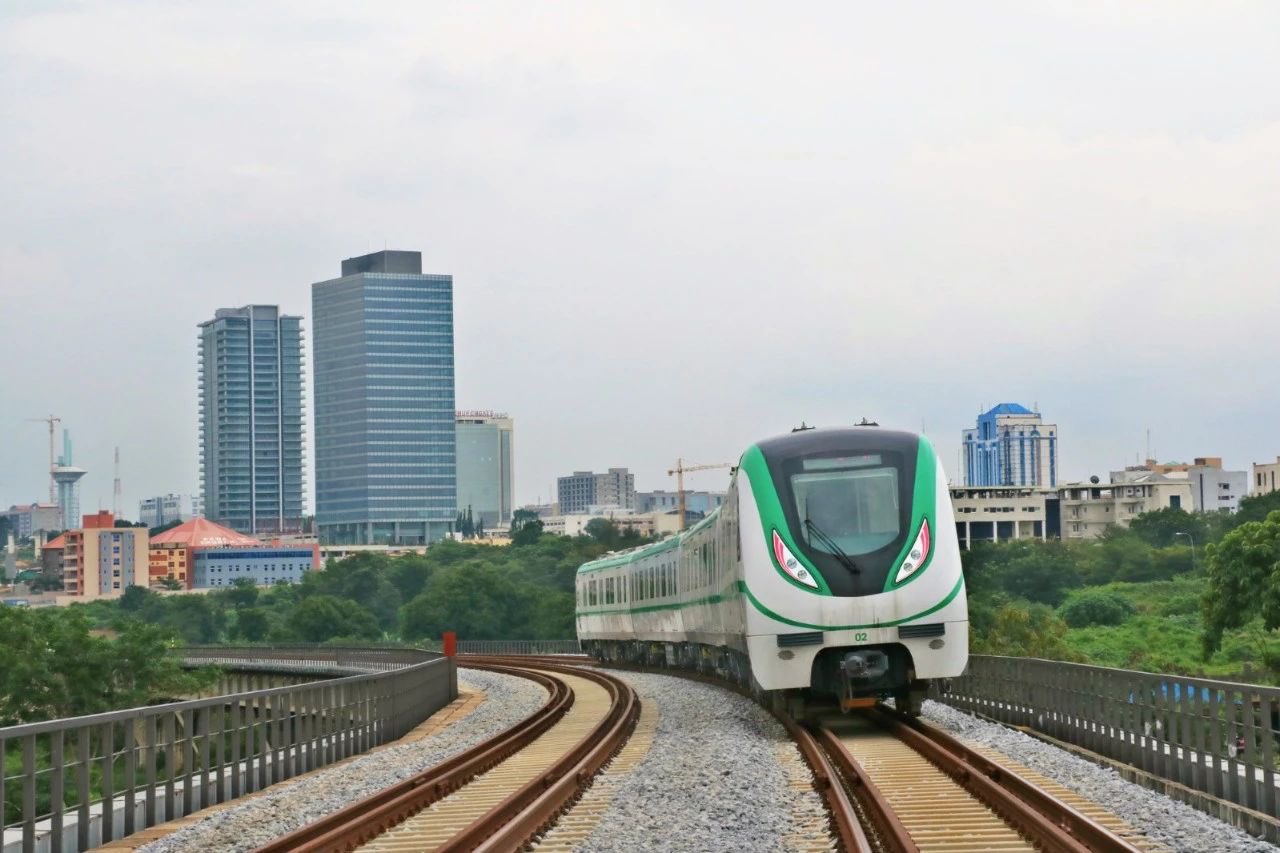
For too long, Nigeria has pretended that economic growth can happen on broken roads, paralysed highways, chaotic transport systems, and collapsing urban mobility. It cannot. That is why the Federal Executive Council’s approval of $2.99 billion for rail projects across Lagos, Kano, and Kaduna deserves serious national attention, not as routine government expenditure, but as a strategic economic necessity.
We must say this clearly, no serious economy moves millions of people and billions of naira daily on road transport alone. The current state of congestion in Lagos, commercial bottlenecks in Kano, and expanding urban pressure in Kaduna are not merely transportation problems. They are productivity crises. Every wasted hour in traffic is lost economic value. Every delayed movement of goods is reduced competitiveness. Every inefficient commute is a hidden tax on citizens and businesses.
The federal government, through the Ministry of Finance Incorporated (MOFI), appears to finally recognise that transport infrastructure is not cosmetic development. It is economic architecture.
The Lagos Green Line, in particular, represents far more than another urban rail initiative. The Lekki corridor has rapidly transformed into one of Africa’s most commercially aggressive economic zones, driven by real estate expansion, industrial investments, port activities, financial services, and population growth. Yet the same corridor has become notorious for punishing congestion that drains productivity daily. Without rail infrastructure, Lagos risks becoming economically overstretched by its own growth.
We believe the Kano Metro project carries equally strategic importance. Kano remains one of Nigeria’s most critical commercial nerve centres, connecting northern trade routes, manufacturing activity, agriculture, and regional distribution systems. Yet transport inefficiency has continuously weakened the city’s economic velocity. Rail mobility in Kano is therefore not simply urban beautification. It is a commercial stabilisation tool.
Kaduna’s light rail project must also be understood beyond mobility rhetoric. Kaduna increasingly functions as an administrative, educational, and commercial extension within northern Nigeria’s economic corridor. Efficient transportation infrastructure could significantly improve labour mobility, urban integration, and business efficiency across the city.
However, we must sound a note of caution. Nigeria has become dangerously familiar with approving ambitious infrastructure projects that later collapse under weak execution, funding inconsistencies, political discontinuity, or maintenance failure. Announcements are easy. Delivery is where credibility lives or dies.
This is where the Tinubu administration faces its real test.
If these rail systems are executed efficiently, transparently, and within sustainable timelines, they could fundamentally reshape commuting behaviour, reduce transportation costs, improve environmental outcomes, and unlock broader urban productivity. But if they become trapped within bureaucratic delays, contractor inefficiencies, corruption, or abandoned financing structures, they will simply join Nigeria’s long catalogue of unrealised infrastructure promises.
We are particularly encouraged by the decision to anchor financing through the Ministry of Finance Incorporated while leveraging counterpart funding structures. Nigeria cannot continue depending exclusively on annual budget allocations for transformational infrastructure. Blended financing models, if properly governed, offer a more realistic pathway for long-term infrastructure development.
Equally important is the simultaneous establishment of a presidential power sector task force chaired by President Bola Ahmed Tinubu. Transport and electricity are not separate economic issues. They are interconnected productivity systems. No industrial economy succeeds without solving both mobility and energy simultaneously.
Ultimately, rail infrastructure is not about trains. It is about national efficiency.
A country of over 200 million people cannot continue operating with twentieth-century transport assumptions while competing in a twenty-first-century global economy. If Nigeria genuinely intends to industrialise, attract investment, expand urban productivity, and reduce economic waste, then aggressive rail modernisation is no longer optional. It is overdue.
Discover more from StakeBridge Media
Subscribe to get the latest posts sent to your email.