

By Kingsley Ani
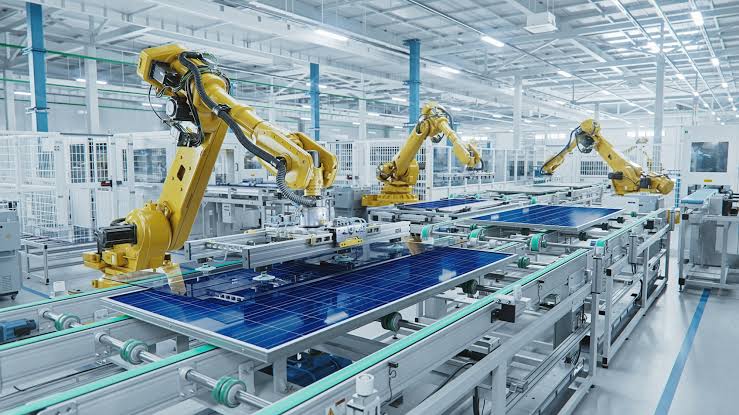
Schneider Electric says Nigerian manufacturers are increasingly adopting adaptive automation systems as rising energy costs, supply chain disruptions and operational uncertainty compel businesses to improve efficiency and protect profitability. According to the Manufacturers Association of Nigeria (MAN), manufacturers spent N1.35 trillion on alternative energy in 2025, more than 21 percent higher than the previous year, while energy now accounts for 35 to 40 percent of production costs. Schneider Electric said software-defined automation enables factories to modify production systems digitally, reducing equipment replacement costs and downtime.
DECISION HIGHLIGHT
The shift towards adaptive automation signals that manufacturers are increasingly treating digital flexibility, rather than additional physical capacity, as the primary response to structural operating costs.
DECISION MEMO
The growing interest in adaptive automation reflects a broader transformation in industrial strategy. As electricity costs, foreign exchange volatility and supply chain disruptions become persistent rather than cyclical challenges, manufacturers are prioritising technologies that improve operational resilience without requiring continuous capital replacement.
Unlike conventional automation, software-defined systems enable production lines to be reconfigured digitally, reducing downtime and limiting dependence on imported spare parts. This is particularly relevant in Nigeria, where infrastructure constraints and foreign exchange pressures continue to affect industrial operations.
Elijah Daniel, Country Sales Director, Sub-Saharan Africa, Schneider Electric, said: “The operators who will lead the next decade are the ones building plants that can adapt, not just the ones building plants to spec.”
The trend suggests that competitive advantage in manufacturing is shifting from scale alone towards operational adaptability, with digital industrial systems becoming a strategic tool for sustaining productivity under volatile economic conditions.
DATA BOX
- Manufacturers spent N1.35 trillion on alternative power in 2025
- Alternative energy spending increased over 21 percent year-on-year
- Energy represents 35 to 40 percent of production costs
- Schneider Electric says adaptive automation can reduce spare parts inventory by up to 70 percent
- World Bank estimates Nigeria loses about $29 billion annually to power shortages, nearly 7 percent of Gross Domestic Product
- More than 70 percent of Nigerian businesses depend on generators
- Sub-Saharan Africa’s industrial process automation market projected to grow from $817 million in 2025 to over $1.5 billion by 2030
WHO WINS / WHO LOSES
Winners
- Manufacturers investing in digital industrial systems
- Industrial automation technology providers
- Businesses seeking lower maintenance costs and improved operational flexibility
Losers
- Manufacturers dependent on rigid legacy automation systems
- Businesses with high exposure to equipment replacement and prolonged production downtime
POLICY SIGNALS
- Industrial competitiveness is increasingly linked to digital transformation rather than physical expansion alone.
- Persistent energy challenges are accelerating technology-led productivity improvements.
- Automation is evolving from a capital expenditure decision into a strategic resilience investment.
INVESTOR SIGNAL
The adoption of adaptive automation points to expanding investment opportunities in industrial technology, digital manufacturing and process optimisation. Companies supplying software-driven automation solutions are likely to benefit as manufacturers prioritise efficiency and cost resilience over conventional capacity expansion.
RISK RADAR
- Persistent electricity shortages limiting productivity gains
- High implementation costs for digital industrial systems
- Cybersecurity and operational technology risks
- Foreign exchange pressures affecting technology imports and maintenance costs
Discover more from StakeBridge Media
Subscribe to get the latest posts sent to your email.