

By Johnson Emmanuel
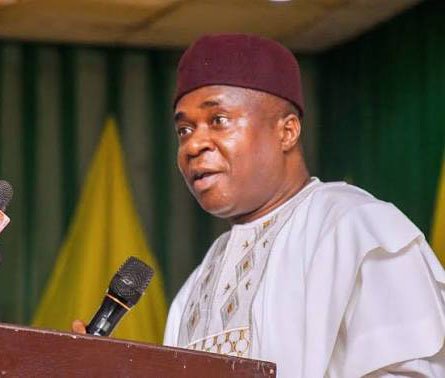
The Director of the Institute of Capital Market Studies, Nasarawa State University, Professor Uche Uwaleke, said in an interview with ARISE NEWS recently that Nigeria’s rising public debt should not be judged solely by its size but by how borrowed funds are deployed. While acknowledging public concerns over the country’s debt profile, he argued that borrowing remains a legitimate fiscal instrument when tied to infrastructure and human capital development, supported by stronger fiscal discipline, spending reforms and legal accountability.
DECISION HIGHLIGHT
Uwaleke’s position reframes Nigeria’s debt debate from one centred on borrowing volume to one focused on capital productivity, fiscal governance and expenditure efficiency.
DECISION MEMO
Rather than advocating lower borrowing at all costs, Uwaleke argues that Nigeria’s fiscal challenge lies in weak capital allocation and insufficient accountability. His assessment suggests that debt sustainability depends less on debt accumulation than on whether borrowed resources generate productive economic assets capable of expanding future revenues.
He said: “Borrowing is not bad. It’s something that, especially when it needs to happen, what’s important is the application of the loan.”
While recognising that exchange rate unification and the securitisation of the Central Bank of Nigeria’s Ways and Means advances have inflated the naira value of public debt, Uwaleke maintained that the pace of debt accumulation remains a legitimate concern.
According to him: “The concerns being expressed by members of the public are valid when you look at it from the point of view of the pace of debt accumulation over the years.”
He argued that the disconnect between rising debt and visible development has weakened public confidence in fiscal policy.
“When you look around you, you may not see tangible things that match the level of loans that have been taken, especially against the backdrop of Section 41 of the Fiscal Responsibility Act, which clearly says borrowing should be for long-term concessional financing and for capital and human development.”
Uwaleke also criticised expenditure management, insisting that governments should respond to revenue shortfalls by adjusting spending rather than increasing borrowing.
He said: “When you have a budget and in the course of implementation you’re noticing shortfall in revenue, you don’t continue to increase the size of your spending. What you need to do is prioritise and cut down on expenditures that can be moved to the next fiscal year.”
On revenue administration, he advocated lower collection costs. “I’ve recommended reducing those cost-of-collection ratios by at least 50 percent. Whatever we’re giving these agencies should be based on need, not simply on a fixed percentage.”
To strengthen transparency, Uwaleke recommended greater reliance on project-linked financing. “We should tie borrowing to projects. We have to increase the issuance of infrastructure bonds. When you borrow using instruments like Sukuk and Green Bonds, you’re sure where the money will be used.”
He also defended Nigeria’s creditworthiness despite rising debt. “Nigeria is always meeting its loan obligations. We have not defaulted, and I don’t see Nigeria defaulting in the near future.”
On the discontinuation of Ways and Means financing, he added: “What’s important now is that no additional Ways and Means loans are being advanced to the government. That has helped build confidence among rating agencies, the World Bank and the IMF.”
He concluded: “What’s important is that when you borrow, make sure that you apply it wisely and in line with the provisions of the law.”
DATA BOX
- Nigeria’s public debt: Approximately N159 trillion
- Public debt in 2014: Approximately N11.2 trillion
- Debt excluding exchange rate and Ways and Means effects: About N97 trillion in 2023
- External debt: Approximately $110 billion at end-2025
- Current debt composition:
- Domestic debt: 53 percent
- External debt: 47 percent
- Recommended debt composition:
- Domestic debt: 70 percent
- External debt: 30 percent
- Recommended financing instruments:
- Sukuk
- Green Bonds
- Panda Bonds
- Infrastructure Bonds
WHO WINS / WHO LOSES
Winners
- Infrastructure investors under project-linked borrowing
- Taxpayers through stronger expenditure accountability
- Long-term investors seeking greater fiscal transparency
Losers
- Inefficient public spending practices
- Revenue collection systems with high administrative costs
- Borrowing programmes lacking identifiable capital projects
POLICY SIGNALS
- Fiscal sustainability increasingly depends on expenditure reforms rather than borrowing limits alone.
- Infrastructure-linked financing is gaining prominence over general-purpose sovereign borrowing.
- Stronger legal sanctions may become central to future fiscal responsibility reforms.
INVESTOR SIGNAL
Uwaleke’s proposals support a more transparent sovereign financing framework anchored on productive capital investment. Greater use of project-specific instruments, tighter expenditure controls and reduced reliance on foreign debt could strengthen investor confidence while improving the quality of public sector borrowing.
RISK RADAR
- Continued rapid debt accumulation without corresponding capital formation
- Weak enforcement of fiscal responsibility legislation
- Revenue shortfalls arising from unrealistic budget assumptions
- Foreign exchange exposure from elevated external debt
- Delayed implementation of expenditure and governance reforms
Discover more from StakeBridge Media
Subscribe to get the latest posts sent to your email.