

By Olumide Johnson
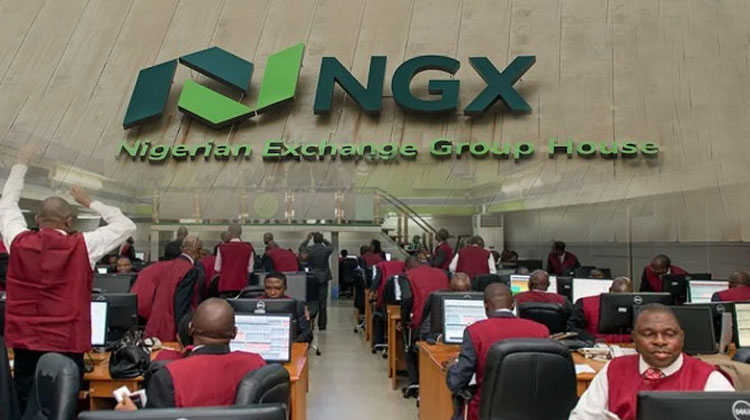
Between May 29, 2023 and May 26, 2026, Nigeria’s equities market recorded its strongest three-year performance since the return to democratic rule in 1999. Under President Bola Ahmed Tinubu, the Nigerian Exchange (NGX) All-Share Index (ASI) rose from 55,769.28 points to 249,738.8 points, a gain of approximately 348 percent, while market capitalisation increased from N30.38 trillion to N160.09 trillion, adding N129.62 trillion in value. The rally was driven by investor expectations of market-oriented reforms and subsequently reinforced by fuel subsidy removal, foreign exchange liberalisation and monetary tightening by the Central Bank of Nigeria (CBN).
DECISION HIGHLIGHT
The market’s re-rating reflects investor endorsement of structural economic reforms that shifted policy emphasis towards private-sector-led growth, market liberalisation and macroeconomic adjustment.
DECISION MEMO
The significance of the NGX rally extends beyond rising share prices. It represents one of the clearest market verdicts on Nigeria’s post-2023 economic policy direction.
Financial markets typically price future expectations rather than current realities. According to some experts, the rally began before the inauguration itself as investors anticipated a more market-friendly administration.
The rally reflects three interconnected developments. First, subsidy removal reduced a major fiscal burden. Second, foreign exchange reforms improved market pricing mechanisms. Third, tighter monetary policy signalled greater commitment to macroeconomic stability.
The gains were further reinforced by stronger international perceptions of Nigeria’s creditworthiness. The International Monetary Fund (IMF) reported economic growth acceleration to 4.1 percent from 3.3 percent, while Moody’s Ratings and Fitch upgraded Nigeria’s sovereign ratings in 2025.
However, the market’s enthusiasm has existed alongside economic strain. Asset owners benefited from substantial capital appreciation, but inflation, currency adjustment and higher living costs imposed significant pressures on households and businesses. The result is a dual reality in which investor confidence and consumer hardship have expanded simultaneously.
Consequently, the rally should be interpreted less as a verdict on living standards and more as a market assessment of policy direction, reform credibility and future earnings expectations.
DATA BOX
- ASI at inauguration (May 2023): 55,769.28 points
- ASI (May 26, 2026): 249,738.8 points
- Three-year gain: 348%
- Market capitalisation (May 2023): N30.38 trillion
- Market capitalisation (May 2026): N160.09 trillion
- Value created: N129.62 trillion
- Single-day gain after inauguration: 5.23%
- Value added in one trading session: N1.5 trillion
- 2023 market return: 45.9%
- 2024 market return: 37.65%
- 2025 market return: 51.19%
- 2026 year-to-date return (May 26): 60.49%
- Economic growth:
- 3.3% at commencement of administration
- 4.1% subsequently
- NGX trading value and volume:
- Approximately fourfold increase according to Umaru Kwairanga, Chairman of NGX Group
WHO WINS / WHO LOSES
Who Wins
- Equity investors.
- Pension funds.
- Asset managers.
- Listed companies with appreciating valuations.
- Foreign portfolio investors.
- Shareholders with significant market exposure.
Who Loses
- Households affected by inflation and rising living costs.
- Fixed-income savers unable to match inflation.
- Businesses facing higher operating costs.
- Consumers with limited exposure to financial assets.
POLICY SIGNALS
The market performance signals investor support for liberalisation, fiscal adjustment and private-sector-led economic activity. It also suggests that markets view reform consistency as more important than short-term economic discomfort. The rally indicates growing confidence in Nigeria’s willingness to undertake previously delayed structural reforms.
INVESTOR SIGNAL
The three-year performance demonstrates that reform implementation can materially alter capital allocation decisions and asset valuations. Investors appear to be pricing expectations of stronger corporate earnings, improved capital flows, better macroeconomic management and deeper financial market development. The continued rise in valuations suggests that confidence in the reform trajectory remains intact, although increasingly dependent on execution.
RISK RADAR
- Persistent inflationary pressures.
- Weak transmission of market gains to household welfare.
- Foreign exchange volatility.
- Reform fatigue or policy reversals.
- Elevated market valuations relative to earnings growth.
- Global capital flow shocks.
- Political pressure to dilute difficult reforms.
- Social tensions arising from the divergence between investor gains and consumer hardship.
The central paradox of the Tinubu-era market rally is that confidence and hardship have expanded concurrently. While the NGX has delivered one of the strongest wealth-creation episodes in Nigeria’s modern financial history, the durability of that performance will ultimately depend on whether macroeconomic reforms translate into broader economic gains beyond capital markets.
Discover more from StakeBridge Media
Subscribe to get the latest posts sent to your email.