

By Hannah Yemisi
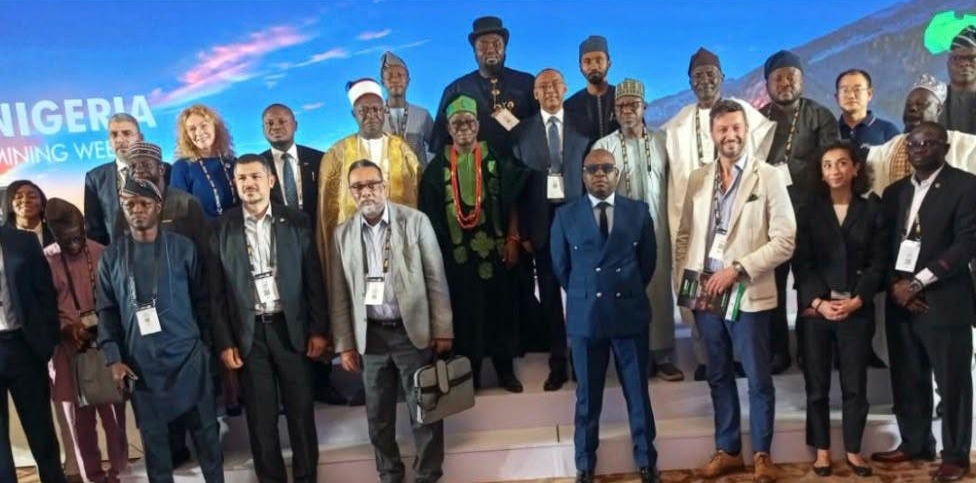
Stakeholders at the 11th edition of Nigeria Mining Week in Abuja have identified community trust, improved security, local value addition and responsible mining practices as critical conditions for converting Nigeria’s mineral wealth into sustainable economic growth.
DEVELOPMENT
The three-day event, organised by the Miners Association of Nigeria in partnership with the Federal Ministry of Solid Minerals Development and PwC Nigeria, is themed ‘Unlocking Investment and Growth through Partnerships.’
President of the Miners Association of Nigeria, Mr. Oba Ayandele Ayanleke, said that the gathering could attract investment, technology and expertise to strengthen the sector.
“When you say coming together of different stakeholders, not only within Nigeria but also from outside, you see that there will be a convergence of ideas, a convergence of technologies, and a convergence of investment, which will make the investment grow very well in Nigeria,” he stated.
However, he identified insecurity along mining corridors as a major obstacle.
“There are so many of them. But still, you know that presently we are having a lot of insecurity issues around our mining corridors. This is one of the major barriers we need to address,” Ayanleke said.
On a recent fatal mining incident, he said: “The government has set up a committee panel to investigate that. Let us wait for them to bring their reports.”
Anna Westerholm, Sweden’s Ambassador to Nigeria, paid tribute to those who died in mining incidents and emphasised community confidence.
“The licence that matters the most is the trust of the community.”
She cited Sweden’s use of automation and battery-electric machinery to reduce workers’ exposure to dangerous tasks.
“Mining is hard work. It should never cost life. We have not got everything right,” she admitted, referencing debates over permits, nature conservation and Sami reindeer lands. “We share what we have learned, mistakes included.”
Westerholm also supported Nigeria’s ambition to move beyond raw-material exports, referencing the minister’s statement in New York that “Nigeria will not remain a source of raw material for the value that others create.”
Country Manager of Segilola Resources Operating Limited, Austin Menegbo, said that the company’s gold mine demonstrated Nigeria’s capacity to host competitive mining operations. The mine produced 91,910 ounces in 2025, with Nigerians accounting for 99 percent of its workforce.
“Segilola has helped to move the conversation about Nigeria’s mining potential from theory to evidence. It has demonstrated that with capital, technical discipline, regulatory involvement, and sustained community partnership, a globally competitive mining operation can be established in Nigeria.”
Menegbo cautioned that one successful commercial gold mine could not transform the industry without a pipeline of credible projects. He identified regulatory coherence, structured public-private dialogue, action against illegal mining and a stronger investment ecosystem as priorities.
Cyril Azobu, Partner and Mining Industry Leader at PwC Nigeria, said: “Nigeria’s mineral potential is well established, but unlocking its full value requires more than mineral endowment; it requires collaboration between government, mining companies, investors, financiers, communities, and development partners.”
He described the recently signed critical minerals framework between Nigeria and the United States as “a timely example of the partnerships that can connect Nigeria’s mineral potential with the investment, technology, and expertise needed to develop it.”
DATA
Segilola produced 91,910 ounces of gold in 2025, while 99 percent of its workforce was Nigerian. Sweden produces approximately 19 percent of the iron ore mined in the European Union.
SIGNIFICANCE
Nigeria’s mining investment prospects depend on more than mineral deposits. Security, credible regulation, worker safety and community acceptance influence project financing, operating continuity and investor confidence.
NEXT MOVE
Attention should focus on the investigation into the fatal mining incident, security improvements, implementation of the Nigeria-US critical minerals framework and development of bankable projects.
OUR LENS
Nigeria’s mineral wealth will generate lasting economic value only when investment translates into domestic processing, skilled employment and stronger local supply chains. Community trust and responsible operations are not peripheral obligations; they are fundamental conditions for sustainable mining growth.
Hannah Yemisi is a reporter of note, governance, state government, healthcare, sustainability, agriculture, reporting on education, and social developments with a focus on accuracy, context and public relevance.
Discover more from StakeBridge Media
Subscribe to get the latest posts sent to your email.