

By Hannah Yemisi
A Nigerian-developed artificial intelligence technology capable of reducing MRI acquisition time by up to 90 percent has won the 2026 Nigeria Prize for Science and Innovation (NPSI), placing healthcare AI at the centre of Nigeria’s innovation agenda.
DEVELOPMENT:
GenScan AI, also known as GenMRI/C-MORE, was developed by Mary-Brenda Akoda, a Nigerian AI researcher and software engineer. She becomes the first woman and first millennial to win the prize as an individual recipient.
She emerged winner from a record 237 entries after an independent evaluation by the Prize’s Panel of Judges and endorsement by the NPSI Advisory Board. The judges selected GenScan AI for combining scientific innovation, technical soundness, developmental impact and commercial scalability.
The C-MORE algorithm uses a one-step consistency-model framework to reconstruct MRI images, potentially cutting scan acquisition times by up to 90 percent without requiring hospitals to replace existing MRI hardware.
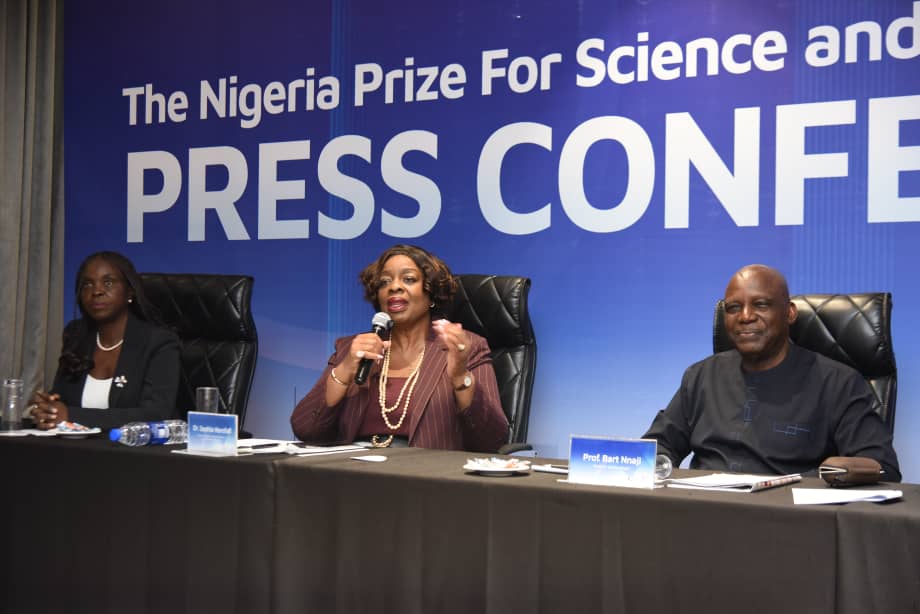
Prof. Barth Nnaji, Chairman of the NPSI Advisory Board, said that the unanimous decision reflected the quality of the innovation and its potential to address important healthcare challenges.
“The adjudication process was deliberately structured to identify innovations that went beyond scientific novelty to demonstrate practical relevance, measurable impact and prospects for real-world application,” Nnaji said.
General Manager, External Relations and Sustainable Development of Nigeria LNG Limited, Dr Sophia Horsfall, said that the emergence of a winner after the prize recorded a “no winner” verdict in 2025 demonstrated that the competition had maintained its standards.
“If an entry is declared worthy of the Prize today, we can be confident that it has earned that distinction through a thorough and credible evaluation process,” she said.

Mary-Brenda Akoda, a Nigerian AI researcher and software engineer, who developed GenScan AI
NUMBERS:
GenScan AI can potentially reduce MRI acquisition time by up to 90 percent.
The technology emerged from 237 entries, the highest number recorded since the prize began.
The 2026 award marks only the 12th occasion on which a winning work has been recognised during the prize’s 22-year history.
Akoda will receive US$100,000 at the Grand Award Night scheduled for October 9, 2026.
The potential productivity gain is significant: if scan time falls substantially without requiring new MRI machines, healthcare facilities could potentially process more patients using existing installed capacity.
SIGNIFICANCE:
The importance of GenScan AI lies beyond the headline reduction in scan time. Its proposed ability to work with existing MRI hardware addresses one of the principal constraints facing healthcare systems in resource-constrained markets: the cost of expanding physical infrastructure.
For hospitals, faster acquisition could mean higher scanner utilisation, shorter patient queues and greater imaging capacity. For patients, it could potentially reduce waiting times and improve access to MRI services.
For investors and the broader technology ecosystem, the award also provides a useful example of where Nigeria’s AI opportunity could become commercially meaningful: applying advanced computation to existing infrastructure rather than building entirely new physical systems.
The judges’ emphasis on scalability is particularly important. The real value of GenScan AI will ultimately depend on clinical validation, regulatory approvals, integration into hospital workflows and evidence that the technology can maintain diagnostic quality at scale.
NEXT MOVE:
The next milestones are likely to be validation, clinical adoption and commercial deployment.
The market should watch for evidence of how GenScan AI performs across different MRI machines, clinical applications and patient populations, as well as the regulatory and institutional pathway required for deployment.
The larger question is whether the NPSI recognition can accelerate partnerships between Akoda’s technology, hospitals, medical imaging providers and technology investors.
OUR LENS:
GenScan AI represents a potentially important shift in the economics of healthcare innovation: using AI to extract more capacity from infrastructure Nigeria already owns.
The significance is therefore not simply that a Nigerian researcher has developed an AI application capable of making MRI scans faster. It is that the innovation targets a measurable bottleneck without making additional hardware the first solution.
That distinction matters in a capital-constrained healthcare system. If the technology can demonstrate that a 90 percent reduction in acquisition time is clinically reliable and commercially reproducible, its value proposition extends from scientific achievement to infrastructure productivity.
The NPSI’s decision also sends a broader signal. Nigeria’s innovation challenge is increasingly moving from generating technological ideas to identifying those capable of surviving the harder test of clinical evidence, commercial scalability and real-world deployment.
Hannah Yemisi is a reporter of note, reporting on education, business, economic and social developments with a focus on accuracy, context and public relevance.
Discover more from StakeBridge Media
Subscribe to get the latest posts sent to your email.