

By Enam Obiosio
We should take seriously the Central Bank of Nigeria (CBN)’s decision to withdraw more than N90 trillion through Open Market Operations (OMO) securities in the first 11 months of 2026. Compared with N40.90 trillion in 2025 and N50.23 trillion in 2024, the figure tells us liquidity management has become demanding. But I believe we must ask: can monetary tightening contain inflation if fiscal spending replenishes the liquidity the central bank is trying to absorb?
We cannot dismiss this as a routine pre-election warning. The 2027 election cycle is approaching, and public expenditure, political activity and government allocations can increase money circulating through the banking system. The central bank’s Monetary Policy Committee (MPC) has warned that election-related fiscal expansion could weaken discipline and complicate price stability. Deputy Governor of CBN, Muhammad Abdullahi, identified the transmission channels: “I recognise that election-related fiscal expansion and other incipient price pressures may propagate through transport, energy and production cost channels, amplifying economy-wide cost-push inflation.”
Inflation is not generated only by excess demand; it can also be driven by higher production, transport and energy costs. When public spending raises demand without a corresponding increase in supply, prices can rise. When spending pressures meet fragile supply chains, the consequences can worsen. We should resist the assumption that repeated liquidity withdrawals alone can secure disinflation.
The reported N90 trillion requires careful interpretation. The figure compiled from auction, FMDQ and Financial Market Dealers Association data excludes some maturities and may not represent net liquidity absorbed. October illustrates why: N6.182 trillion in new OMO bills was allotted, while N9.051 trillion matured, producing a net repayment of about N2.87 trillion before other adjustments. We should not confuse gross issuance with the net monetary effect.
The deeper problem is coordination. Founder of the Centre for the Promotion of Private Enterprise (CPPE), Dr. Muda Yusuf, linked liquidity growth to higher government revenues and allocations to states and local governments, much of which remained in commercial banks. He observed: “The public sector liquidity is feeding into the financial system liquidity.” He also identified spending by the Independent National Electoral Commission (INEC), security agencies, political parties and candidates as sources of funds entering circulation. We should recognise this is not simply a central banking problem. It is a fiscal management problem with monetary consequences.
We should consider the World Bank’s warning that Nigeria’s consolidated fiscal deficit could widen from 3.1 percent of gross domestic product in 2025 to 3.5 percent in 2026, as stronger capital spending and pre-election expenditure outweigh revenue gains. Higher oil receipts may improve government finances, but gains do not automatically create fiscal space if spending commitments rise faster. We need to know not only how much government earns, but how much it spends, when it spends and what expenditure produces.
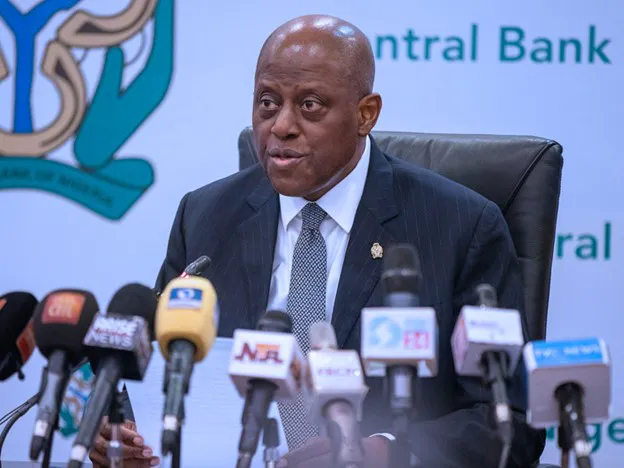
Economist Akpan Ekpo captured the difficulty: “With the elections coming, I don’t think the CBN effort will bear much fruit.” Yet we should understand the warning: monetary policy cannot permanently offset fiscal decisions that inject liquidity. Mr. Olayemi Cardoso, Governor of CBN said, “We are ready,” and pledged proactive deployment of instruments to mop up excess liquidity. Preparedness is necessary, but it cannot substitute for fiscal restraint.
We should demand a compact between monetary and fiscal authorities. Government spending should be predictable, transparently reported and aligned with available revenue and productive capacity. Election-related expenditure should be budgeted, audited and disclosed. Public sector deposits, cash releases and intergovernmental allocations should be monitored for their liquidity implications. The central bank should publish information on gross OMO issuance, maturities and net absorption, allowing the public to distinguish intervention from its actual effect.
We should not mistake this argument for opposition to public spending. Nigeria needs investment in infrastructure, security, health, education and productive capacity. But expenditure that raises demand without expanding supply can intensify the price pressures it is meant to relieve. We should judge spending by its economic return, not its political visibility or allocation size.
For households, inflation is not an abstract monetary statistic. It determines the purchasing power of wages, the cost of food and transport, and the ability to plan. For businesses, volatile prices and expensive credit complicate investment, production and employment. We should not ask citizens and firms to bear tight money’s costs while public institutions disregard the discipline that makes stability possible.
The lesson is that we cannot build price stability on monetary tightening alone while fiscal policy moves in the opposite direction. The CBN can absorb liquidity, manage expectations and defend monetary stability; it cannot make undisciplined spending harmless. We should enter the election period with transparent budgets, credible financing and restraint across every level of government. Otherwise, we may spend more than N90 trillion mopping up liquidity, only to discover that public spending keeps pouring it back.
Enam Obiosio is a public relations and investor relations practitioner and journalist with experience in arts and business journalism, with expertise spanning financial markets, economic policy, infrastructure, corporate communications, and the creative economy.
Discover more from StakeBridge Media
Subscribe to get the latest posts sent to your email.