

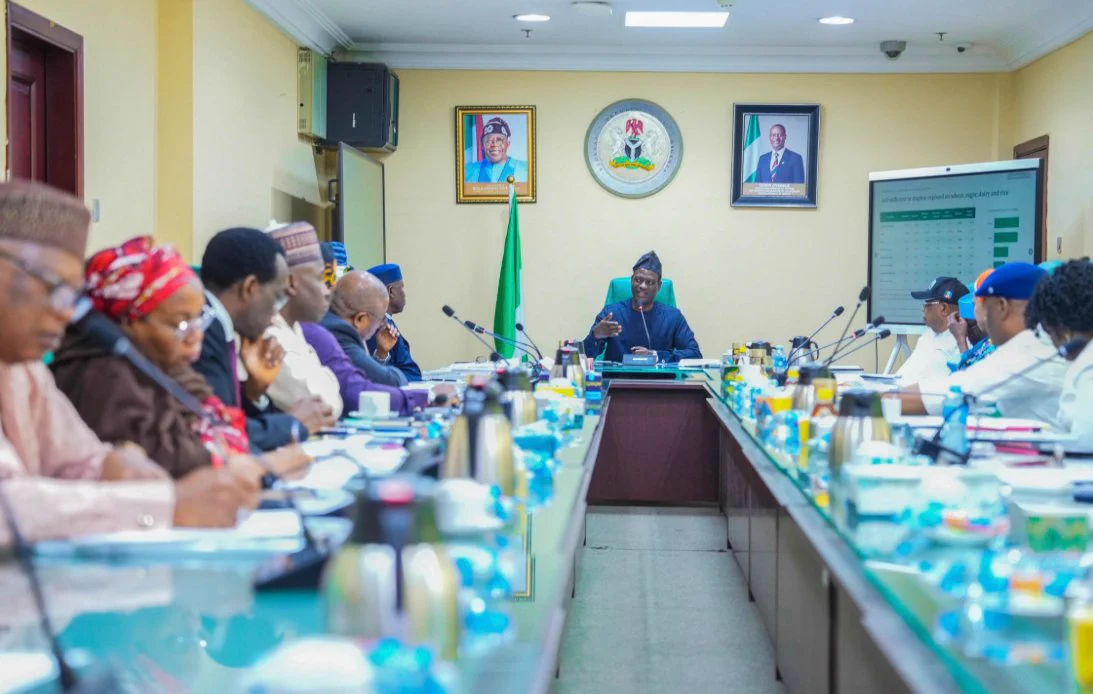
The Economic Management Team (EMT), chaired by Minister of Finance and Coordinating Minister of the Economy, Dr. Taiwo Oyedele, is pursuing budget harmonisation to align government appropriations, revenue projections, financing commitments and capital expenditure within a more coherent fiscal framework. However, without transparent accounting, realistic revenue assumptions and effective implementation controls, the exercise risks carrying existing budget execution weaknesses into another fiscal year rather than resolving them. Enam Obiosio writes.
The Economic Management Team (EMT), chaired by Minister of Finance and Coordinating Minister of the Economy, Dr. Taiwo Oyedele, met in Abuja on 18 November 2026 to review economic performance and advance plans to harmonise the 2026 and 2027 budgets. The Federal Government intends to execute as much of the 2026 capital budget as possible, carry outstanding balances into 2027 and move towards a single annual budget cycle. The meeting considered the 2027 Finance Bill, food and power interventions, and the draft National Development Plan 2026–2030. Participants included ministers and Mr. Philip Ikeazor, Deputy Governor, Economic Policy at Central Bank of Nigeria (CBN).
DECISION HIGHLIGHT
Budget harmonisation recognises that appropriations, revenue and implementation schedules must align. Carrying balances forward may protect project continuity, but must not legitimise delayed capital delivery.
DECISION MEMO
This is a structural adjustment. It acknowledges that projects suffer when appropriations, cash releases and implementation timelines conflict. A single annual cycle could improve planning, but consolidation is not fiscal discipline. Government must identify obligations, separate viable projects from stalled ones and disclose completion funding.
Carrying 2026 balances into 2027 could prevent project interruptions. Alternatively, unfunded commitments could crowd out new priorities and conceal previous budget costs. The EMT disclosed neither the outstanding balances nor affected projects and financing.
The 2027 Finance Bill is intended to update tax laws, improve the business environment, lower borrowing costs and channel liquidity into productive activity. These remain objectives. Cheaper credit depends on fiscal credibility, monetary conditions and lenders’ appetite. Tax changes must improve compliance and investment incentives without creating uncertainty.
Food interventions target cassava, yams, maize and rice through better farm-input delivery, reduced post-harvest losses and targeted support. The 90-day action plan was approved by the National Economic Council and endorsed by the Federal Executive Council.
The power plan targets consistent distribution of about 5,500 megawatts through gas coordination, transmission improvements, metering and infrastructure protection. Without milestones, gas commitments and payment arrangements, the target offers limited assurance to manufacturers.
The figures contextualise, not prove, programme success. The EMT reported gross domestic product (GDP) growth of 4.43 percent in Q2 2026, October inflation of 14.06 percent and reserves of about US$55 billion. Moody’s and Fitch revised Nigeria’s outlook to positive, while S&P Global upgraded its rating from B- to B in May. The EMT said that economic and credit-rating discussions should be “grounded in data and evidence”.
DATA BOX
- GDP growth: 4.43 percent, Q2 2026.
- Headline inflation: 14.06 percent, October 2026, a six-year low according to the EMT.
- External reserves: approximately US$55 billion.
- Power distribution target: about 5,500 megawatts.
- Food intervention: 90-day action plan.
- Budget proposal: carry outstanding 2026 capital balances into 2027.
- National Development Plan: 2026–2030, seven pillars.
WHO WINS / WHO LOSES
Credibly prepared projects, contractors with verified claims, productive businesses and households could benefit from improved execution, lower post-harvest losses and more reliable power. Agencies with weak project preparation face greater scrutiny. Taxpayers lose if rollover postpones accountability or repeatedly finances unfinished projects.
POLICY SIGNALS
The government signals more realistic budgeting and cross-sector coordination. The draft National Development Plan covers macroeconomic stability, energy, industrialisation, infrastructure, governance, security and human capital. Its value depends on costings, priorities and measurable milestones. The Ministry of Finance plans to publish finalised economic and financial information before year-end; timely disclosure would strengthen scrutiny.
INVESTOR SIGNAL
Investors need disclosure of carried-over obligations, capital releases, project completion and financing assumptions. The 2027 Finance Bill may affect costs and credit access, but its implications await legislative detail. Fiscal credibility will determine whether improved ratings translate into lower risk premiums and productive investment.
RISK RADAR
Unfunded rollover commitments, opaque project selection, revenue shortfalls and weak coordination could undermine delivery. Power and food targets require verifiable data. The creative economy bill, proposed Presidential Council on Tourism and national digital addressing system also need clear mandates, budgets and credible implementation plans.
Enam Obiosio is a public relations and investor relations practitioner and journalist with experience in arts and business journalism, with expertise spanning financial markets, economic policy, infrastructure, corporate communications, and the creative economy.
Discover more from StakeBridge Media
Subscribe to get the latest posts sent to your email.