

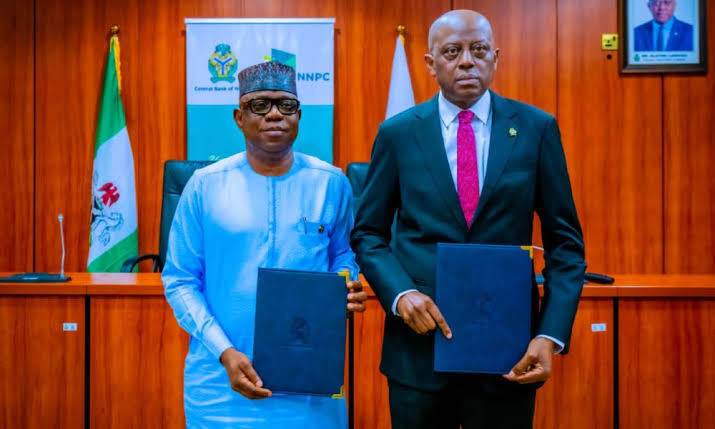
We should welcome the agreement between the Central Bank of Nigeria (CBN) and Nigerian National Petroleum Company Limited (NNPC Limited), without treating a Memorandum of Understanding (MoU) as proof that Nigeria’s energy-financing problems are solved. Its value depends on results.
Group Chief Executive Officer of NNPC Limited, Engr. Bashir Ojulari, described the agreement as a framework for collaboration. “This MoU provides that structure, setting out the principles and framework by which the two institutions will collaborate at the meeting point between energy and finance,” he said. We should regard this as intent, not achievement. A framework cannot independently raise production, guarantee foreign exchange inflows or make unviable projects bankable.
We should assess the partnership through its mechanisms. Ojulari said it would align NNPC initiatives with national monetary and energy objectives, address trade and foreign exchange challenges, and improve access to capital. Predictable oil receipts could support market liquidity. Better financial discipline could strengthen cash management. These outcomes require transparent transactions, reliable remittances and stronger production.
Group Chief Financial Officer of NNPC Limited, Adedapo Segun, said the agreement would help attract investment to raise oil production from 1.8 million barrels per day to three million barrels per day. We should distinguish ambition from achievement. Growth requires investment, operational reliability, security, asset maintenance and predictable commercial arrangements.
We should recognise the CBN’s role while preserving the boundary between monetary policy and commercial operations. Governor of the CBN, Olayemi Cardoso, described the agreement as formalising the institutions’ relationship. He said it would promote “efficient account management, fund transfers and liquidity support”, while ensuring revenue availability and more predictable foreign exchange inflows. These functions could reduce payment friction; they cannot make monetary accommodation a permanent financing channel for an energy company.
We should insist that every commitment carries public accountability. We should demand clear responsibilities, measurable indicators, transparent reporting and safeguards against preferential access to foreign exchange or public liquidity. We should also expect disclosure of NNPC receipts, payment obligations and project financing. Without such information, we cannot verify improved discipline.
For investors, we should regard the MoU as a possible reduction in coordination risks, not proof of bankability. We should look for sustained production, stronger cash generation, timely settlement of obligations and credible project economics. We should measure the agreement by barrels delivered, foreign exchange earned, obligations settled and investments completed. Only results can turn cooperation into lasting energy-sector value.
Discover more from StakeBridge Media
Subscribe to get the latest posts sent to your email.