

By Enam Obiosio
There is a tendency, in Nigeria’s policy discourse, to confuse motion with progress. Announcements are mistaken for outcomes, frameworks for execution. What is unfolding within the maritime sector under the administration of President Bola Ahmed Tinubu does not fit that familiar pattern. It is not rhetorical activity. It is structural repositioning, deliberate, layered, and increasingly measurable.
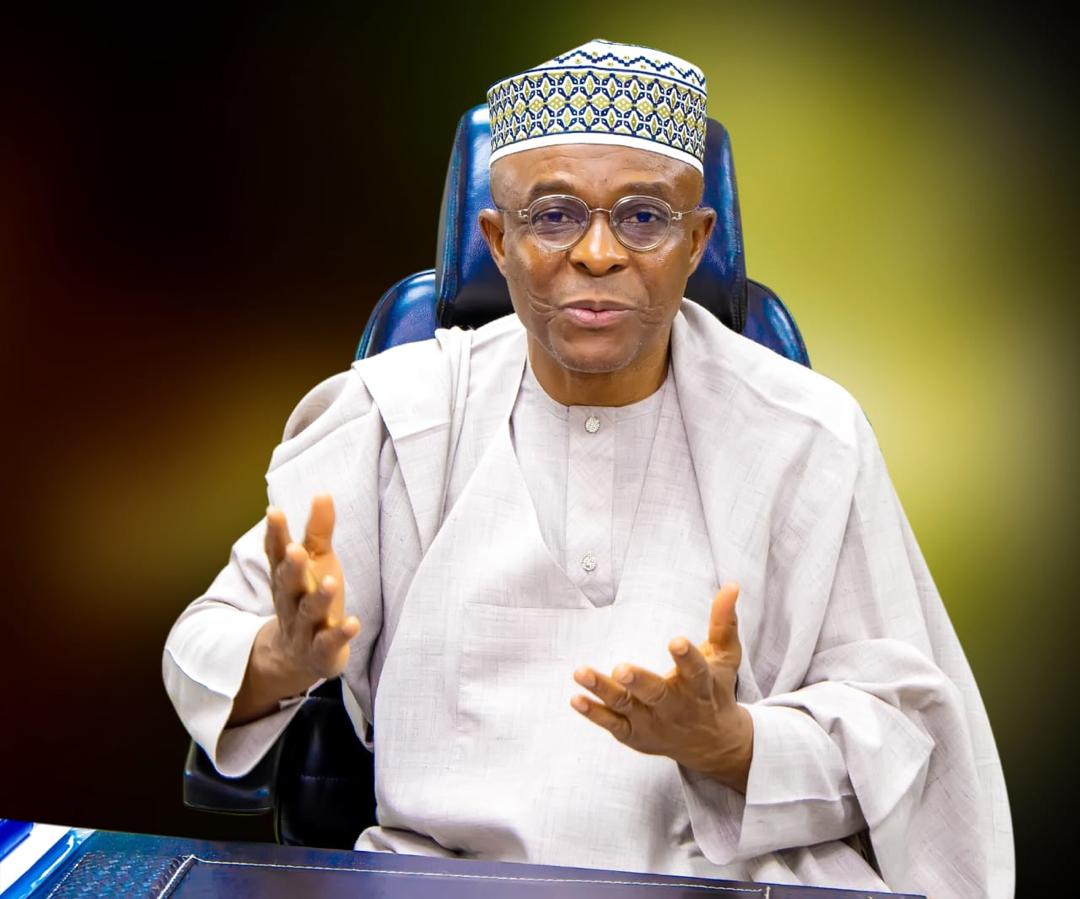
At the centre of this shift stands Dr. Abubakar Dantsoho, Managing Director of the Nigerian Ports Authority (NPA), supported by the institutional clarity introduced through the Federal Ministry of Marine and Blue Economy under Adegboyega Oyetola. Together, they are doing what Nigeria has historically struggled to sustain, aligning policy intent with operational reality.
The premise is straightforward, though it took far too long to be accepted. Ports are not passive infrastructure. They are competitive instruments. In a continent moving toward integrated trade under the African Continental Free Trade Area (AfCFTA), cargo will not respect sentiment or size. It will flow to efficiency, to speed, to reliability. Nigeria, despite its scale, had been losing that contest.
For decades, the country handled over 90 percent of its trade through ports that were, at best, functionally adequate and, at worst, structurally compromised. Congestion, manual processes, fragmented oversight, and chronic underinvestment created a system that imposed costs on itself. Smaller West African economies, with fewer natural advantages, quietly captured disproportionate cargo share. That imbalance was not accidental. It was earned through better systems.
What Dantsoho has done, and this deserves emphasis, is to confront that reality without defensiveness. His articulation is clinically accurate. Geography is no longer a competitive advantage. It is a baseline. Performance is the differentiator. That clarity is now being translated into execution.
The port modernisation programme, backed by a $1 billion facility approved by the House of Representatives for Lagos Port Complex and Tin Can Island Port, is not a cosmetic upgrade. It is a correction of accumulated neglect. Berth expansion, improved cargo handling systems, and reduced vessel turnaround time are not technical details. They are the metrics that determine whether Nigeria participates meaningfully in continental trade or watches it pass by.
Yet, the more consequential decision is not the investment itself. It is the refusal to remain Lagos-centric. For too long, Nigeria treated its primary ports as singular nodes rather than components of a national logistics network. The ongoing procurement processes for Warri, Port Harcourt, Onne, and Calabar signal a more mature understanding. Throughput is not maximised by concentration. It is optimised by distribution.
Oyetola’s role in this architecture is equally critical. The creation of the Federal Ministry of Marine and Blue Economy is not administrative ornamentation. It is a governance correction. Fragmentation had long been the silent saboteur of Nigeria’s maritime potential. Multiple agencies, overlapping mandates, and incoherent coordination created friction where there should have been flow. By consolidating oversight, the ministry introduces a degree of coherence that the sector has lacked.
The results, even at this stage, are difficult to ignore. Revenue from agencies under the ministry rose from approximately N700.79 billion in 2023 to about N1.83 trillion in 2025. That increase is not merely a function of higher activity. It reflects improved transparency, reduced leakages, and a system that is beginning to account for itself.
If infrastructure is the visible layer of reform, digitalisation is the invisible force multiplier. The deployment of a Port Community System (PCS) and the National Single Window is, in effect, an attempt to dismantle one of the most entrenched inefficiencies in Nigerian trade, the dominance of manual, opaque processes. Documentation delays, duplicated procedures, and discretionary bottlenecks have long inflated the cost of doing business. A paperless, integrated platform does not merely improve speed. It alters incentives.
There is also an important, if understated, shift in how the Nigerian Ports Authority under Dantsoho approaches financing. The openness to private sector participation through project financing models is pragmatic. Public capital alone is insufficient to meet the scale of infrastructure required. By inviting structured private participation, the Authority is not relinquishing control. It is leveraging capital efficiency.
However, the sophistication of this reform agenda lies in its recognition that ports do not exist in isolation. Efficiency at the quay is meaningless if congestion persists beyond it. This is where the emphasis on multimodal logistics becomes decisive. Rail integration, inland dry ports, barging operations, and dedicated export corridors are not supplementary initiatives. They are essential components of a functioning logistics chain.
Dantsoho’s acknowledgement that gains at the ports cannot be sustained without efficient hinterland connectivity reflects a level of systems thinking that has often been absent in Nigerian infrastructure planning. It is a recognition that logistics is an ecosystem, not a collection of assets.
Equally significant is the progress in maritime security. Nigeria’s record of over four years without piracy incidents represents a material shift in risk perception. Maritime insecurity had, for years, imposed a premium on Nigerian trade, discouraging investment and increasing insurance costs. The stabilisation achieved through the Deep Blue Programme removes a critical constraint and enhances the country’s attractiveness as a maritime hub.
Still, it is necessary to confront the uncomfortable statistic that continues to define Nigeria’s position. The country accounts for more than 60 percent of West Africa’s Gross Domestic Product but handles only about 25 percent of the region’s cargo traffic. This is not a marginal gap. It is a structural underperformance.
What the current reforms attempt to do is to close that gap, not through rhetoric, but through capacity, efficiency, and coordination. The development of deep seaports in Bayelsa, Cross River, Akwa Ibom, and Ondo, alongside the operationalisation of facilities such as Lekki Port, expands Nigeria’s ability to handle larger vessels and higher volumes. This is not optional. It is a prerequisite for relevance in global shipping networks.
The broader economic implications are substantial. Efficient ports reduce logistics costs, enhance export competitiveness, and support industrialisation, particularly in non-oil sectors. In the context of AfCFTA, where market access is expanding, the ability to move goods quickly and predictably becomes a strategic advantage.
It is here that the alignment between Oyetola, Dantsoho in President Tinubu’s administration becomes most evident. This is not a series of isolated interventions. It is a coordinated attempt to reposition Nigeria within the African trade architecture. The blue economy, often discussed in abstract terms, is being translated into actionable policy and infrastructure.
There are, of course, risks. Infrastructure gaps beyond the ports, inconsistent power supply, and the perennial challenge of policy continuity could undermine progress. Digital systems require full stakeholder compliance to deliver intended efficiencies. Private sector participation must be carefully structured to avoid misaligned incentives.
But these risks do not negate the direction of travel. If anything, they underscore the importance of sustaining the current momentum.
What distinguishes this phase of reform is not its ambition, though that is considerable. It is its coherence. For once, Nigeria’s maritime strategy appears to understand the problem it is trying to solve. Ports are being treated not as static gateways, but as dynamic engines of trade.
Dantsoho’s confidence that Nigeria’s port system will emerge as a leading maritime logistics hub in Africa is not misplaced. It is conditional. It depends on execution discipline, policy consistency, and the continued alignment of institutions. Oyetola’s insistence on balanced, nationwide development ensures that growth is not confined to a single corridor. It distributes opportunity and reduces systemic vulnerability.
The federal government’s willingness to back these reforms with financing, legislation, and institutional restructuring provides the necessary foundation. In a policy environment often characterised by fragmentation and short-termism, this level of alignment is rare. It is also, if sustained, transformative.
Nigeria is not yet where it should be in the maritime hierarchy. That is evident. But it is, finally, moving with purpose. And in the calculus of trade, purpose, when matched with execution, is often enough to alter outcomes.
The ports, long seen as constraints, are being recast as catalysts. That shift, driven by Dantsoho, enabled by Oyetola, and backed by the Tinubu administration, is not merely a sectoral reform. It is a redefinition of Nigeria’s economic interface with Africa.
The implications will not be immediate. Structural transformations rarely are. But the direction is now clear. Nigeria is no longer content to watch regional trade flows pass through more efficient corridors. It is positioning itself to command them. That, in itself, marks a departure worth noting.
Discover more from StakeBridge Media
Subscribe to get the latest posts sent to your email.