

By Olumide Johnson
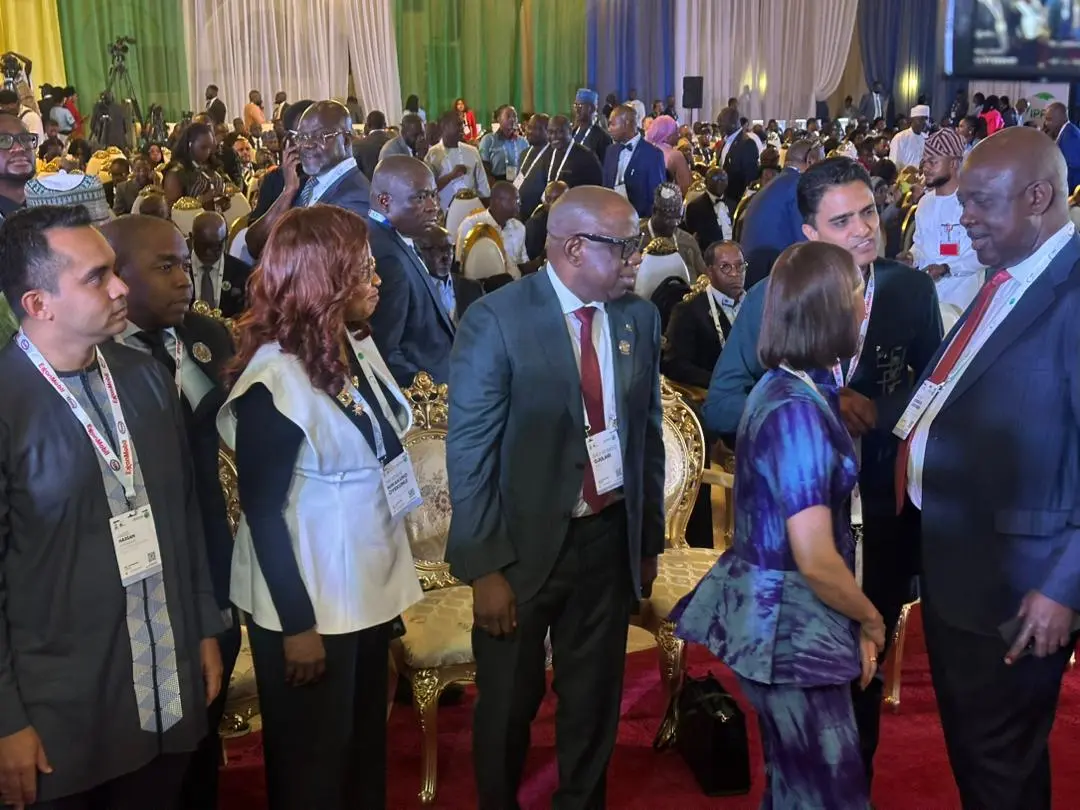
Chairperson of the Petroleum Contractors Trade Section (PCTS) and Managing Director of Tenaris Nigeria, Rosario Osobase, recently stated at the Nigeria International Energy Summit (NIES) 2026 that Nigeria’s local content framework must transition from ownership-based participation towards measurable industrial performance, sustainable value retention and capacity utilisation.
Speaking during the summit, Osobase argued that local content policy should evolve beyond compliance-driven participation models towards execution-focused industrial competitiveness capable of deepening domestic value creation across the energy sector.
Osobase also highlighted the evolving role of the Nigerian Content Development and Monitoring Board (NCDMB) as a strategic enabler of indigenous participation, industrial sustainability and technology-driven sectoral growth.
She reaffirmed the commitment of PCTS members to advancing execution capacity, infrastructure development, innovation and technology transfer throughout Nigeria’s oil and gas value chain.
DECISION HIGHLIGHT
The intervention reflects growing pressure within Nigeria’s energy sector to convert local content policy from procurement compliance into measurable industrial capability and long-term economic retention.
Osobase’s position also signals increasing recognition that indigenous participation alone is insufficient without productive utilisation of installed capacity, technical efficiency and scalable manufacturing integration.
The remarks further reinforce NCDMB’s expanding institutional role beyond regulatory supervision into industrial development coordination.
DECISION MEMO
Nigeria’s local content framework is entering a more complex phase where the core policy question is no longer participation access but industrial competitiveness.
For over a decade, local content implementation largely focused on increasing Nigerian ownership participation, contract allocation and workforce inclusion within the petroleum industry. While these measures expanded indigenous representation, they did not consistently translate into sustainable manufacturing ecosystems or globally competitive industrial capacity.
Osobase’s intervention suggests that the next phase of local content policy may increasingly prioritise utilisation rates, operational efficiency, technology absorption and long-term value retention rather than headline participation statistics alone.
The emphasis on capacity utilisation is particularly significant within Nigeria’s oil and gas sector, where fabrication yards, manufacturing facilities and technical assets often remain underutilised after major project cycles weaken.
NCDMB’s repositioning as an industrial competitiveness enabler also reflects broader attempts to align energy policy with industrialisation objectives amid rising pressure for economic diversification and domestic production scaling.
The challenge, however, remains whether Nigeria’s industrial ecosystem can sustain technological upgrading, financing access and execution consistency required to compete beyond protected domestic participation frameworks.
DATA BOX
- Event:
- Nigeria International Energy Summit (NIES) 2026
- Key participant:
- Rosario Osobase, Chairperson, Petroleum Contractors Trade Section (PCTS)
- Additional role:
- Managing Director, Tenaris Nigeria
- Key institution:
- Nigerian Content Development and Monitoring Board (NCDMB)
- Strategic priorities highlighted:
- capacity utilisation
- industrial competitiveness
- sustainable value retention
- execution capability
- technology transfer
- infrastructure development
- Policy transition themes:
- from compliance to performance
- from participation to value retention
- from capacity creation to capacity utilisation
- Core sectors affected:
- oil and gas services
- fabrication
- manufacturing
- engineering
- industrial infrastructure
WHO WINS / WHO LOSES
Who Wins:
- Indigenous firms with scalable operational capacity
- Nigerian manufacturing and fabrication companies
- Technology-transfer and engineering service providers
- Skilled technical workforce
- Industrial infrastructure operators
Who Loses:
- Passive ownership structures lacking technical depth
- Import-dependent supply chains
- Underutilised industrial facilities
- Firms dependent solely on compliance protections
- Contractors unable to meet performance benchmarks
POLICY SIGNALS
Nigeria’s local content policy is increasingly shifting towards industrial productivity, operational efficiency and measurable economic impact.
The growing emphasis on execution and utilisation also signals wider attempts to integrate energy-sector policy with national industrialisation and manufacturing objectives.
NCDMB’s evolving role suggests stronger institutional focus on building sustainable industrial ecosystems rather than merely monitoring participation ratios.
INVESTOR SIGNAL
The transition towards performance-based local content frameworks may improve long-term investor confidence in Nigeria’s industrial and energy supply-chain ecosystem.
Stronger emphasis on infrastructure, technology transfer and execution capability could create medium-term opportunities across:
- fabrication,
- engineering services,
- industrial manufacturing,
- energy infrastructure,
- technical training,
- domestic supply-chain integration.
The policy direction may also encourage deeper partnerships between indigenous firms and international technical operators.
RISK RADAR
Execution sustainability remains the principal risk confronting Nigeria’s local content transition.
Key vulnerabilities include:
- weak industrial financing,
- inconsistent project pipelines,
- underutilised manufacturing assets,
- technology gaps,
- infrastructure constraints,
- regulatory inconsistency,
- limited export competitiveness,
- dependence on protected domestic participation structures.
Without sustained industrial demand and continuous capital investment, local content gains may remain administratively compliant but economically shallow.
Discover more from StakeBridge Media
Subscribe to get the latest posts sent to your email.