

By Ayo Susan
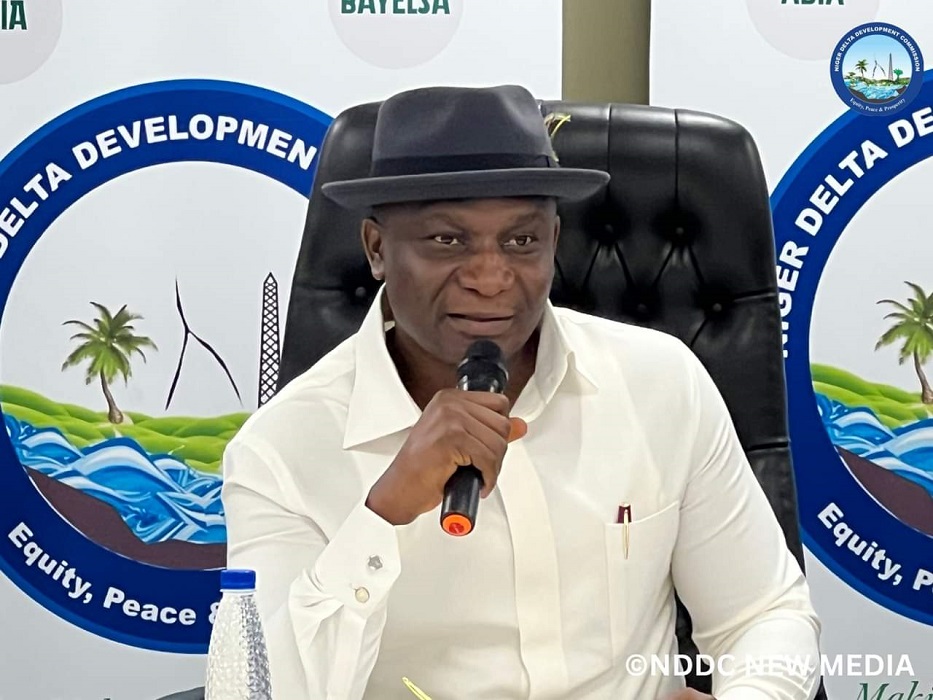
At the Niger Delta Development Commission (NDDC) Law and Development Summit 2026 held in Port Harcourt on June 3, 2026, Dr Samuel Ogbuku, Managing Director of NDDC, reaffirmed the Commission’s commitment to partnering with the legal community to advance sustainable development in the Niger Delta and Nigeria. The summit, themed ‘The Role of Law in Driving Sustainable Development in the Niger Delta Region,’ brought together legal practitioners, policymakers, development experts, environmental advocates, academics, judicial officers and civil society stakeholders to examine how legal frameworks, governance systems and policy implementation can drive regional transformation. Ogbuku highlighted governance reforms undertaken by the Commission, including corporate governance restructuring, procurement reforms and the digitalisation of nearly 90 percent of NDDC processes.
According to Ogbuku, “sustainable development for the Niger Delta region is not just about infrastructure and brick-and-mortar; it entails a balanced integration of economic growth, social inclusion, and environmental protection for the region’s long-term well-being. We have repositioned the Commission’s operations, strengthened internal governance, and accelerated our development programmes with a renewed sense of urgency and purpose.”
DECISION HIGHLIGHT
The summit signals NDDC’s attempt to place law, governance reform and institutional accountability at the centre of its development strategy rather than treating infrastructure delivery as a standalone intervention tool.
DECISION MEMO
The summit reflects a growing recognition that development deficits in the Niger Delta are increasingly governance challenges as much as infrastructure challenges.
For decades, the region has attracted multiple intervention agencies, public programmes, corporate social responsibility initiatives and development actors. Yet outcomes have often fallen short of expectations, partly due to fragmented responsibilities, overlapping mandates and weak institutional coordination.
This concern was directly raised by Mr. Henry Odein Ajumogobia, former Minister of Petroleum Resources and Foreign Affairs, who argued that NDDC should be strengthened as the principal coordinating institution for development efforts across the region.
According to Ajumogobia: “Rather than functioning as the central coordinating body, the NDDC has become one layer in a crowded ecosystem where responsibilities are diffuse and unclear.”
His observation, in a release by Seledi Thompson-Wakama, Director, Corporate Affairs at the NDDC, shifts attention from funding levels to institutional architecture. The argument suggests that development effectiveness may depend less on creating new interventions and more on improving coordination among existing actors.
The summit also highlighted NDDC’s ongoing internal reforms. Ogbuku’s disclosure that KPMG Advisory reviewed the commission’s processes and developed new corporate governance policies indicates an effort to strengthen institutional credibility. The reported digitalisation of almost 90 percent of operational processes suggests a move towards transparency, efficiency and reduced administrative friction.
Equally significant is the commission’s framing of law as a development instrument. The summit’s discussions moved beyond legal compliance to focus on how legal frameworks can facilitate investment, accountability, environmental protection, social inclusion and economic growth.
The broader implication is that NDDC is seeking to reposition itself from a project-delivery agency to a governance-led development institution capable of coordinating broader regional transformation.
DATA BOX
Event
- NDDC Law and Development Summit 2026
- Date: June 3, 2026
- Location: Port Harcourt
Theme
- “The Role of Law in Driving Sustainable Development in the Niger Delta Region”
Governance Reforms Highlighted
- KPMG Advisory engaged to review internal processes
- New corporate governance policies implemented
- Procurement processes reformed
- Nearly 90% of NDDC processes digitalised
- Electronic contract execution introduced
Key Stakeholders
- Niger Delta Development Commission
- Nigerian Bar Association
- Rivers State Government
- Legal practitioners
- Judicial officers
- Development partners
- Civil society organisations
- Environmental advocates
Strategic Focus Areas
- Institutional accountability
- Governance reform
- Sustainable development
- Legal framework strengthening
- Policy implementation
WHO WINS / WHO LOSES
Winners
- Niger Delta communities benefiting from improved governance.
- Development partners seeking stronger institutional coordination.
- Investors requiring greater transparency and accountability.
- Legal and policy institutions involved in development planning.
- Contractors and stakeholders benefiting from digital processes.
Potential Losers
- Inefficient legacy administrative systems.
- Fragmented development structures with overlapping mandates.
- Stakeholders benefiting from opaque procurement processes.
- Projects weakened by poor institutional coordination.
POLICY SIGNALS
- Governance reform is becoming a central pillar of regional development.
- Legal frameworks are being positioned as economic development tools.
- Institutional coordination is emerging as a policy priority.
- Digitalisation remains a key component of public-sector reform.
- NDDC is seeking a stronger coordinating role in regional development.
INVESTOR SIGNAL
The reforms outlined by NDDC point to efforts to improve governance quality, transparency and operational efficiency. Digitalisation, procurement reforms and strengthened corporate governance frameworks are positive indicators for development partners and investors seeking greater predictability in project execution and stakeholder engagement. The emphasis on institutional accountability may also improve confidence in future development interventions across the region.
RISK RADAR
- Structural overlap among development institutions.
- Implementation risks associated with governance reforms.
- Funding constraints affecting long-term development programmes.
- Persistent socio-economic deficits across host communities.
- Weak coordination among federal, state and private-sector actors.
- Reform sustainability beyond current leadership cycles.
The central message from the summit is that the next phase of Niger Delta development may depend less on the volume of interventions and more on the quality of governance frameworks guiding them. NDDC’s reform agenda suggests a deliberate attempt to use law, accountability and institutional strengthening as catalysts for more sustainable development outcomes.
Discover more from StakeBridge Media
Subscribe to get the latest posts sent to your email.