

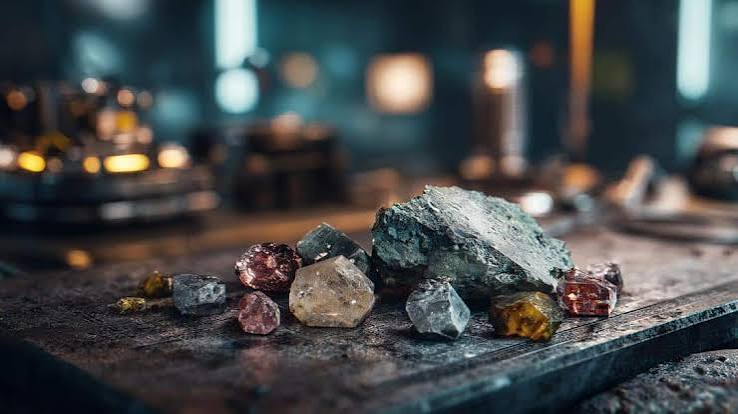
For decades, we have watched a familiar cycle repeat itself across Nigeria’s extractive industries. We dig resources from the ground, ship them abroad in raw form, and then wonder why the jobs, technology, industrial capacity and real wealth are created elsewhere. The result has been an economy that often exports potential but imports value. That is why the emergence of the $400 million rare earth processing plant being developed by Hasetins Commodities Limited in Nasarawa State deserves attention far beyond the mining sector.
This project is not merely another industrial investment. It represents the type of economic transition Nigeria has talked about for years but has struggled to achieve. If successfully completed and operated as envisioned, it could become evidence that Nigeria is finally beginning to move from extraction to processing, from commodity dependence to industrial value creation.
The most important statement made during the federal government’s inspection was not about equipment, construction progress or regulatory compliance. It came from Hasetins Managing Director and Chief Executive Officer, Prince Jidayi, who observed: “For decades the narrative has been of raw extraction and immediate export. Hasetins is advancing that.” That single statement captures the strategic significance of the project.
Rare earth minerals are no longer obscure commodities. They are becoming central to the global economy. They power electric vehicles, renewable energy technologies, advanced electronics, defence systems and modern manufacturing. As countries race to secure critical mineral supply chains, resource-rich nations face a choice. They can remain suppliers of raw materials or become participants in higher-value segments of the production chain. We believe Nigeria must choose the second option.
The proposed plant is expected to add 12,000 tonnes annually to Hasetins’ existing processing capacity, raising total output to 18,000 tonnes per annum. More importantly, it has the potential to position Nigeria as Africa’s leading rare earth processing hub. That matters because processing creates significantly more value than extraction alone. It generates skilled jobs, attracts technology, deepens industrial capabilities and strengthens domestic supply chains.
Equally encouraging is the Federal Government’s insistence on compliance, environmental responsibility and community engagement. Too often, mining projects across Africa have been associated with environmental degradation, social conflict and limited local benefits. The comments from officials of the Federal Ministry of Solid Minerals Development suggest an attempt to establish a different model.
Deputy Director, Oladehinde Oladusi, rightly noted that the company had gone beyond simply obtaining access to mineral resources. According to him, the project reflects a commitment to environmental standards, proper planning and advanced technologies designed to minimise hazards associated with rare earth processing.
We find this significant because industrialisation without environmental responsibility is not development. It is merely deferred damage. If Nigeria wants to become a serious player in critical minerals, it must demonstrate that mining and processing can coexist with environmental protection, community welfare and regulatory accountability.
The project’s potential employment impact also deserves attention. Officials have indicated that job creation could be substantial once operations commence. Combined with Hasetins’ plan to establish regional and satellite separation centres that integrate artisanal miners into formal supply chains, the initiative could help transform mining from a fragmented activity into a structured economic ecosystem. This is precisely the direction Nigeria’s mining sector should be taking.
We are particularly encouraged by the emphasis on local participation. Hasetins says it intends to provide safety equipment, training and offtake arrangements for artisanal miners. If implemented effectively, this approach could improve incomes, enhance safety standards and reduce informality within the sector.
Of course, caution remains necessary. Nigeria has seen ambitious industrial projects announced before without achieving their full promise. The true measure of success will not be the size of the investment or the scale of the facility. It will be whether the plant operates sustainably, creates jobs, transfers technology and stimulates broader industrial development. Yet the signals are encouraging.
The global transition towards clean energy is accelerating. Demand for critical minerals is rising. Countries are competing to secure supply chains. In this environment, exporting raw minerals is increasingly becoming an outdated development model.
We believe the Hasetins project points towards a more intelligent alternative. It recognises that the future belongs not to countries that merely own resources, but to countries that process, refine, innovate and create value from those resources.
Nigeria has spent too many years exporting dirt and importing prosperity. The rare earth project in Nasarawa offers an opportunity to reverse that equation. If government, investors and communities remain aligned, this may become more than a mining project. It may become a blueprint for the industrial future Nigeria has long sought.
Discover more from StakeBridge Media
Subscribe to get the latest posts sent to your email.