

By Olumide Johnson
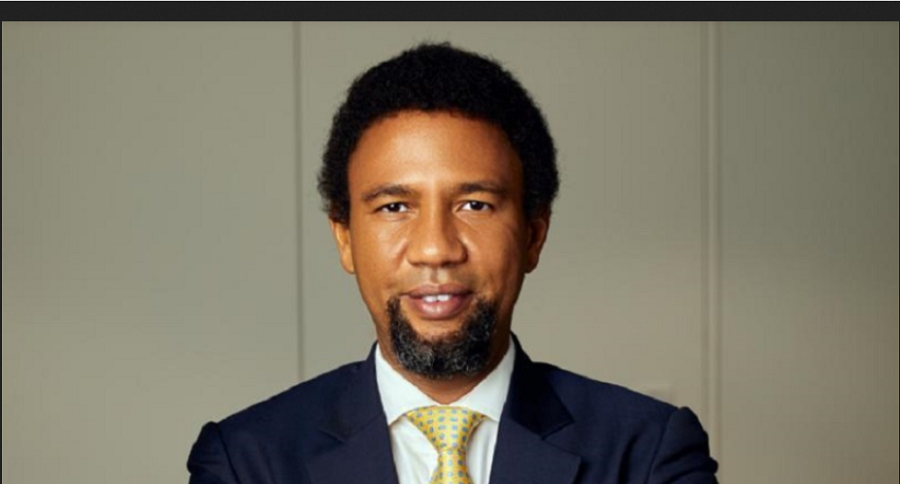
At MTN Nigeria’s stakeholder engagement programme, ‘Data on Trial’, held recently in Lagos, Mr. Karl Toriola, Chief Executive Officer of MTN Nigeria, defended the recent telecommunications tariff increase, arguing that it was necessary to preserve industry viability and sustain network investment. Toriola disclosed that MTN Nigeria invested N900 billion in network expansion and maintenance in 2025 and plans to invest more than N1trillion in 2026. He stated that prior to the tariff adjustment, the company was experiencing severe financial stress and was technically insolvent.
“The tariff increase was implemented for one primary reason: to allow the industry to survive,” Toriola said. “At the point in time when the tariff increase was implemented, we practically could not pay our bills. Without that tariff increase, we would have had to shut down the network.”
DECISION HIGHLIGHT
MTN Nigeria’s position reframes the tariff increase from a pricing decision to an infrastructure sustainability intervention.
According to Toriola, “Technically speaking, we were insolvent. We were in negative equity. So, it was necessary for the industry first just to survive. It was really on the verge of breaking down. And then to allow us to continue to invest.”
The company’s decision is therefore tied directly to preserving cash flows required for network operations, infrastructure maintenance and future capacity expansion.
“Last year, we invested N900 billion. This year, we are going to invest in excess of a trillion. We invest more in the expansion and maintenance of this company than we make in profits,” he also said.
DECISION MEMO
The more significant issue emerging from MTN Nigeria’s defence is the growing tension between consumer affordability and infrastructure economics within Nigeria’s digital economy.
For several years, operators absorbed escalating operating costs driven by foreign exchange volatility, diesel expenses, site maintenance, security challenges and inflation. The consequence was an industry increasingly squeezed between regulated pricing expectations and rising capital requirements.
Toriola’s insolvency claim suggests that the tariff debate may be less about profitability and more about the sustainability of national telecommunications infrastructure.
His remarks also expose a structural reality often overlooked in public discussions. Telecommunications networks require continuous capital expenditure regardless of consumer sensitivity to pricing.
The planned N1trillion investment programme indicates that MTN Nigeria views network expansion and quality improvement as dependent on restoring commercial viability rather than merely increasing revenues.
The company’s defence of data pricing follows the same logic. Toriola argued that unlimited data offerings remain economically difficult because network capacity remains finite.
“We cannot give unlimited internet data to everyone, as much as we would desire it. We will not be able to build the networks that we will use in any way whatsoever.”
Equally important is MTN Nigeria’s attempt to shift public discourse from pricing alone to consumption behaviour. Through new data dashboards and calculators, the company is seeking to improve transparency around data usage and reduce customer distrust over perceived data depletion.
The initiative suggests that customer education is becoming as important as network investment in maintaining subscriber confidence.
DATA BOX
- MTN Nigeria subscribers: More than 87 million
- Network investment in 2025: N900bn
- Planned network investment in 2026: More than N1tn
- Consumer education campaign duration: Six months
- New customer tools: Data calculator and personalised data dashboard
- Key operational challenges: Vandalism, insecurity, diesel costs, site disruptions, foreign exchange pressures
- Company status before tariff increase: Negative equity and technical insolvency, according to management
WHO WINS / WHO LOSES
Winners
- Telecommunications operators with improved capacity to invest.
- Subscribers benefiting from long-term network expansion and quality improvements.
- Digital businesses dependent on reliable connectivity.
- Infrastructure vendors and network equipment providers.
Losers
- Consumers facing higher telecommunications costs.
- Low-income users with limited discretionary spending.
- Businesses heavily dependent on data-intensive operations.
- Operators unable to scale investment alongside rising demand.
POLICY SIGNALS
The development reinforces the federal government’s growing recognition that telecommunications infrastructure must remain commercially sustainable to support digital transformation objectives.
It also highlights the increasing policy challenge of balancing consumer protection with infrastructure investment incentives.
The debate suggests future regulatory decisions may place greater emphasis on industry sustainability alongside affordability considerations.
INVESTOR SIGNAL
MTN Nigeria’s planned investment exceeding N1tn signals management confidence in long-term demand growth for data services despite current consumer concerns.
The scale of planned capital expenditure indicates that operators continue to view Nigeria’s digital economy as an attractive long-term growth market.
Equally significant is the company’s assertion that network investment exceeds reported profits, suggesting that future valuation discussions may increasingly focus on infrastructure replacement costs and capital intensity rather than headline earnings alone.
RISK RADAR
Several risks remain visible.
First, higher tariffs could trigger consumer resistance if service quality improvements do not materialise quickly.
Second, vandalism and insecurity continue to threaten network reliability. Toriola noted that attacks on telecommunications infrastructure can affect tens of thousands of subscribers and, in some cases, up to two million users connected to affected base stations.
Third, persistent inflation and foreign exchange pressures may continue to erode operating margins despite tariff adjustments.
Finally, the affordability-versus-investment debate is unlikely to disappear. While MTN Nigeria argues that tariff increases were necessary for survival, sustained public acceptance will ultimately depend on whether consumers experience measurable improvements in network quality, transparency and service delivery.
Discover more from StakeBridge Media
Subscribe to get the latest posts sent to your email.